 EN
 ZH

Saddle Dental Stools vs. Flat-Seat Dental Stools: Which Suits You Best?

Choosing between saddle and flat-seat dental stools depends on your working posture, treatment routines, and comfort preferences. A saddle stool may suit dental professionals who need to lean forward and reposition frequently, while a flat-seat stool offers a familiar sitting surface that some users prefer for longer procedures. Neither fits every clinician.
For dental clinics, schools, and training centers, the priority is finding a stool that supports daily work without restricting movement. For distributors, product consistency, purchasing terms, and supplier support also matter. This guide compares both designs and explains how to evaluate your options.
What Is the Difference Between Saddle and Flat-Seat Dental Stools?
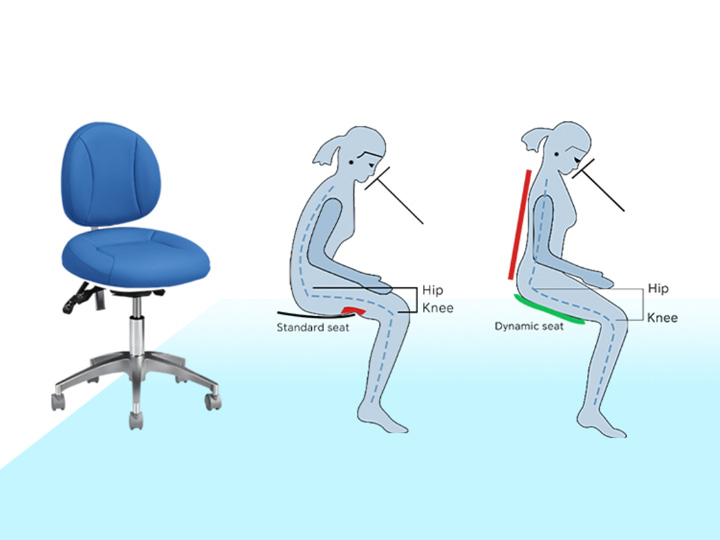
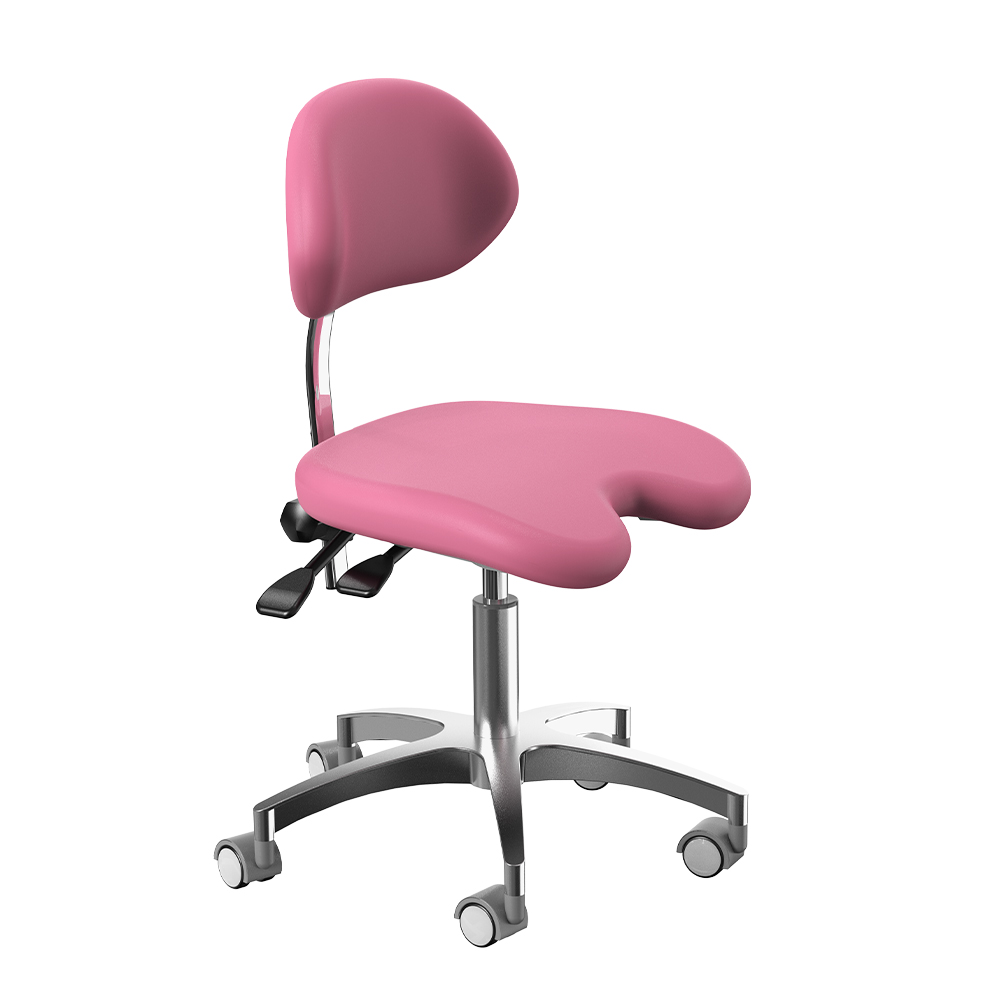
The main difference is seat shape, which influences how users position their pelvis, hips, and legs while sitting. A saddle seat has a raised central section shaped to resemble a riding saddle, whereas a flat-seat stool generally has a broader, relatively level sitting surface.
How Do the Two Seat Designs Differ?
A dental saddle stool encourages a more open hip angle, while a flat-seat design allows users to adopt a more familiar sitting position. The actual posture depends on seat height, body proportions, backrest design, and how the user adjusts the stool.
What Are the Main Advantages and Limitations of Each Design?
| Comparison factor | Saddle dental stool | Flat-seat dental stool |
| Seat shape | Contoured, often with a raised center | Relatively level sitting surface |
| Sitting position | Encourages a more open hip angle | Allows a familiar seated position |
| Movement | May suit frequent repositioning around the treatment area | Movement depends on seat dimensions and stool construction |
| Adjustment | Correct height and seat angle are important | Height and backrest adjustment remain important |
| Potential limitation | May require an adjustment period and may not suit every body type | May encourage a less favorable posture if poorly adjusted |
These are general design characteristics, not guaranteed results for every product. For example, a well-adjusted flat-seat stool may suit a particular dentist better than a saddle stool that does not fit their body.
Therefore, compare the complete stool design rather than choosing by seat shape alone.
Which Dental Stool Is Right for Your Working Needs?
Compare the seat design, adjustment range, and support features against your typical procedures and working positions.
When Should You Consider a Dental Saddle Stool?
Consider a dental saddle stool if your work involves frequent forward leaning, close positioning around the dental chair, and repeated changes in working angle. Its contoured seat may help you maintain a more open hip position while keeping your feet supported.
For example, a dentist who frequently changes position while working around a patient may appreciate a stool that allows controlled movement without repeatedly adjusting their entire sitting position.
However, saddle seats are not automatically comfortable for everyone. Users should check whether the seat width, contour, height, and tilt suit their body proportions. A trial period can help identify pressure points or adjustment difficulties before a larger purchase.
When Is a Flat-Seat Dental Stool a Practical Choice?
A flat-seat stool may be appropriate if you prefer a familiar sitting surface or find a saddle-shaped design difficult to adapt to.
Dental assistants, students, and clinicians may have different seating preferences even when they perform similar tasks. In a training center, for instance, a conventional seat may be easier to accommodate across users with different levels of experience, provided its adjustments suit their needs.
Still, a flat seat should not be selected solely because it feels familiar. Check whether the seat height allows stable foot placement and whether the overall arrangement supports a workable position relative to the patient.
What Does Research Say About Dental Stool Ergonomics?
Research suggests that saddle seats may lower ergonomic risk scores in certain settings, but current evidence does not establish that they prevent pain or provide the same benefits for all dental professionals.
A 2018 systematic review and meta-analysis published in PLOS ONE examined two studies involving 150 second-year dental students. Both studies found lower ergonomic risk scores with saddle seats than with conventional seats among second-year dental students performing laboratory tasks with phantom heads. The authors rated the evidence as moderate and called for further research involving practicing dentists and real clinical procedures.
The practical lesson is to consider seat design alongside working posture, appropriate adjustment, and individual comfort. Evidence about posture scores should not be interpreted as proof that a particular stool will prevent musculoskeletal disorders.
What Should Clinics and Distributors Check Before Buying?
Clinics should prioritize functional fit and daily usability, while distributors need to evaluate product quality, commercial terms, and the support available from the manufacturer.
Which Product Features Matter in Daily Clinical Use?
Before purchasing, assess the following features against the demands of your working environment.
- Height adjustment: Check whether the stool can be positioned appropriately for the user’s height and the dental chair.
- Backrest support: Consider whether the backrest can be adjusted to provide suitable support without restricting access to the treatment area.
- Seat cushioning: Evaluate firmness, pressure distribution, and comfort during representative working sessions.
- Mobility and stability: Check whether the casters move smoothly on the clinic floor and whether the base remains stable during normal repositioning.
- Cleaning and maintenance: Confirm that the upholstery is compatible with the clinic’s cleaning and disinfection procedures. Do not assume that easy-to-clean materials are compatible with every disinfectant.
Schools and training centers should also consider whether adjustments can accommodate multiple users. Clinics may place greater emphasis on the individual clinician’s preferred posture and the stool’s compatibility with existing equipment.
What Should Distributors Evaluate in a Dental Stool Supplier?
Distributors need more than a product specification sheet. They should assess whether the supplier can support the entire purchasing and resale process.
| Evaluation area | Questions to ask |
| Product quality | What quality-control procedures and product documentation are available? |
| Pricing and orders | What are the minimum order quantity, quotation terms, and payment conditions? |
| Supply reliability | What production lead times and delivery arrangements apply? |
| After-sales service | What warranty, maintenance guidance, and spare-parts support are available? |
| Distributor support | Are product training, technical resources, and sales materials available? |
Request written answers before committing to a bulk order. If you plan to serve several customer segments, clarify which models and specifications are available for each application.
These checks help distributors compare suppliers on operational suitability and total purchasing considerations, rather than relying on the initial unit price alone.
What Dental Stool Features Should Buyers Compare?
ROSON offers several dental stool models with different seat designs and adjustment features. Confirm the seat shape and specifications of each model before comparing it with saddle or flat-seat alternatives.
Which Features Are Available in ROSON Dental Stools?
The ROSON dental stool range includes four listed models: RS-07, RS-06, RS-05, and RS-03. The product range highlights the following features:
- Adjustable height and backrest for individual positioning.
- 360-degree rotation to support movement around the working area.
- High-density foam cushioning.
- Durable upholstery designed for easy cleaning.
- A five-star base with smooth-rolling casters.
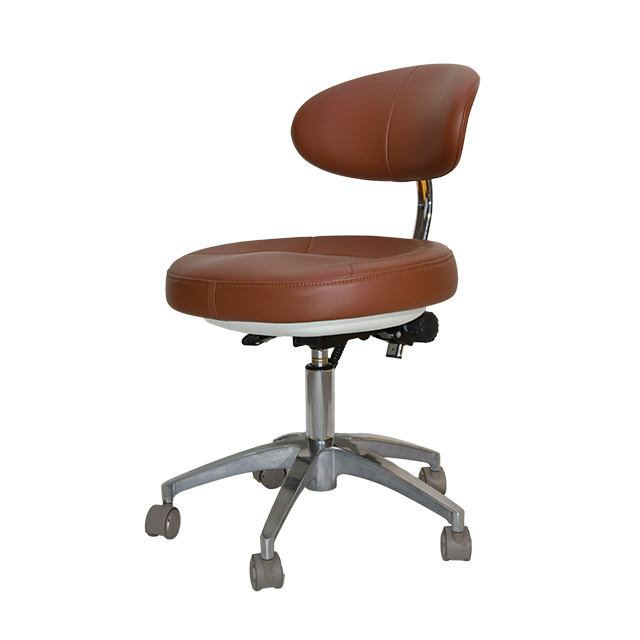
These features provide a starting point for comparing stools used in dental clinics and other professional settings. However, the available product information does not clearly map each model to a saddle or flat seat. Buyers should confirm the seat shape and model-specific specifications rather than assuming all four models offer the same configuration.
How Can Buyers Confirm Product Specifications and Purchasing Terms?
Before placing an order, clinics and distributors should confirm the following details with ROSON:
- Model configuration: Ask for confirmation of the seat shape, dimensions, height range, adjustment options, and other model-specific specifications.
- Quotation and supply: Confirm the unit price, minimum order quantity, lead time, shipping arrangements, and applicable payment terms.
- After-sales support: Clarify warranty coverage, maintenance instructions, spare-parts availability, and the support process for the destination market.
ROSON also provides dental equipment resources covering installation, operation, maintenance, and after-sales support. Distributors can ask which resources and services are available for their market and order.
For clinics, these questions help establish whether the stool meets practical requirements. For distributors, they also clarify the information needed to advise customers and manage future service requests.
How Can You Make the Final Choice?
A saddle dental stool may be worth considering if its shape supports your working position and movement needs. A flat-seat stool may be more suitable if you prefer a conventional sitting surface. A suitable choice depends on fit, adjustment, and the demands of daily practice.
Before buying, use this checklist:
- Compare both seat designs against your typical working positions.
- Test the stool’s height, support, and mobility where possible.
- Confirm cleaning compatibility and maintenance requirements.
- For bulk purchases, verify specifications, pricing, delivery, and after-sales arrangements.
Contact us to get specs and commercial terms for your clinic or dealership.
About the Author