 EN
 ZH

How to Choose Dental Assistant Chairs for Your Clinic

Choosing a dental assistant chair involves more than finding a comfortable seat. The right stool should support a suitable working posture, allow assistants to move around the dental chair, and withstand repeated cleaning and daily use. For dental clinics, schools, and training centers, the priority is a chair that fits the working environment. For distributors, product quality, purchasing costs, supply reliability, and after-sales support also influence the decision.
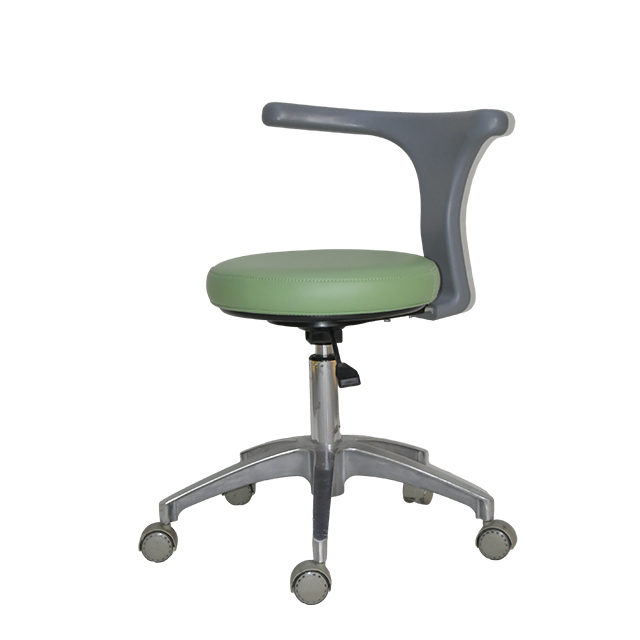
Assess the user’s working position, typical sitting duration, and required adjustment range. For assistants who frequently change position or training centers with multiple users, check whether the stool can accommodate these different needs.
What Should You Consider Before Choosing a Dental Assistant Chair?
Start by assessing the user’s working position, daily schedule, and adjustment needs. A stool that works for a dentist in one treatment room may not suit an assistant who frequently changes position or a training center with multiple users.
Target Users and Daily Usage Duration
The intended user and typical sitting duration should guide the initial selection. Dental assistants often work beside the patient while reaching for instruments, observing procedures, and coordinating with the dentist. Their seating should allow them to maintain a practical working height without repeatedly stretching or leaning forward.
For a private clinic, consider the assistant’s height, the height of the dental chair, and the available floor space. For a school or training center, prioritize a usable adjustment range so that different students and instructors can adapt the stool to their working positions.
How Do Working Posture and Adjustability Affect Daily Use?
Working posture depends on the user’s position relative to the patient and instruments. Evaluate the stool together with the dental chair and instrument delivery system to determine which adjustments are needed.
The American Dental Association (ADA) identifies posture, equipment positioning, and workplace setup as important considerations in dental ergonomics. Buyers should therefore assess the complete working arrangement, including the stool, dental chair, instrument delivery system, and assistant’s usual movements, rather than evaluating the stool in isolation.
A practical evaluation should include:
- Working height: Can the user adjust the stool to a suitable height relative to the patient chair and treatment area?
- Reach and movement: Can the user access instruments without excessive twisting or stretching?
- Adjustment: Can the seat and backrest accommodate the user’s working position?
- Sitting duration: Does the seat remain suitable during typical procedures?
These checks provide a more useful starting point than choosing a stool based on appearance alone.
Which Features Matter Most in a Dental Assistant Chair?
Prioritize features that match the user’s posture, movement patterns, and cleaning routine. Seat shape, backrest support, adjustment mechanisms, casters, and base construction all affect how a stool fits into a dental workspace.
Why Do Height Adjustment, Rotation, and Mobility Matter?
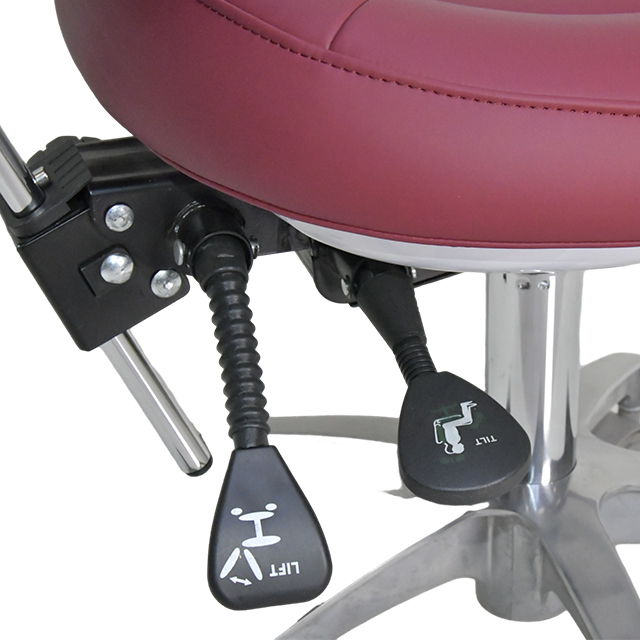
Height adjustment allows users to adapt their sitting position to the patient chair and instrument layout. Rotation and rolling casters make it easier to reposition around the treatment area without repeatedly lifting or dragging the stool.
When comparing models, check the following features:
| Feature | What to check | Why it matters |
| Seat-height adjustment | Range and ease of operation | Helps users find a workable sitting height |
| Backrest adjustment | Angle, position, and locking mechanism | Allows support to be adapted to different tasks |
| Seat design | Flat, contoured, U-shaped, or saddle | Affects comfort and freedom of movement |
| Casters | Rolling action, noise, and floor compatibility | Supports movement around the operatory |
| Base | Stability and construction | Helps the stool remain stable during normal use |
Do not assume that a stool offering more adjustment controls is automatically the right purchase. The relevant question is whether users can make the adjustments they need easily and consistently.
What Should You Check About Cushioning, Upholstery, and Base Stability?
Inspect the cushion, upholstery, and base as parts of the complete product. Cushioning should feel appropriate for the intended sitting duration, while the upholstery should be compatible with the cleaning and disinfection products used by the clinic.
Ask the supplier which cleaning agents are suitable for the upholstery and whether the manufacturer’s instructions specify any restrictions. Do not assume that a surface is compatible with every disinfectant simply because it is described as easy to clean.
For the base and casters, check the manufacturer’s specifications, load rating, replacement-part availability, and suitability for the clinic’s flooring. These checks are especially relevant for facilities purchasing several stools, where maintenance needs can affect operating costs over time.
How Should Clinics, Training Centers, and Distributors Compare Their Options?
The right purchasing criteria depend on who will use the stool and who will maintain or resell it. Clinics need equipment that fits daily procedures, training centers must accommodate different users, and distributors need products supported by reliable commercial arrangements.
What Should Dental Clinics Prioritize for Daily Procedures?
Dental clinics should begin with the procedures performed most frequently and the positions assistants maintain during those procedures. A stool used for extended periods may require a different seat shape and backrest configuration from one used for shorter, varied tasks.
Before selecting a model, ask staff to test whether it fits the treatment workflow, provides sufficient access to the patient, and moves easily within the operatory. Check whether the stool fits beneath or beside the existing dental chair without obstructing instruments, cables, or staff movement.
Avoid paying for optional features that do not solve a real working problem. A model with a straightforward adjustment mechanism may be more suitable for a clinic than a more complex stool that staff find difficult to configure.
How Can Dental Schools and Training Centers Choose for Multiple Users?
Training centers should prioritize adjustability, durability, cleaning requirements, and ease of use across different body sizes. Because students and instructors may share the same equipment, simple controls and a suitable adjustment range can reduce the time needed to prepare each workstation.
Test the stool with users of different heights, record any adjustment difficulties, and assess whether the same model can accommodate the range of users expected at the workstation. If several models are under consideration, use the same checklist for each one so the purchasing team can compare them consistently.
What Should Distributors Check Before Buying in Bulk?
Distributors should evaluate the product and the supplier together. A stool with suitable specifications may still be a poor commercial fit if the supplier cannot clarify order requirements, spare-part availability, delivery arrangements, or warranty coverage.
Before placing a bulk order, confirm:
- Product specifications: Exact model, seat configuration, adjustment functions, materials, and available colors.
- Commercial terms: Minimum order quantity (MOQ), unit pricing, payment conditions, and shipping costs.
- Supply arrangements: Production lead time, packaging, order confirmation, and procedures for handling delays.
- After-sales support: Warranty terms, replacement parts, technical assistance, and the process for reporting defects.
- Market requirements: Applicable product documentation, labeling, import requirements, and any distributor-specific obligations.
Request written confirmation of the agreed terms. If the stools will be sold under a distributor’s own brand, discuss whether customization is available rather than assuming that every model supports private labeling.
What Does ROSON Offer in Its Dental Stool Range?
ROSON offers several dental stool models with different combinations of seating support, adjustment functions, and mobility features. Buyers should compare the specifications of individual models rather than assume every feature is included across the range.
How Do the RS-03, RS-05, RS-06, and RS-07 Models Differ?
The most useful comparison is based on the adjustment and support features each user needs.
| Model | Notable features | What buyers should evaluate |
| RS-03 | Pneumatic height adjustment, T-shaped support arm, aluminum base | Whether the basic support and mobility configuration suits daily work |
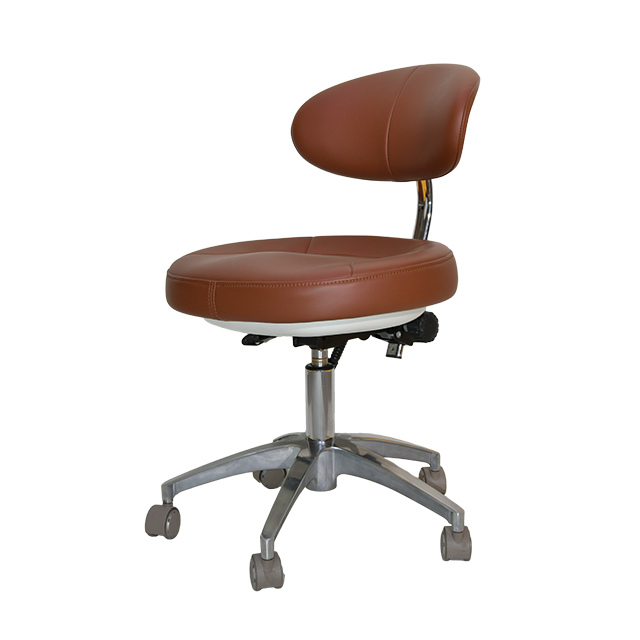
| RS-05 | U-shaped cushion, adjustable seat height, torso support | Whether the seat shape and additional support fit the user’s working posture |
| RS-06 | Eight-way adjustment, five-degree forward tilt | Whether the additional positioning options are useful for regular procedures |
| RS-07 | U-shaped seat, adjustable backrest and seat depth | Whether the seat dimensions and support adjustments fit the intended users |
Review the specifications for each model before requesting a quotation. In particular, confirm dimensions, adjustment ranges, materials, available colors, and any options required for your market.
How Can You Make the Final Dental Assistant Chair Decision?
Select the model that meets the confirmed clinical requirements and fits the available budget and maintenance arrangements. A structured comparison helps clinics avoid unsuitable purchases and helps distributors evaluate products on more than price alone.
Before placing an order, use this checklist:
- Fit: Does the stool accommodate the user’s height and normal working positions?
- Adjustment: Are the seat height and backrest settings suitable for the intended tasks?
- Comfort: Does the seat shape provide appropriate support during typical procedures?
- Mobility and stability: Do the casters and base suit the workspace and flooring?
- Maintenance: Are the upholstery and cleaning requirements compatible with clinic procedures?
- Commercial terms: Have the price, MOQ, delivery schedule, warranty, and spare-parts arrangements been confirmed?
- Model verification: Have you checked the specifications of the exact model being ordered?
Use the completed checklist to compare shortlisted models and verify the selected configuration before ordering.
Explore the ROSON dental stool range to compare available configurations. Not sure which model fits your clinic or distribution business? Contact us before you order.
About the Author