 EN
EN  ZH
ZH 
How Lighting Quality Influences Patient Perceptions

The moment a patient steps into your operatory, they are subconsciously evaluating the quality of care they will receive. While clinical skills are paramount, the physical environment plays a massive role in patient psychology. Lighting, often treated as a mere utility, is actually a critical determinant of patient comfort and perceived hygiene.
In my years consulting on clinic setups, I’ve seen state-of-the-art practices undermined by poor illumination that casts harsh shadows or creates a sterile, intimidating “interrogation room” vibe. Conversely, I’ve seen modest clinics transformed into premium environments simply by upgrading to high-fidelity LED systems.
This article explores the intersection of illumination technology and patient perception. We will look beyond the lux ratings to understand how color rendering, beam consistency, and ambient ratios influence the patient experience and your clinic’s brand authority.
The Psychology of Light: Color Temperature and Anxiety
Lighting does more than illuminate the oral cavity; it sets the emotional tone of the room. The color temperature of your operatory lights, measured in Kelvin (K), directly impacts patient anxiety levels.
Traditionally, halogen lights operated around 3000K–3500K, emitting a yellowish hue. While “warm,” this spectrum can often feel dated or dingy to modern eyes accustomed to the crisp white of digital screens. Modern LED operatory lights typically target a “Neutral White” or “Daylight” range of 4000K to 5500K.
The “Cleanliness” Signal
Patients associate cool, crisp white light with sterility and precision. A study of medical environments suggests that lighting in the 4000K–5000K range is perceived as “cleaner” and “more professional” than warmer tones. However, there is a threshold. Pushing beyond 5500K into the blue-white spectrum (6000K+) can feel cold, clinical, and anxiety-inducing.
The Clinical Compromise: CRI
For the clinician, the priority is the Color Rendering Index (CRI). You need a light source that renders colors accurately—specifically the red rendering index (R9)—to distinguish between healthy gingiva and inflamed tissue.
- Target: Look for a CRI of ≥90 and an R9 value of >50.
- Why it matters to patients: High CRI allows for accurate shade matching in restorative work. Nothing damages patient trust faster than a crown that looked perfect under the operatory light but looks mismatched in natural daylight.
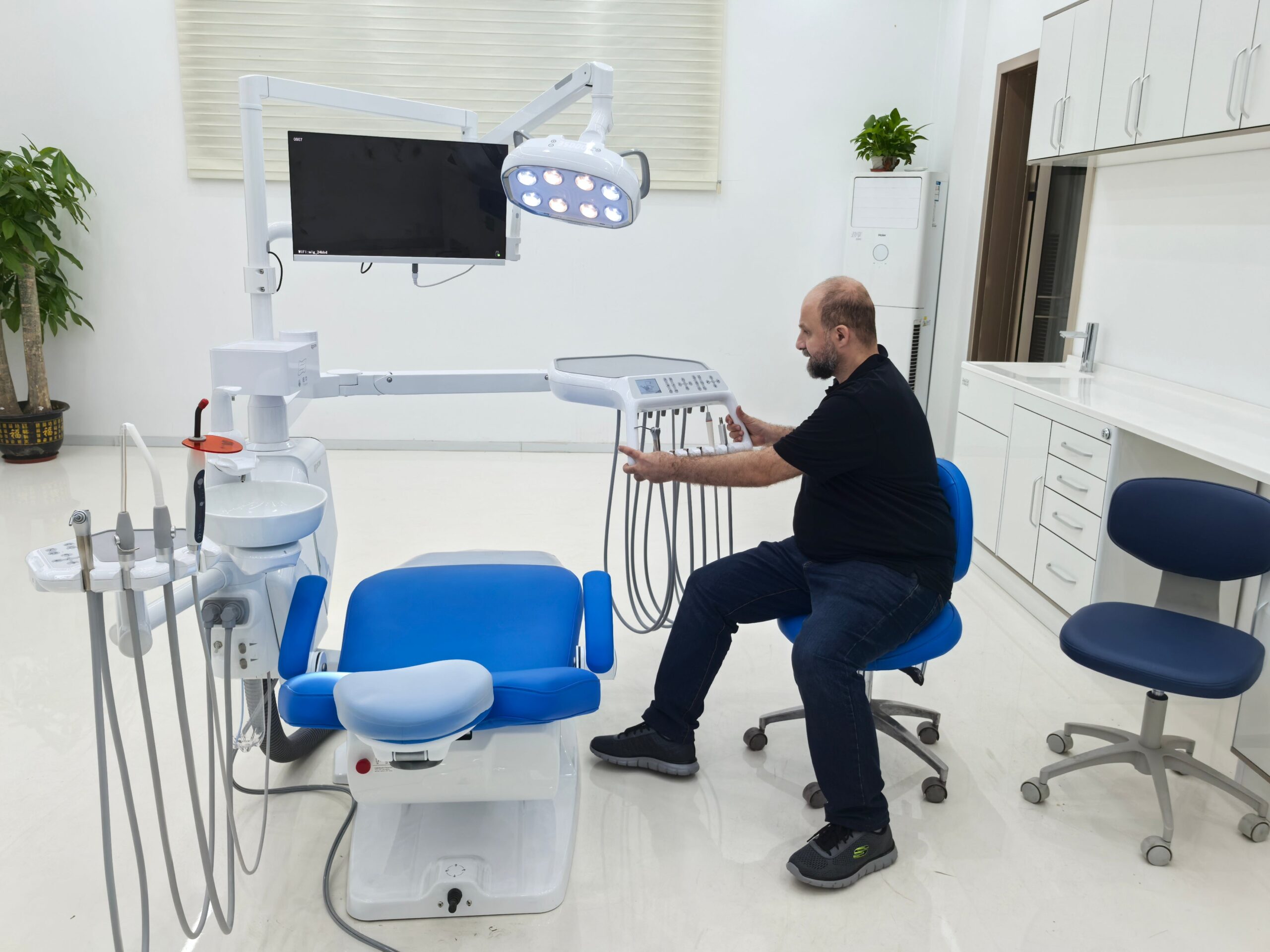
Intensity and Glare: The “Spotlight Effect”
A common complaint from patients is the feeling of being trapped under a harsh spotlight. This is often due to poor beam definition or excessive intensity without proper diffusion.
Managing Lux Levels
According to general ergonomic guidelines and standards referenced in reports like those from Frost & Sullivan, modern dental LEDs are capable of delivering anywhere from 8,000 to over 50,000 lux.
- General Examination: ~15,000–20,000 lux is sufficient and less blinding for the patient.
- Precision/Restorative: ~25,000–30,000 lux.
- Surgical: >40,000 lux.
Pro Tip: High-quality lights feature a “patient entry” mode (often dimmed to ~8,000 lux) or a “composite mode” (yellow filter). Use these. Never have the light at full intensity when the patient first sits down. It creates an immediate sensory shock.
The Soft Edge
The quality of the beam edge is a subtle but powerful factor. Cheaper lights often have a “hard edge”—a sharp line between bright light and total darkness. This causes eye fatigue for the dentist and a jarring visual experience for the patient. Premium lights use reflected LED technology or advanced diffusers to create a “soft edge,” blending the light gently into the surrounding area. This reduces the “interrogation” feel.
The Ambient-to-Task Ratio: Avoiding Contrast Strain
One of the most frequent errors I encounter in clinic design is the neglect of ambient lighting.
The 1:3 Ratio Rule
Ergonomic research supports a specific luminance ratio to prevent eye strain. The contrast between the operating field (the mouth) and the background (the rest of the room) should not exceed 1:3 (or 1:5 at the absolute maximum).
If your operating light is blazing at 25,000 lux but your room lights are dim (e.g., 500 lux), the ratio is 50:1. This forces the patient’s pupils (and yours) to constantly dilate and constrict as they shift their gaze.
- Result: Headaches and visual fatigue for the clinician; a disorienting, tunnel-vision experience for the patient.
- Solution: Ensure your ceiling lights provide adequate ambient illumination. If you use a very bright task light, you must increase the ambient light to match.
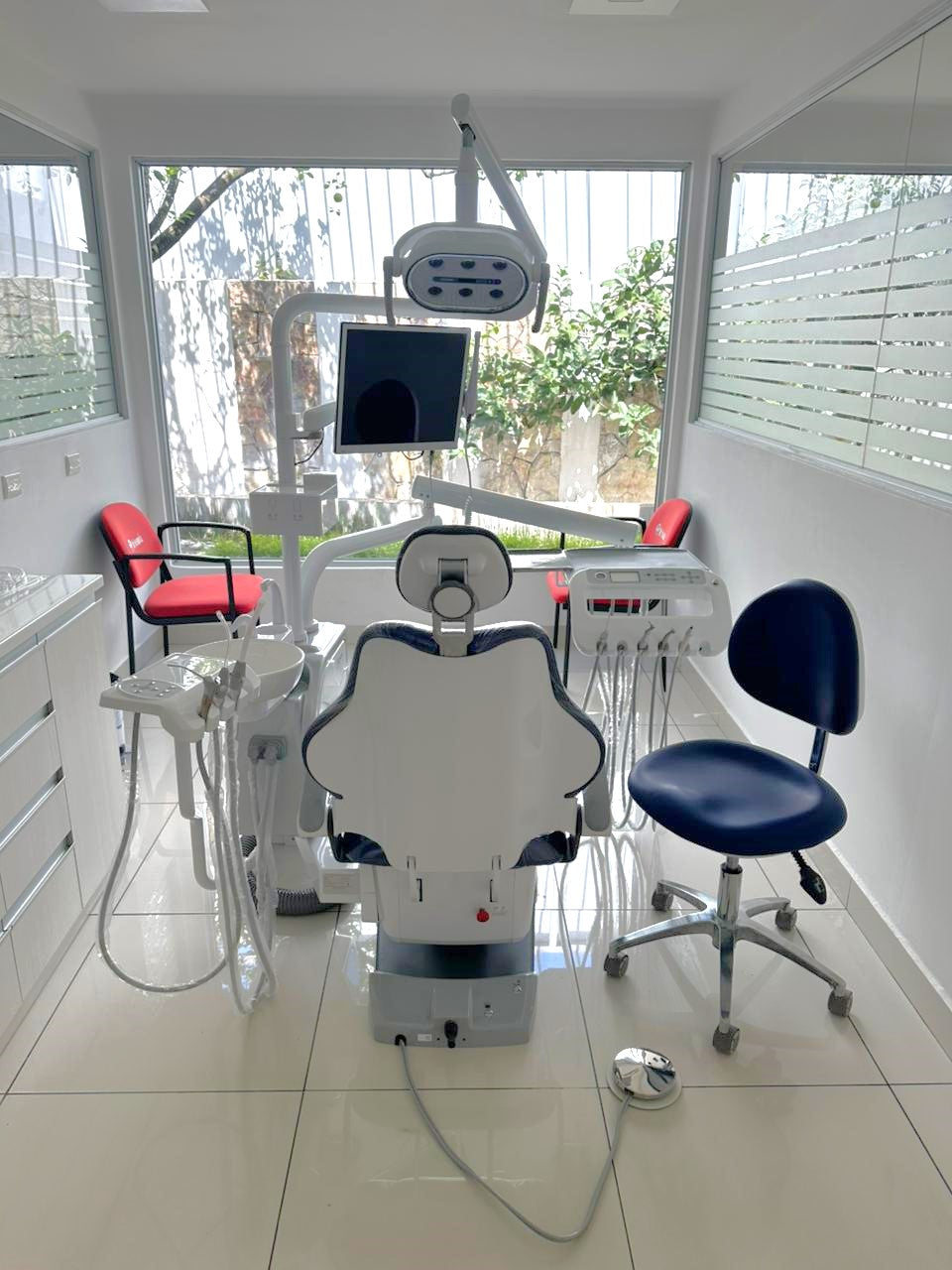
Common Misconception: “Dimming the Room Calms the Patient”
The Myth: Many practitioners believe that dimming the overhead room lights creates a relaxing, spa-like atmosphere.
The Reality: While valid for a hygiene lounge or waiting area, in the operatory, high contrast between a dark room and a blinding oral light triggers the “glare response.” It makes the task light feel significantly harsher.
Correction: Use dimmable ambient lighting. Keep it bright during the procedure to lower the contrast ratio, and only dim it during consultation or post-op discussions.
Technical Comparison: Halogen vs. LED
For clinics considering an upgrade, understanding the trade-offs is essential for both ROI and patient satisfaction.
| Feature | Traditional Halogen | Modern LED | Impact on Patient Experience |
|---|---|---|---|
| Heat Emission | High (Infrared output) | Low / Negligible | High: Halogen heat can dry out the oral cavity and make patients sweat/uncomfortable. LED keeps the face cool. |
| Color Temp | ~3500K (Yellowish) | 4000K–5500K (Daylight) | Medium: LED looks cleaner and more modern; Halogen can feel “dated.” |
| Fan Noise | Often noisy (cooling fans) | Silent (Passive cooling) | High: Fan noise contributes to auditory anxiety. Silent LEDs reduce sensory load. |
| Curing Risk | High premature curing | “Composite Mode” available | Medium: Prevents procedural delays that frustrate patients. |
Maintenance and Compliance
Maintaining your lighting is not just about functionality; it is a compliance issue. Standards such as ISO 13485 for medical device quality management emphasize the need for consistent performance of equipment.
The Degradation Curve
LEDs do not burn out like bulbs; they fade. An LED light head might lose 20-30% of its intensity over 5 years.
- Actionable Step: Use a light meter (lux meter) annually to verify your output. If a light rated for 30,000 lux is only delivering 18,000 lux, you are compromising visual acuity, which can lead to longer procedure times and increased patient discomfort.
Wrapping Up: Lighting as an Asset
Your operatory lighting is a silent ambassador for your practice. It signals cleanliness, precision, and modernity before you even say a word. By moving away from harsh, high-contrast lighting setups and embracing high-CRI, balanced LED systems, you reduce patient anxiety and create a workspace that supports clinical excellence.
Prioritize lights with variable intensity, “soft edge” beam profiles, and silent operation. Remember, in the competitive landscape of dental healthcare, the details—like not blinding your patient—are what build loyalty.
Frequently Asked Questions (FAQ)
Q: Can LED lights cure composites prematurely?
A: Yes, because standard white LEDs contain a blue spectrum peak that activates photo-initiators. Always choose a light with a dedicated “Composite Mode” or “Yellow Mode” (typically ~2700K) that filters out the blue wavelengths during material placement.
Q: What is the ideal distance for the light head from the patient?
A: The focal length for most dental lights is designed for 70–80 cm. Placing the light too close increases heat and limits the illuminated field; placing it too far reduces lux intensity significantly.
Q: How often should I replace my dental light?
A: Quality LED heads are rated for 30,000–50,000 hours. In a typical practice, this is 10–15 years. However, if the mechanical arm drifts or the lens becomes yellowed/scratched (reducing light quality), it should be serviced or replaced sooner.
Disclaimer: This article is for informational purposes only and does not constitute medical or professional advice. Standards and regulations regarding medical devices vary by region. Always consult with a qualified dental equipment technician or ergonomic specialist for your specific clinic needs.
About the Author