 EN
EN  ZH
ZH 
Ergonomic Dental Chair vs. Standard Dental Chair: Key Differences and Interesting Facts

Choosing between an ergonomic dental chair and a standard dental chair affects more than comfort. It shapes practitioner health, patient retention, and long-term equipment costs. This guide breaks down the key differences between the two, compares them across the factors that matter most for clinic decision-making, and helps you determine which option fits your practice’s volume, budget, and patient demographics.
What Is an Ergonomic Dental Chair
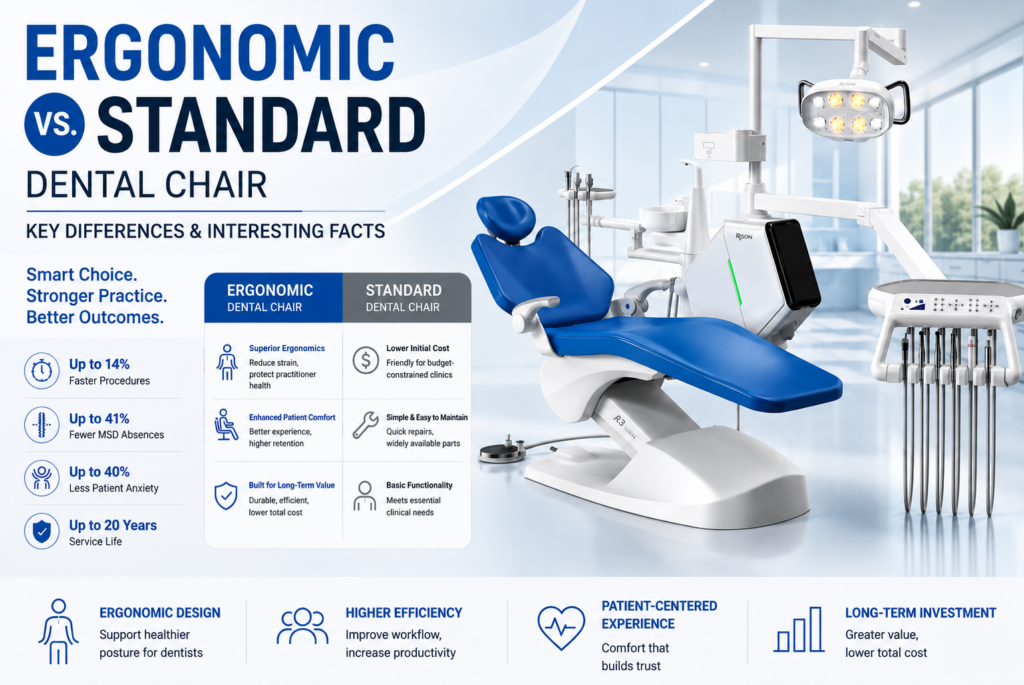
An ergonomic dental chair is a dental chair engineered to optimize both patient comfort and practitioner posture and motion during clinical procedures, going beyond basic functionality to support long-term physical well-being for the dentist as well as comfort for the patient.
Key Features: This type of chair typically includes a multi-joint headrest for precise positioning, memory positions for quick and repeatable adjustments, a hands-free spittoon that minimizes interruptions, and synchronized backrest-seat tilt that allows smoother, more natural transitions between positions throughout a procedure.
Pros:
- Reduces practitioner musculoskeletal strain during long or repetitive procedures
- Improves patient comfort during extended treatments
- Helps drive better patient retention over time
- Offers greater adaptability across different patient body types
- Supports more efficient workflows for high-volume practices
Cons: The trade-offs include a higher upfront cost and more complex internal components, which generally means specialized maintenance is required and repairs or replacement parts can take longer to source than with simpler chair designs.
What Is a Standard Dental Chair
A standard dental chair is a dental chair that meets basic seating, height-adjustment, and reclining functions without any dedicated posture-optimization design, focusing on core functionality rather than specialized ergonomics.
Key Features: These chairs are typically built with basic upholstery, a simple lift mechanism for height adjustment, and manual or basic foot control for reclining, keeping the overall design straightforward and easy to operate.
Pros:
- Lower upfront cost, making it accessible for new or budget-constrained clinics
- Simpler structure that’s easier to maintain
- Easier and faster repairs
- Widely available replacement parts
- Straightforward for staff to learn and operate
Cons: The downsides include limited posture support for practitioners during long-term daily use and reduced adaptability for patients with varied body types, both of which can become more noticeable as patient volume or case complexity increases.
Ergonomic vs. Standard Dental Chair: Key Differences
By examining patient comfort, operator posture support, adjustability, durability, maintenance, and price, you can quickly identify which chair offers better long-term value, improves daily working efficiency, reduces physical strain, and better meets the needs of both dentists and patients. The table below presents these differences clearly for easier evaluation.
| Comparison Factor | Ergonomic Dental Chair | Standard Dental Chair |
| Patient comfort features | Multi-point support, adjustable headrest, memory positions | Basic cushioning, fixed headrest |
| Operator posture support | Optimized seating angles, reduced lower-back strain | Limited support, fatigue over long-term use |
| Adjustability range | Full-range, synchronized adjustment | Single-direction, manual adjustment |
| Durability | Sturdy construction, higher-grade materials | Moderate, varies by brand |
| Maintenance complexity | Higher, requires specialized servicing | Lower, easy to repair |
| Price range | Mid to high-end | Entry-level to mid-range |
Ergonomic vs. Standard Dental Chair: Analysis and Insights
The comparison table above outlines the surface-level differences, but the real question for most clinics is where these differences actually translate into money, time, and patient outcomes. The five insights below unpack that.
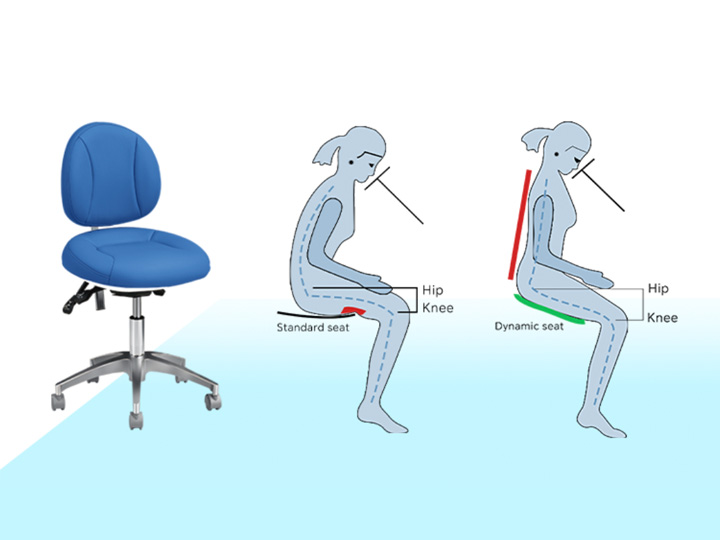
Ergonomic Pays Off Fastest in High-Volume Practices
In high-throughput clinics, ergonomics functions as much as a financial metric as a comfort feature — every unnecessary reach adds seconds that compound into lost billable hours over a year. That shows up in the numbers: practices using an ergonomic dental chair report around 14% faster procedures and up to 41% fewer staff absences from musculoskeletal strain.
These gains scale with volume: for a clinic running near capacity, they can help justify the higher upfront cost, while a practice with lighter daily usage may never generate enough volume for the difference to matter.
Total Cost of Ownership Matters More Than Price Tag
That volume-driven logic carries over into cost. A standard dental chair is more prone to issues like hydraulic leaks and brittle handpiece tubing, a major reason it typically requires 3–7% of its purchase price in annual upkeep, compared to just 1–2% for an ergonomic dental chair.
That maintenance gap compounds further with lifespan: a standard chair usually needs replacing every five to seven years, while a well-built ergonomic chair is often engineered for around 20 years of service. The deciding factor here tends to be time horizon — a shorter ownership window can make the standard chair the more efficient choice, while a longer one tends to favor the ergonomic option.
Patient Comfort Drives Retention
Comfort is another factor worth weighing, and one signal of how much a practice values its patients. Optimal support can lower patient anxiety by up to 40%, and smooth, quiet chair movement further reduces the “startle response,” which may help build trust over repeat visits.
Much of that comfort traces back to the chair itself — an ergonomic dental chair is purpose-built to deliver that support and smoothness consistently, while a standard dental chair relies more on basic cushioning, which may fall short for longer or more anxiety-prone visits.
Adjustability Matters More for Diverse Patient Demographics
One factor can carry particular weight regardless of budget: who the patients actually are. As populations grow more varied in age and physical needs, adjustability becomes less about comfort and more about safety — a wider range of body types and mobility levels means a chair needs to accommodate more than a one-size-fits-all setup.
Here, the gap tends to show up in precision rather than basic capability: an ergonomic dental chair typically goes further, with double-articulating headrests and removable armrests that ease positioning for pediatric or mobility-impaired patients, while a standard dental chair usually covers the essentials with less fine-tuned range.
Applications: Choosing Between Ergonomic and Standard Dental Chairs
When an Ergonomic Dental Chair Is the Better Choice
- High-volume clinics with heavy daily chair usage
- Long-duration procedures and oral surgery
- Clinics with diverse patient demographics
When a Standard Dental Chair Is the Better Choice
- New or budget-constrained clinics
- Low procedure volume or short-duration treatments
- Multi-chair buildouts prioritizing cost-efficiency over specialization
In short, an ergonomic dental chair fits practices where usage is heavy, procedures run long, or patients vary widely in age and body type. A standard dental chair, in contrast, fits practices where usage is lighter, budgets are tighter, or the priority is equipping multiple chairs efficiently.
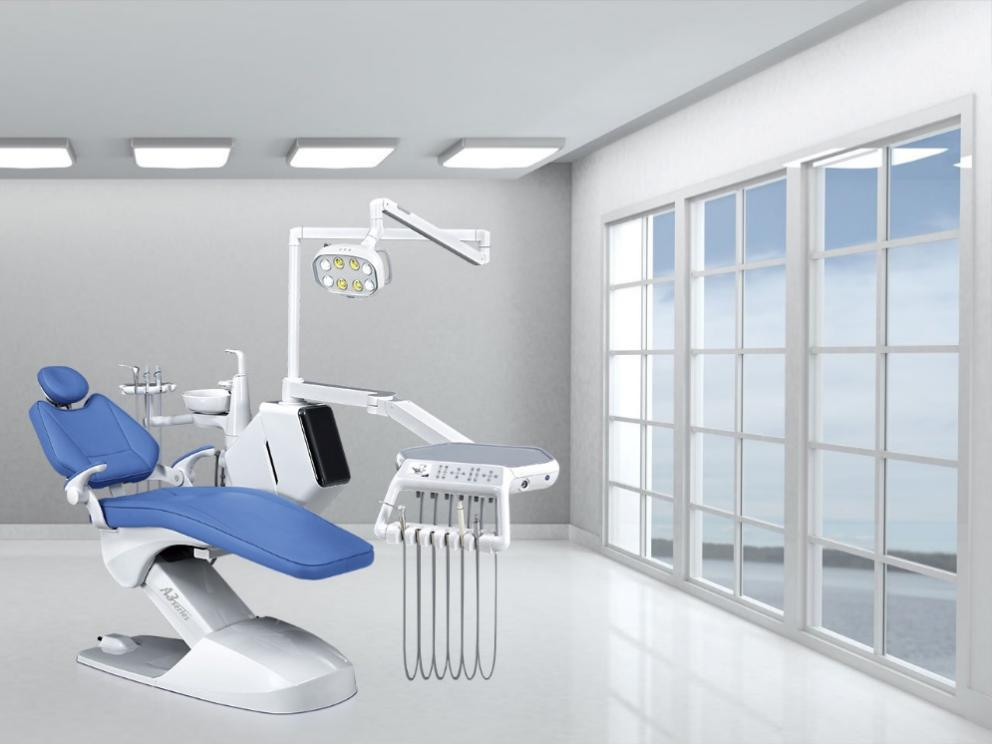
Best Ergonomic Dental Chair Recommendations: Roson Flagship Model A3
For practices ready to invest in an ergonomic dental chair, the ROSON Flagship A3 is worth considering. Built by a manufacturer certified to ISO 9001, ISO 13485, and CE standards, the A3 is positioned as a flagship model for high-demand clinics, combining ergonomic design with advanced disinfection and digital controls.
One standout detail is its four-level adjustable handpiece holder, with a 30°–80° range of motion that lets operators customize positioning for easier access and more comfortable reach during procedures. The A3 configuration also pairs with the RS06 ergonomically shaped dentist’s stool, which includes:
- Eight-way adjustability
- Ultra-breathable material
- Non-deformable cushioning
- 5°forward tilt capability
- 360°silent casters
- Sturdy aluminum alloy base
- Maintains natural spine curvature
- Prevents femoral artery blockage
Together, these features support the kind of sustained, comfortable posture that high-volume practices depend on — making the ROSON Flagship A3 a strong fit for clinics where practitioner wellbeing and workflow efficiency are top priorities.
Conclusion: Finding the Right Fit for Your Practice
Choosing between an ergonomic and standard dental chair ultimately depends on your clinic’s volume, budget, and patient demographics — each offers real advantages for different practice needs. For clinics ready to invest in an ergonomic upgrade, the ROSON Flagship A3 combines posture-optimized design, advanced disinfection, and lasting comfort in one integrated system. Contact us today to find the chair that best fits your practice.
FAQs: Ergonomic vs. Standard Dental Chair
Q1: Is there an official certification for “ergonomic” dental chairs?
No dedicated certification exists specifically for “ergonomic” design. Both standard and ergonomic dental chairs fall under the same general international standard, ISO 7494-1 (which superseded ISO 6875:2011), covering general safety and performance requirements for dental patient chairs, alongside broader medical device certifications like ISO 13485 and CE marking. “Ergonomic” is a design descriptor rather than a certified category, so buyers should evaluate specific engineering features rather than rely on the label alone.
Q2: Can a standard dental chair be upgraded with ergonomic features later?
Partially. Some elements can be added after purchase — such as replacing upholstery with contoured, pressure-distributing versions, or adding compatible accessories. However, core ergonomic mechanisms like synchronized backrest-seat tilt and multi-joint headrest articulation are built into the chair’s frame and control system, and generally cannot be retrofitted without replacing the chair itself.
Q3: Do ergonomic dental chairs require special training to operate?
Not extensive training. Most ergonomic controls — memory positions, foot pedals, hands-free spittoons — are designed for intuitive use and follow a similar operating logic to standard chairs. Practices typically receive a brief orientation from the manufacturer or distributor during installation, comparable to onboarding for any new equipment, rather than formal certification.
References
- Smart Dental Chair Investment: Unmasking Hidden Costs
- Boost Clinic ROI: Efficient Dental Operatory Design Guide
- Dental Chair Ergonomics: Boosting Patient Comfort & Reducing Anxiety
About the Author