 EN
EN  ZH
ZH 
Dental Stool Seat Shapes Explained: Flat, Contoured, U-Shaped, or Saddle?

A dental stool affects how easily a dentist or assistant can sit, turn, reach instruments, and approach the patient. However, no single seat shape suits every operator.
Flat, contoured, U-shaped, and saddle seats support the body differently. Buyers should compare freedom of movement, thigh support, sitting position, and daily working habits rather than choosing a stool by appearance alone.

How Does Dental Stool Seat Shape Affect Working Posture?
Dental stool seat shape affects how the user positions the thighs, hips, and upper body during treatment.
A flat seat allows frequent position changes. A contoured seat guides the user toward the center. A U-shaped seat changes the support around the thighs and central sitting area, while a saddle seat creates a wider, straddled position.
| Seat Shape | Typical Sitting Experience | Main Point to Consider |
| Flat | Familiar and unrestricted | Freedom to shift position |
| Contoured | Guided and centered | Fit around the hips and thighs |
| U-shaped | Open or recessed center | Thigh clearance and support |
| Saddle | Wider, straddled position | Comfort with the divided seat |
Why Is Seat Shape Only One Part of Dental Ergonomics?
A suitable dental stool must support both seated comfort and normal chairside movement.
Dentists and assistants regularly rotate, lean forward, reach for instruments, and move around the patient chair. A seat may feel comfortable when the user sits still but become restrictive during treatment.
Back support also affects the sitting experience. Some users prefer regular lumbar support, while others need more freedom to rotate. The seat, backrest, base, and casters should therefore work as one complete system.
What Is a Flat Dental Stool Seat Best Used For?
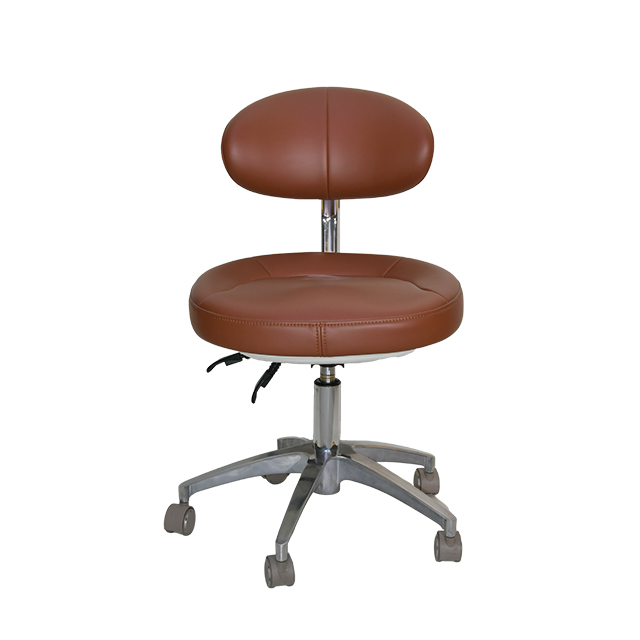
A flat dental stool suits users who prefer a familiar sitting surface and frequent position changes.
Because the seat does not strongly guide the hips or legs, the operator can move toward either side, shift body weight, or sit closer to the front edge.
A flat design may also suit clinics, schools, and training centers where several people share the same stool. Different users can adapt their sitting position without having to fit a strongly shaped seat.
What Are the Main Advantages of a Flat Seat?
The main advantage of a flat seat is freedom of movement.
The user can rotate, move the legs, or shift weight without following a fixed seat profile. This may benefit dentists and assistants who frequently reposition themselves around the patient.
Common reasons to choose a flat dental stool include:
- A familiar sitting position
- Simple entry and exit
- Freedom to shift weight
- Suitability for multiple users
- Compatibility with varied working habits
What Limitations Should Buyers Consider?
A flat seat provides less positional guidance than a shaped seat.
Some users may slide forward, sit unevenly, or feel that the seat provides insufficient support during longer procedures. The front edge can also create pressure if the stool is positioned too high or the cushioning feels too firm.
Buyers should therefore assess the complete seat profile rather than assuming all flat stools provide the same experience.
How Does a Contoured or U-Shaped Dental Stool Differ?
Contoured and U-shaped stools provide more structured support than a basic flat seat.
A contoured seat uses curves or raised areas to guide the user toward a central position. A U-shaped design includes an open or recessed section that changes how the seat supports the thighs and central area.
These designs may suit users who want a more repeatable sitting position. However, an overly narrow, deep, or strongly shaped seat can restrict movement.
How Does a Contoured Seat Guide the Sitting Position?
A contoured seat guides the user by shaping the contact area around the hips and thighs.
The design helps the operator identify a consistent sitting position each time. This may reduce unwanted sliding and provide a more defined sense of support.
However, stronger contouring also reduces freedom. A dentist who frequently sits sideways or near the front edge may prefer a flatter design.
What Is the Purpose of a U-Shaped Seat?
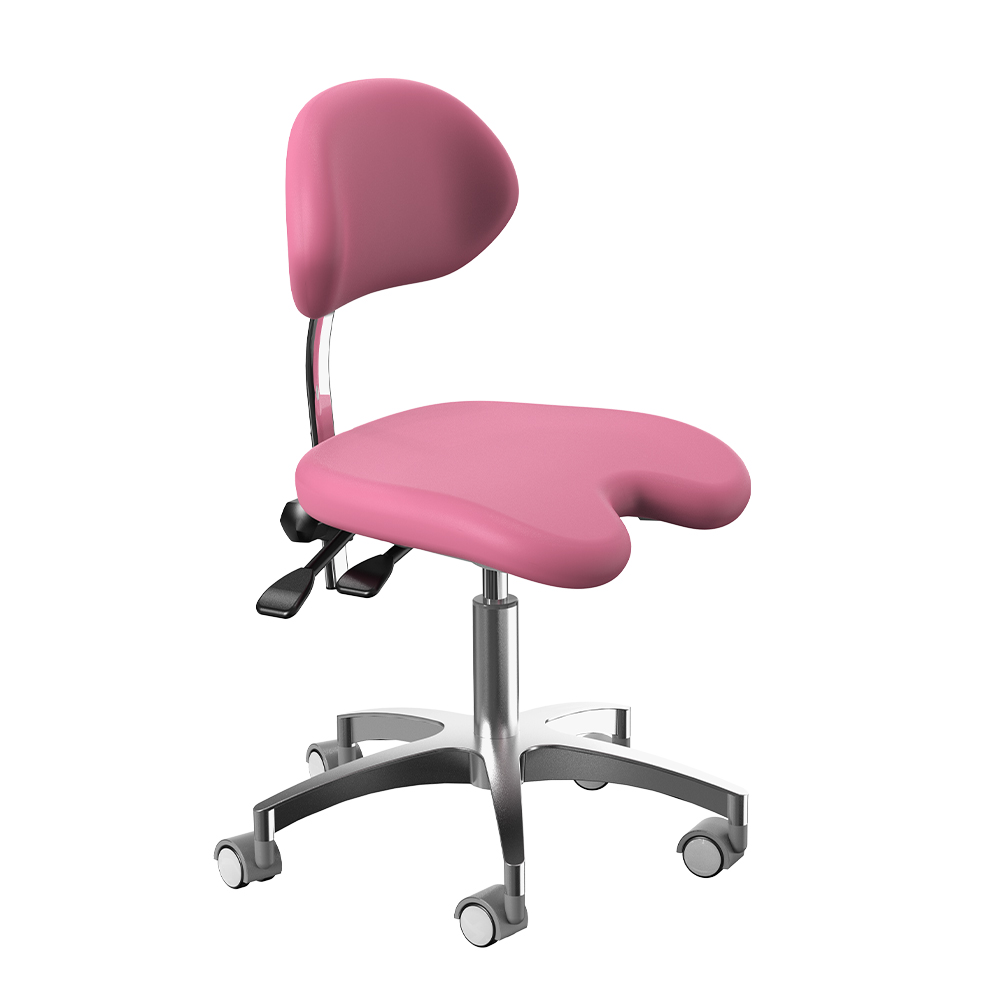
A U-shaped seat creates additional space around the front or center while supporting the user on both sides.
This shape may make it easier to keep the legs apart or move closer to the patient chair without a wide front edge blocking the working position.
Roson identifies the RS-07 and RS-05 as stools with U-shaped seat designs. The RS-05 includes high-density rebound cushioning, an ergonomically tilted seat, adjustable seat height, an adjustable foot ring, and torso support that can be configured for left- or right-hand operation.
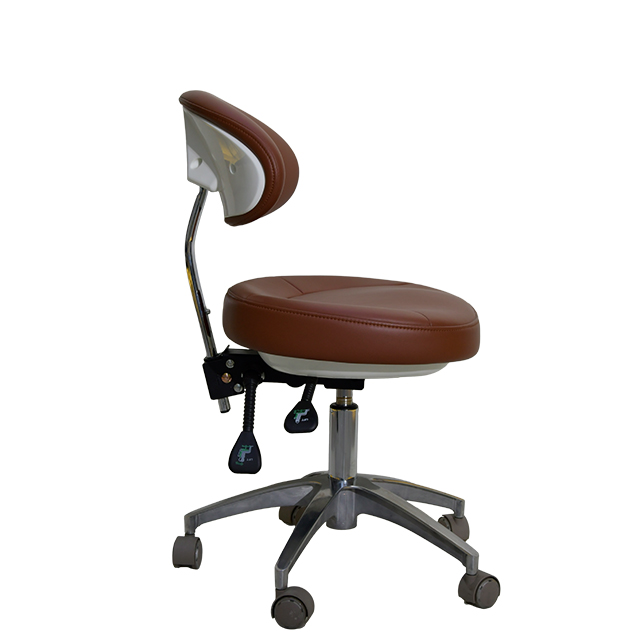
The RS-07 uses a U-shaped ventilation structure and a 20-degree angled leg-support area. Its backrest reclines between 90 and 110 degrees, while the seat depth can be adjusted from 300 to 428 millimeters.
Who May Prefer These More Structured Seat Designs?
Contoured and U-shaped seats may suit users who prefer defined support and a centered sitting position.
They may be useful during procedures that require the operator to remain stable while making smaller hand and upper-body movements.
However, operators who frequently move from side to side may find a strongly shaped seat restrictive. The seat should support the user without preventing normal chairside movement.
When Should You Choose a Saddle Dental Stool?
A saddle dental stool may suit users who prefer a wider leg position and a divided sitting surface.
The raised central section places the legs on opposite sides of the seat. This creates a noticeably different position from sitting on a flat or traditionally contoured stool.
A saddle design may also allow the operator to approach the patient while keeping the legs apart. However, users accustomed to conventional seating may need time to adapt.
How Does a Saddle Seat Change the Sitting Position?
A saddle seat places the user over the center of the stool with the thighs angled outward or downward.
This design can encourage a more open sitting position, but seat width and shape strongly affect comfort. A seat that feels too wide may create pressure around the inner thighs, while a narrow seat may provide insufficient support.
The operator should also consider whether the divided seat fits comfortably around the base and side structures of the dental chair.
What Does the Roson Dental Stool Range Offer?
Our dental stool range combine adjustable support, mobile bases, easy-clean surfaces, and several seat designs.
The official range includes the RS-07, RS-06, RS-05, and RS-03. Shared features listed for the range include adjustable seat height and backrests, 360-degree rotation, high-density foam cushioning, durable upholstery, five-star bases, and smooth-rolling casters.
Which Shared Features Are Listed for Roson Dental Stools?
Our dental stools focus on adjustability, support, mobility, and surface maintenance.
The RS-06 provides eight-way adjustment, a five-degree forward-tilt function, and 360-degree silent casters. These controls allow users to adapt the stool position and move around the treatment area.
The RS-03 includes pneumatic height adjustment, a support arm, an aluminum base, and quiet casters intended for movement across hard floors.
Available features vary by model. Distributors should therefore avoid presenting every function as standard across the complete range.
Conclusion: Which Dental Stool Seat Shape Should You Choose?
Choose the seat shape that supports normal chairside movement without causing unwanted pressure or restricting access to the patient.
A flat seat provides familiarity and freedom. A contoured seat offers stronger positional guidance. A U-shaped seat creates more space around the center and thighs, while a saddle seat provides a divided, wider sitting position.
We offer multiple dental stool models for clinics, distributors, schools, and training centers. Explore the our dental stool range to compare available designs, or contact us for dental stool options that match your customers’ working preferences and treatment environments.
About the Author