 EN
EN  ZH
ZH 
Positioning Patients for Comfort and Treatment Access

The Foundation of Ergonomic Dentistry: Practitioner and Patient Health
Proper patient positioning is not a matter of simple convenience; it is a core component of effective and sustainable dental practice. For the practitioner, it forms the bedrock of career longevity by preventing chronic musculoskeletal strain. For the patient, it transforms the treatment experience, fostering comfort and cooperation. Achieving this balance requires a conscious and practiced approach to ergonomics.
The Clinician’s Posture: Preventing Chronic Strain
Many clinicians develop persistent neck, back, and shoulder pain over time. I’ve seen it happen to colleagues who ignored early warning signs. The culprit is often a workspace that forces them into awkward postures for hours. The most common mistake is setting the patient chair too low, causing the clinician to hunch forward, leading to lumbar flexion and spinal loading.
The simple fix that made a huge difference for me was learning to bring the patient to my ideal working posture, not the other way around. The goal is to have the patient’s oral cavity aligned with your elbow height while your forearms remain roughly parallel to the floor. This single adjustment minimizes shoulder elevation and reduces static muscle fatigue significantly. Always start by adjusting your own stool for a stable base with your feet flat on the floor, then adjust the patient chair height to meet your needs.
Patient Comfort as a Clinical Advantage
A comfortable patient is a cooperative patient. When a patient feels secure and supported, they are less likely to be anxious or make sudden movements, which directly enhances treatment precision and safety. The design of the dental chair itself plays a crucial role here.
Cushioning, for instance, is a critical feature. In a busy clinic environment, a medium-firm density cushion is often preferable. It prevents the feeling of ‘bottoming out’ during long procedures, which can create pressure points and discomfort, while still effectively distributing the patient’s weight. This small detail can significantly improve patient tolerance for extended treatment sessions.
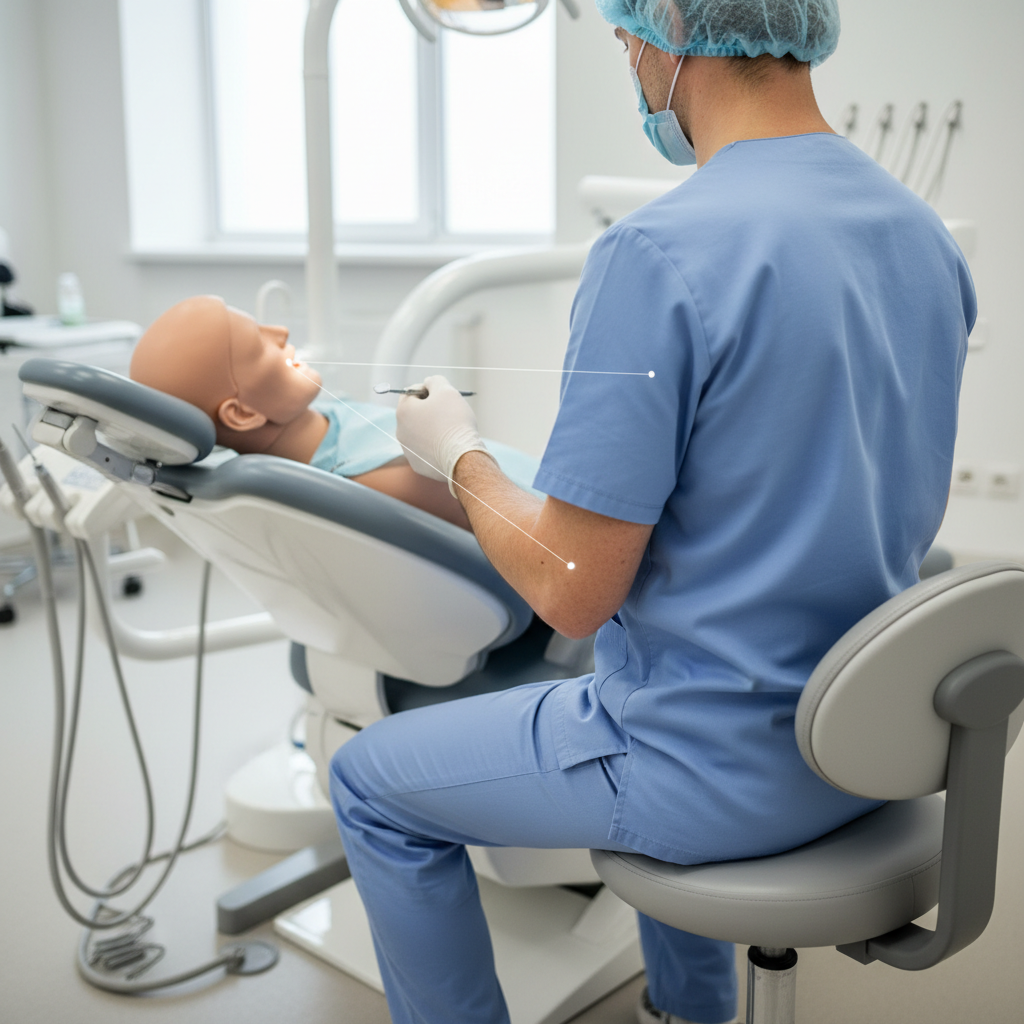
Mastering Chair Adjustments for Optimal Access and Comfort
Once the ergonomic foundation is set, the next step is to master the dynamic adjustments required for specific dental procedures. A systematic approach ensures consistency and efficiency.
A Step-by-Step Guide to Initial Patient Setup
- Start Upright: Greet the patient with the chair in a fully upright position to facilitate easy entry and conversation.
- Seat the Patient: Ask the patient to sit all the way back in the chair, so their back is fully supported.
- Adjust the Headrest: The headrest should be locked securely under the occipital bone (the bony ridge at the back of the skull). This provides stable head support and prevents the patient from sliding.
- Lower and Recline: Inform the patient you are about to recline the chair. Smoothly lower the chair base and then tilt the backrest to the appropriate angle for the scheduled procedure.
Procedure-Specific Positioning: A Clinical Guide
Different procedures demand different lines of sight and access angles. Over-relying on one default position compromises both ergonomics and visibility. I’ve found that logging the optimal angles for the three most common procedures in my practice (exam, restorative, extraction) was a game-changer for consistency. Here is a baseline guide for adjusting chair positions.
| Procedure | Recommended Backrest Recline | Headrest Position | Clinical Rationale |
|---|---|---|---|
| Routine Exams & Cleanings | 20–30 degrees | Neutral; slight chin-up tilt | Provides good overall visibility of the oral cavity without causing patient discomfort. |
| Restorative (e.g., Fillings) | 20–45 degrees | Articulated to match arch access | A steeper recline can improve access to posterior teeth, but adjust incrementally to avoid patient swallowing difficulties. |
| Surgical & Endodontic | 0–10 degrees (Near-Supine) | Tilted back for maxillary arch | This position provides optimal access and control for complex procedures and helps manage irrigation and debris. |
| Impressions | 45-60 degrees (Semi-Upright) | Neutral | Helps prevent gagging and allows the patient to manage their airway more comfortably. |
Key Dental Chair Design Features That Enhance Positioning
Modern dental chairs incorporate specific design elements that make achieving ideal positioning easier and more intuitive. When evaluating equipment, look beyond the basic specifications and consider features that directly impact daily workflow.
Beyond Basic Adjustments: The Role of Advanced Features
A thin, narrow backrest design is a significant ergonomic advantage, as it allows the clinician to get closer to the patient without needing to lean forward excessively. Likewise, a double-articulating headrest offers a far greater range of motion, making it easier to position the patient’s head for optimal access to both the maxillary and mandibular arches. For high-volume clinics, chairs with programmable memory positions can save valuable time between appointments by automatically moving to a preset entry/exit or treatment position.

Upholstery and Maintenance: Durability Meets Infection Control
Upholstery is a primary point of patient contact and a critical element for infection control. Designs featuring modular, seamless upholstery are superior for high-turnover settings. They eliminate stitching where contaminants can accumulate and allow for easy replacement of worn or damaged sections without taking the entire chair out of service. When you see visible stress on seams, it’s a reliable predictor that the cover will fail within months—it’s more cost-effective to replace it proactively.
A common misconception is that a frequently loosening headrest screw indicates wear and tear. More often, it’s a sign of slight patient misalignment, causing them to push against the lock. Re-adjusting the patient’s head to rest comfortably in the headrest cradle often solves the problem without any tools. It’s also vital to use appropriate disinfectants. Using high-alcohol solutions on upholstery not rated for them will cause cracking and premature failure.
Accommodating All Patients: Special Positioning Considerations
A truly patient-centric practice is prepared to accommodate everyone. This requires considering patients who may have different needs than the average.
Bariatric Patients and Patients with Limited Mobility
For bariatric patients or those with mobility challenges, chair selection is paramount. Key features to look for include a higher weight capacity, a reinforced frame for stability, and a wider seat plate. Perhaps most important are sturdy, removable armrests. These allow for safe and dignified lateral transfer from a wheelchair, a feature that is indispensable for accessibility.
The Importance of Certified Quality and Safety
Finally, the mechanical integrity and safety of a dental chair are non-negotiable. Manufacturing that adheres to internationally recognized quality management systems, such as those outlined in ISO 13485:2016, provides assurance of a product’s reliability. Furthermore, to be sold in major markets, equipment must comply with stringent regulatory standards. This includes regulations like the FDA’s Quality System Regulation in the United States and the European Union’s comprehensive Medical Device Regulation (MDR). These frameworks govern everything from design and material sourcing to manufacturing processes and post-market surveillance, ensuring the device is safe for clinical use.
Key Takeaways
Mastering patient positioning is a skill that pays daily dividends in any dental practice. By focusing on clinician ergonomics, you protect your long-term health and career. By tailoring chair adjustments to specific procedures, you enhance precision and efficiency. And by choosing equipment with thoughtful design features, you create a safer, more comfortable environment for your patients. This integrated approach elevates the quality of care, improves patient satisfaction, and builds a more sustainable and successful practice.
Disclaimer: This article is for informational purposes only and does not constitute professional medical advice. The ergonomic and positioning suggestions provided are general guidelines. Clinicians should use their professional judgment to ensure patient safety and comfort. Always consult equipment manuals for specific operational and maintenance instructions. Practices should ensure they accommodate patients with special needs in compliance with all applicable regulations.
References
About the Author