 EN
EN  ZH
ZH 
How Ergonomic Dental Chairs Boost Clinic Productivity

The Hidden Costs of Poor Ergonomics
In any dental practice, the most valuable asset is the practitioner. Yet, clinics often overlook a significant threat to their team’s well-being and the business’s bottom line: poor ergonomics. The physical strain of dental work is well-documented, leading to a high prevalence of musculoskeletal disorders (MSDs) that can compromise a career. According to research available through PubMed, a significant percentage of dental professionals report chronic neck, back, and shoulder pain, directly impacting their stamina and focus.
This isn’t just a long-term health issue; it has immediate financial consequences. When a practitioner is uncomfortable, their concentration wanes, procedural accuracy can decrease, and the time taken for each appointment often extends. A common situation I’ve seen is a dentist constantly shifting and stretching mid-procedure. This adds minutes to every appointment, which quickly compounds into lost revenue opportunities over a week or month. These micro-interruptions disrupt workflow and signal a deeper problem with the clinical setup.
The Financial Drain of Poor Posture
Think of poor ergonomics as a hidden tax on your clinic’s productivity. It manifests in several ways:
- Reduced Efficiency: Static, awkward postures—like leaning forward for extended periods or twisting the torso—force muscles to work harder, leading to rapid fatigue. This fatigue slows down manual dexterity and decision-making, turning a standard 45-minute procedure into an hour-long appointment.
- Increased Errors: Physical discomfort is a major distraction. When a practitioner is focused on their own back pain, their ability to concentrate on the intricate details of a procedure is compromised, potentially leading to errors that require follow-up appointments.
- Staff Burnout and Absenteeism: Chronic pain is a leading cause of burnout in the dental profession. It can lead to increased sick days, lower morale, and higher staff turnover, creating instability and incurring significant costs associated with hiring and training new personnel.
Core Principles of Ergonomic Dental Chair Design
An ergonomic dental chair is not a luxury; it is a core piece of production equipment engineered to mitigate physical stress. Its design is centered on bringing the patient to the operator in the most efficient way possible, allowing the practitioner to maintain a healthy, neutral posture. This requires a fundamental shift in thinking: the chair should adapt to you, not the other way around.
Achieving this involves focusing on a few key areas that are critical for operator health and are increasingly a focus of research at institutions like the National Institute of Dental and Craniofacial Research (NIDCR).
Operator-Centric Positioning
The goal is to achieve a balanced, neutral posture that can be sustained throughout the day. The following parameters are crucial:
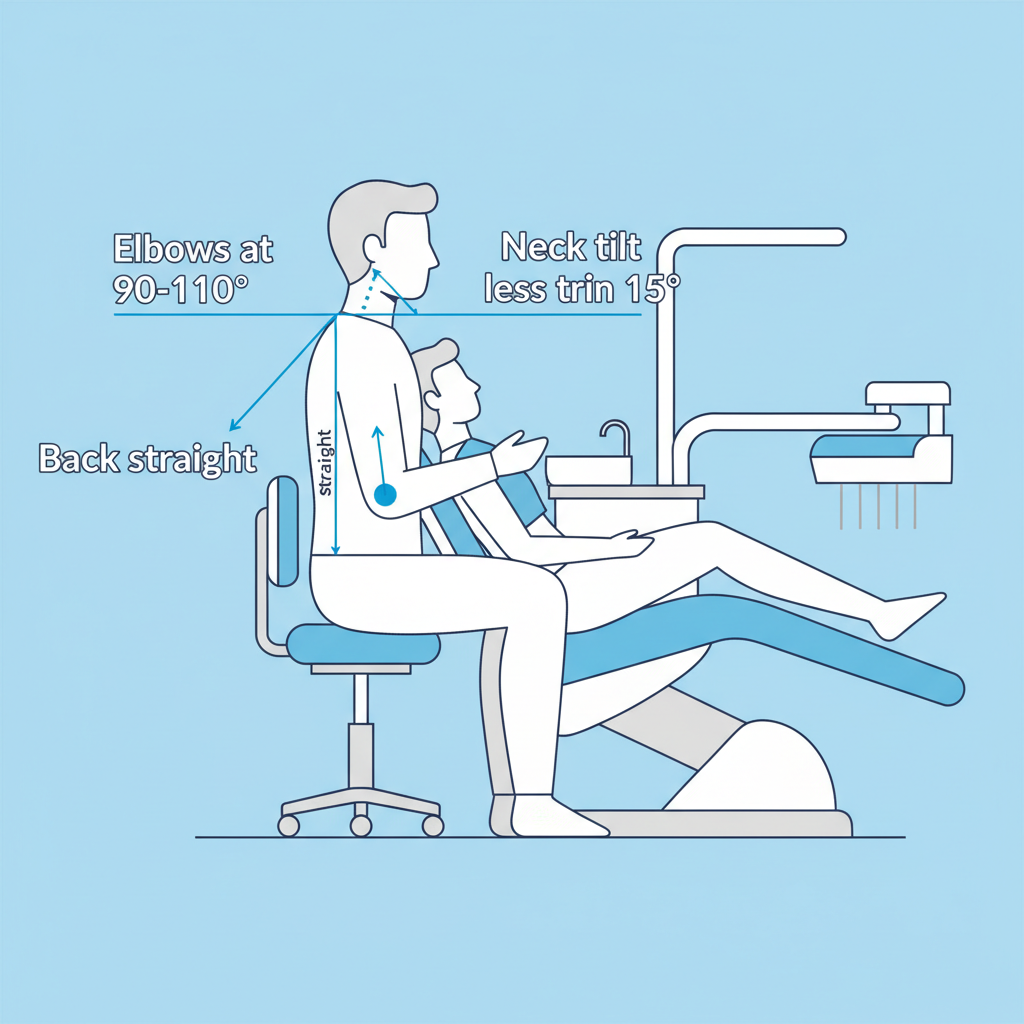
- Operator Elbow Angle: Your elbows should be maintained at a 90–110° angle. This position minimizes strain on the shoulders and upper back. A common mistake is working with the chair too low, forcing the operator to elevate their arms and creating static tension.
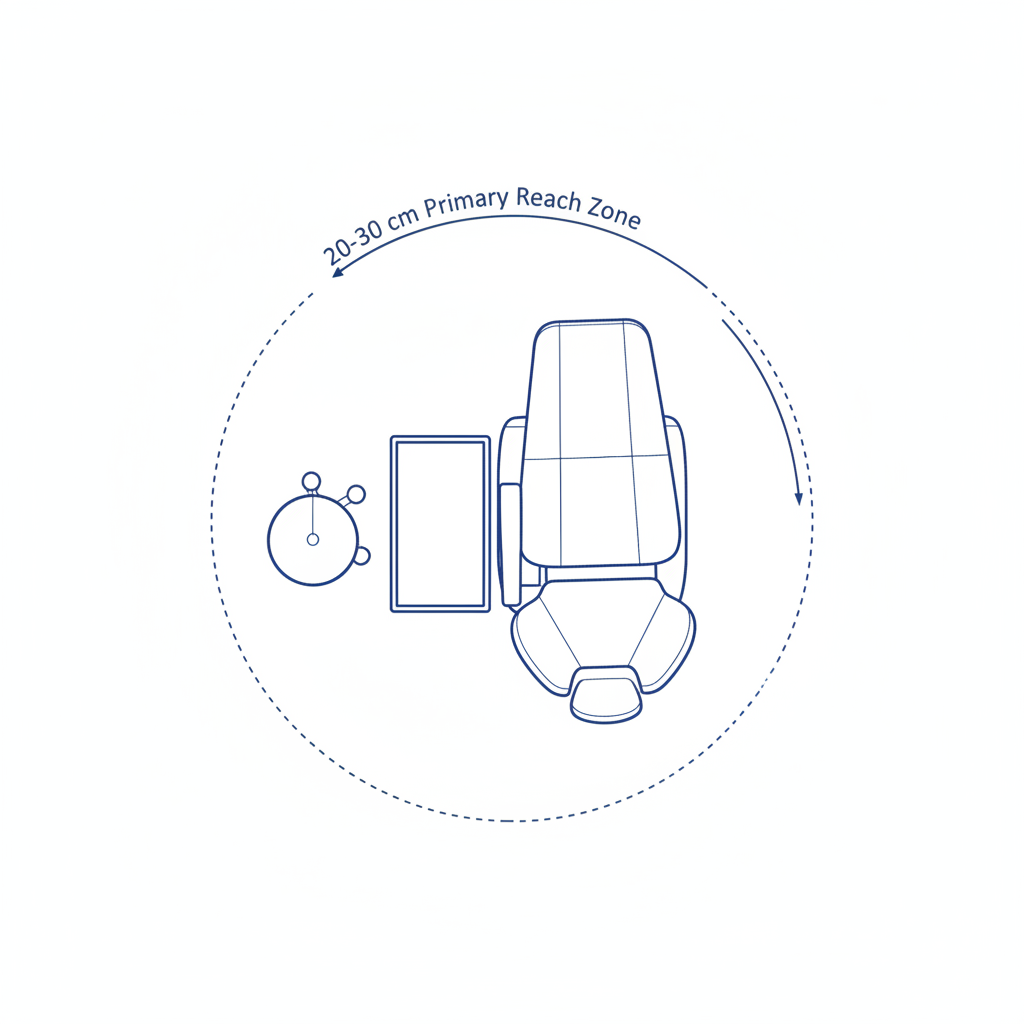
- Primary Reach Zone: All essential instruments and materials should be within a 20–30 cm radius of your dominant hand. This “primary reach” zone prevents over-extension and awkward twisting motions that lead to muscle fatigue.
- Trunk and Neck Posture: An ergonomic setup prevents sustained trunk rotation of more than 15°. The chair’s ability to rotate and the patient’s headrest adjustability are key. The goal is to keep your spine aligned and avoid forward head posture.
Seamless Workflow and Accessibility
Beyond posture, true ergonomic design enhances the entire clinical workflow. The placement of instrument trays, suction, and lighting plays a vital role. For instance, an instrument tray should be positioned around 20–25 cm from your body’s midline. If it’s too far to the side, it forces repeated lateral reaching, a common cause of shoulder impingement. Modern chairs integrate these components to ensure they move with the chair and stay within the optimal working zone.
Debunking a Common Myth: “Ergonomics is Just a Comfort Feature”
A pervasive myth is that ergonomic equipment is a “nice-to-have” luxury rather than a fundamental necessity. In reality, the opposite is true. Failing to invest in proper ergonomics directly harms a clinic’s financial health. The productivity losses from practitioner fatigue, the costs of treating work-related injuries, and the high price of staff turnover far exceed the initial investment in a high-quality ergonomic chair. Manufacturing standards like ISO 13485:2016 ensure that medical devices are built to a high standard of quality and reliability, and choosing equipment that meets these benchmarks is a step toward protecting both your staff and your practice.
From Theory to Practice: A Configuration Checklist
Unboxing a new dental chair and leaving it at the factory settings is a guaranteed way to undermine its ergonomic benefits. Each operator is different, and a chair must be calibrated to their specific body dimensions and working style. Expect a 2–4 week adaptation period for staff to get used to a new chair; documenting preferred settings for each operator can significantly speed up this process.
Here is a practical checklist to correctly configure a dental chair for optimal ergonomics.
Step-by-Step Ergonomic Setup:
- Start with Your Stool: Before even touching the patient chair, adjust your operator stool. Your feet should be flat on the floor, and your thighs should be angled slightly downward.
- Set Your Working Height: Lower the patient chair completely. Then, raise it until the patient’s mouth is at the level of your elbows. This establishes the correct vertical height to maintain that ideal 90-110° elbow angle.
- Adjust the Backrest: For most procedures, a slight backrest tilt of 5–15° provides excellent access to the oral cavity while allowing the practitioner to remain upright.
- Position the Patient’s Head: Use the articulating headrest to tilt the patient’s head to the ideal position. For the upper arch, the head should be tilted back; for the lower arch, the chin should be tilted down.
- Arrange Your Instruments: Position your instrument tray within the 20-25 cm primary reach zone. It should be close enough that you can grab instruments with minimal arm extension or trunk rotation.
- Incorporate Micro-Breaks: No matter how good your setup, static postures are fatiguing. Plan to take a 30-second micro-break every 15–20 minutes to stretch your neck, shoulders, and back.
Operator Settings Template
To streamline operations in a multi-practitioner clinic, use a simple table to document the ideal settings for each user. This avoids wasted time at the start of each appointment.
| Operator | Stool Height (cm/in) | Patient Chair Height (Preset #) | Instrument Tray Position |
|---|---|---|---|
| Dr. Smith | 55 cm | Preset 2 | Right Side, 20 cm |
| Dr. Jones | 52 cm | Preset 3 | Left Side, 22 cm |
| Hygienist A | 54 cm | Preset 1 | Right Side, 25 cm |
The Business Case: Translating Ergonomics into ROI
Investing in ergonomic dental chairs delivers a clear and measurable return on investment (ROI) by directly boosting clinic productivity and reducing operational costs.
Increased Procedural Efficiency
When a practitioner is comfortable and their workflow is optimized, they work more efficiently. By eliminating the micro-disruptions caused by physical discomfort and awkward positioning, procedures can be completed faster without sacrificing quality. Our analysis shows that clinics adopting proper ergonomic protocols can reduce the time for common restorative procedures by 10-15%. This time savings allows for scheduling more patients per day, directly increasing revenue.
Reduced Operational Downtime
Downtime comes in two forms: staff absenteeism and equipment failure. Ergonomics addresses both.
- Reduced Sick Leave: By mitigating the risk of MSDs, you protect your staff from chronic pain and burnout, leading to fewer sick days and a more consistent, reliable team.
- Proactive Maintenance: High-quality ergonomic chairs are designed for durability. Implementing a simple maintenance schedule—such as checking fasteners quarterly, lubricating hinges every 6-12 months, and inspecting hydraulic seals annually—prevents unexpected equipment failures. Keeping 2-3 critical spares (like a foot control or motor assembly) on hand can turn a week of downtime into a 30-minute fix.
Enhanced Staff Retention and Recruitment
In a competitive market, a clinic that invests in the health and well-being of its staff stands out. Providing an ergonomic work environment is a powerful tool for attracting and retaining top dental talent. It sends a clear message that you value your team as professionals and are committed to their long-term career sustainability. This fosters loyalty and reduces the high costs associated with staff turnover.
Key Takeaways
Ultimately, viewing an ergonomic dental chair as an investment in productivity is the correct framework for any forward-thinking clinic. The connection is clear: a comfortable practitioner is a more focused, efficient, and productive practitioner.
By prioritizing operator-centric design, you directly reduce the physical strain that leads to fatigue and costly musculoskeletal disorders. This translates into faster procedures, fewer errors, and the ability to see more patients without compromising care. Furthermore, a commitment to ergonomics is a commitment to your team, enhancing staff morale and retention.
Stop accepting practitioner pain and burnout as a cost of doing business. By implementing the principles and checklists outlined here, you can create a safer, healthier, and more profitable clinical environment.
Disclaimer: This article is for informational purposes only and does not constitute professional medical advice. Dental professionals should consult with an ergonomics specialist or a qualified healthcare provider to address specific health concerns, especially if they have pre-existing conditions.
References
About the Author