 EN
EN  ZH
ZH 
The Key to a Healthy Dental Career: Chair Ergonomics

The Hidden Cost of Poor Ergonomics
For many dental professionals, the greatest career threat isn’t market competition or technological change—it’s the slow, cumulative physical toll of daily practice. Musculoskeletal disorders (MSDs) are a pervasive issue in dentistry, stemming from prolonged static postures, repetitive motions, and suboptimal positioning. These conditions often manifest as chronic pain in the neck, back, and shoulders, directly impacting a practitioner’s endurance, precision, and ultimately, their career longevity. Research available through resources like PubMed consistently highlights the high prevalence of work-related pain among dentists, turning what should be a rewarding career into a source of physical hardship.
The consequences extend beyond personal discomfort. Chronic pain can lead to reduced productivity, an increase in sick days, and in severe cases, early retirement. This represents a significant loss of skilled professionals in the field. Addressing ergonomics isn’t a luxury; it’s a foundational pillar of a sustainable and healthy dental career.
The Core Principles of Dental Ergonomics
Effective ergonomics is about creating a work environment that fits the practitioner, not forcing the practitioner to fit the environment. The goal is to achieve a balanced and neutral posture that minimizes physical stress. This is built on a few key principles.
Neutral Posture: The Foundation of Comfort
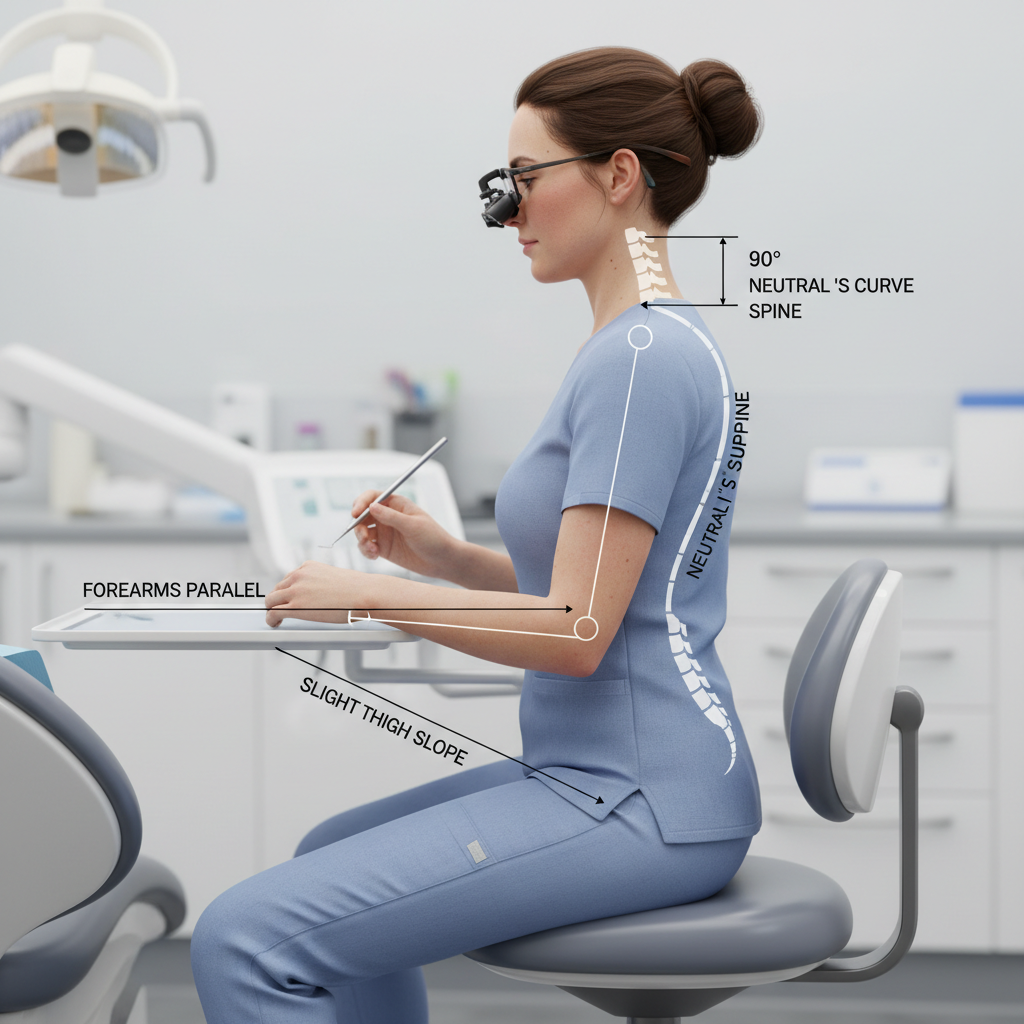
Neutral posture is the body’s strongest and most efficient position. For a seated dental professional, this means:
- Spine: Maintaining the natural “S” curve of the spine. The head should be balanced over the shoulders, not thrust forward.
- Shoulders: Relaxed and down, not hunched or raised.
- Elbows: Kept close to the body, bent at approximately 90 degrees.
- Forearms: Roughly parallel to the floor.
- Wrists: In a straight or neutral position.
Achieving this posture begins with the operator’s stool and is the starting point for all other adjustments.
Debunking a Myth: The Problem with Static Posture
A common misconception is that finding one “perfect” posture and holding it all day is the key to ergonomics. In reality, the human body isn’t designed for static loads. Holding any single position for too long restricts blood flow and puts immense strain on muscles and joints. The real goal is dynamic seating. This involves making frequent, small adjustments to your position and taking micro-breaks. A practical heuristic is the 20/20 rule: for every 20 minutes of work, take a 20-30 second break to stretch or reset your posture. This simple habit can dramatically reduce cumulative strain.
The Operator-Patient-Equipment Triangle
Think of your workspace as a triangle with three key points: you (the operator), the patient, and your equipment. The key to efficiency and ergonomic safety is arranging these elements to minimize reaching and twisting. The proper setup sequence is critical: always adjust your own chair first to establish a neutral foundation, then position the patient relative to you, and finally, bring your equipment within easy reach.
A Step-by-Step Guide to Ergonomic Chair Setup
I used to end my days with persistent neck and lower back strain. The culprit wasn’t just the long hours, but how I was sitting. I learned to follow a strict setup routine before every procedure, which made a significant difference. Here is a simple, effective checklist to calibrate your position.
| Step | Action | Key Ergonomic Goal | Practitioner Insight |
|---|---|---|---|
| 1. Calibrate Your Stool | Adjust seat height so your feet are flat on the floor and thighs slope slightly downward. | Establishes a stable, neutral pelvic position. | For most adults, this is a seat height of 42–52 cm. A slight forward seat tilt of +3° to +7° can also reduce pressure on the lumbar spine. |
| 2. Position the Patient | Place the patient in a supine position and adjust the headrest to support their neck. | Brings the oral cavity into an optimal line of sight without requiring you to lean or crane your neck. | The patient’s head should be at the very top of the chair back. |
| 3. Adjust the Patient Chair | Raise or lower the entire patient chair until the patient’s mouth is at your elbow level. | Ensures your forearms remain parallel to the floor and elbows stay at a 90° angle. | This is the single most important adjustment to prevent shoulder and neck strain. Always bring the patient to you. |
| 4. Arrange Your Equipment | Position your instrument tray, light, and other tools within a comfortable arm’s reach. | Minimizes twisting of the torso and over-extension of the shoulders. | Your most frequently used instruments should be the closest to you to avoid repetitive reaching. |
Following this sequence ensures that your posture dictates the setup, not the other way around.
Common Mistakes and How to Avoid Them
Even with the best equipment, poor habits can undermine your ergonomic efforts. Proactively identifying common pitfalls is key to building a healthier practice.
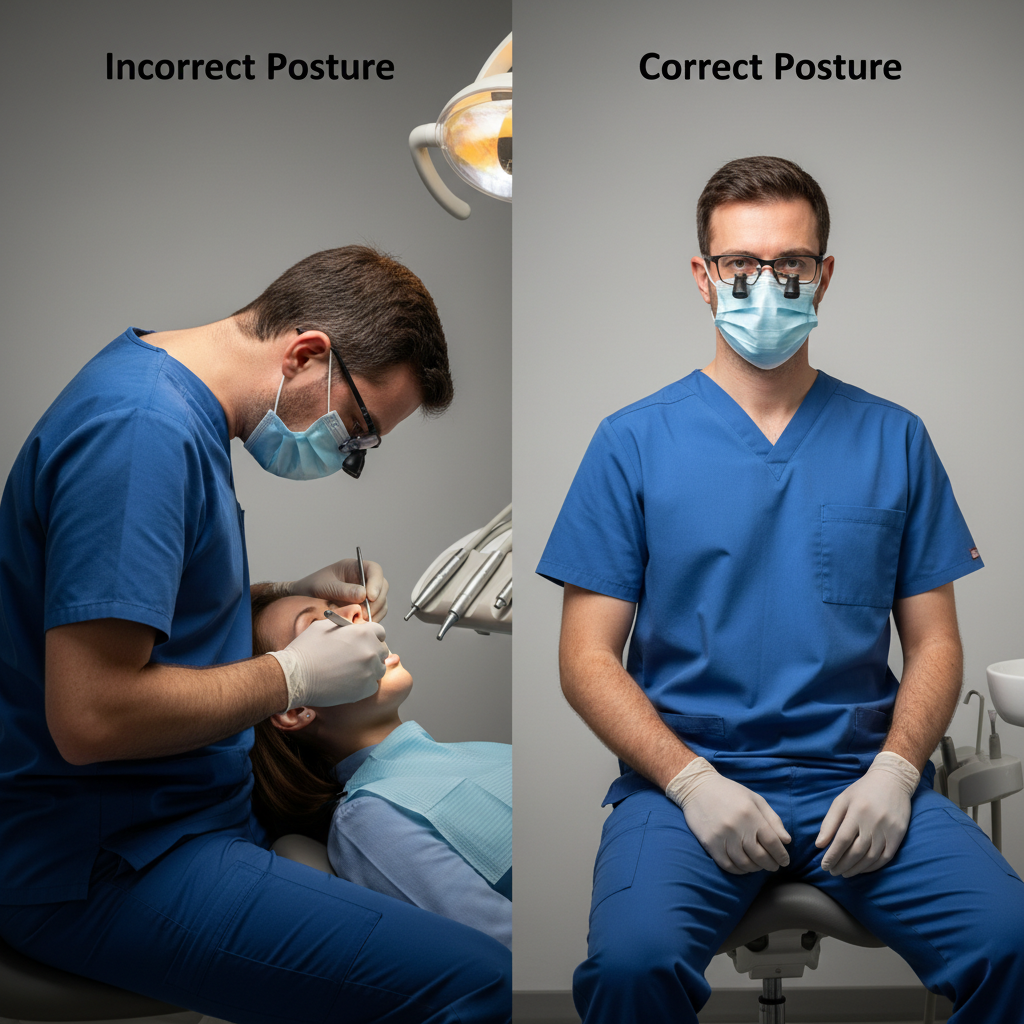
- Mistake #1: Working in a Locked, Static Position. Many practitioners find a “comfortable” spot and stay there, leading to muscle fatigue. The Fix: Embrace dynamic movement. Use the features of your chair and stool to make small adjustments throughout the day. Even shifting your weight is beneficial.
- Mistake #2: Neglecting Assistant Access. A setup that is perfect for you but forces your assistant to twist or reach creates an ergonomic problem for your team. The Fix: Consider the entire team during setup. Ensure there is adequate space for the assistant to work comfortably, promoting a safer environment for everyone.
- Mistake #3: Setting the Operator Stool Too Low. A low seat height forces you to raise your shoulders and arms, causing significant neck and shoulder strain. The Fix: Always start by setting your stool height correctly, with feet flat and thighs angled slightly down. Your hips should be slightly higher than your knees.
For clinics with multiple users, establish a “neutral” default setting for the chair and teach all staff a two-minute adjustment routine to perform between patients. This ensures everyone starts from a correct ergonomic baseline.
Maintaining Your Ergonomic Setup for a Healthy Career
Ergonomic excellence is not a one-time fix; it’s an ongoing practice that combines good habits with well-maintained equipment. The long-term health of your career depends on this commitment.
Building Sustainable Habits
Integrating ergonomic principles into your daily workflow is crucial. The two-minute adjustment routine between patients is a great start. Furthermore, the practice of taking 20-30 second micro-breaks every 20-30 minutes to stretch your neck, shoulders, and back can significantly offset the strains of static posture. For me, the real game-changer wasn’t just the initial setup, but remembering to use these small breaks to reset my body. It felt unnatural at first, but it quickly became an automatic habit that erased my end-of-day pain.
Equipment Maintenance for Safety and Performance
Your dental chair is a critical piece of equipment that requires regular inspection to perform safely and reliably. This aligns with the principles of quality management systems like ISO 13485:2016, which emphasize equipment maintenance for consistent performance and safety. A simple maintenance schedule can prevent unexpected failures and ensure your chair supports your ergonomic needs.
- Monthly: Inspect upholstery for any tears or cracks. Damaged upholstery can be difficult to clean, posing an infection control risk, and can compromise the supportive function of the cushions.
- Quarterly: Check hydraulic systems for smooth and quiet operation. Listen for any unusual noises, as minor squeaks often indicate a need for lubrication rather than a major component failure. Also, inspect the casters on your operator stool to ensure they roll freely.
Adherence to regulations like the EU MDR (Medical Device Regulation) further underscores the importance of using and maintaining equipment according to manufacturer guidelines to ensure patient and operator safety.
Wrapping Up
Prioritizing ergonomics is not just about comfort; it is a critical investment in the longevity and financial health of your dental career. By understanding and implementing the core principles of neutral posture, dynamic movement, and a methodical setup process, you can significantly reduce your risk of debilitating musculoskeletal disorders. Move beyond the myth of a single “perfect” posture and embrace a dynamic work style supported by well-maintained equipment. These small, consistent adjustments are the key to protecting your body and ensuring you can provide high-quality care for years to come.
Disclaimer: This article is for informational purposes only and does not constitute professional medical advice. Dental professionals should consult with an ergonomics specialist or a qualified healthcare provider to address specific physical concerns, especially if they have pre-existing conditions.
References
About the Author