 EN
EN  ZH
ZH 
Streamlining Maintenance for a Fleet of Dental Chairs

The Hidden Costs of Equipment Downtime in Large-Scale Dentistry
Managing one or two dental chairs is a straightforward task. Managing a fleet of ten, twenty, or even fifty chairs across a large clinic or training center introduces a level of complexity that can quickly overwhelm unprepared operational teams. Unscheduled downtime doesn’t just cancel a single appointment; it disrupts clinical schedules, delays training programs, and erodes patient trust. The true challenge lies not in fixing a broken chair, but in creating a system that prevents failures, streamlines repairs, and maximizes the operational availability of every single unit.
This guide provides a comprehensive framework for developing a robust maintenance program for a fleet of dental chairs. We will move beyond reactive fixes to establish proactive strategies for inventory management, technician training, and performance measurement, ensuring your equipment remains a reliable asset rather than an operational bottleneck.
The Foundation: Strategic Standardization and Selection
The most effective maintenance programs begin long before a single tool is picked up. They start with the strategic selection and standardization of the chairs themselves. For a high-traffic environment, prioritizing equipment that is built for durability and ease of service is paramount.
Why Standardization is a Force Multiplier
Standardizing your fleet on a limited number of chair models is the single most impactful decision you can make to streamline maintenance. The goal is to achieve a high degree of parts commonality—aiming for 70% or more. This approach simplifies nearly every aspect of your maintenance workflow:
- Reduced Spare Parts Inventory: Instead of stocking dozens of unique components for different models, you can maintain a lean, efficient inventory of common parts. This reduces carrying costs and simplifies reordering.
- Simplified Technician Training: Your in-house or third-party technicians can develop deep expertise on a single system, leading to faster diagnoses and repairs.
- Consistent User Experience: Dentists, assistants, and students benefit from a uniform operating experience across all operatories, reducing errors and improving efficiency.
When evaluating equipment, look beyond the initial purchase price and consider the Total Cost of Ownership (TCO). A cheaper chair that requires frequent, specialized repairs can quickly become more expensive than a durable, easily serviceable model. This long-term financial view is critical, as explored in our guide on How Chair Durability Impacts Your Clinic’s Financial Health. Furthermore, ensuring equipment adheres to internationally recognized quality standards, such as those outlined in ISO 13485:2016, provides a strong indicator of a manufacturer’s commitment to quality and safety.
Building a Proactive Maintenance Program
A reactive “fix it when it breaks” approach is inefficient and costly for a large fleet. A proactive program built on scheduled preventive maintenance (PM) is essential for maximizing uptime and extending the life of your equipment.
Debunking a Common Misconception: “Skipping PM Saves Money”
A frequent mistake is viewing preventive maintenance as an optional expense. In reality, skipping routine checks to save time or money in the short term almost always leads to higher costs later. Minor issues like a loose fitting or a worn seal, if ignored, can cascade into major failures, causing extensive downtime and requiring expensive emergency repairs. A structured PM program is an investment in operational stability.
We find that a well-planned PM schedule requires approximately 15-30 minutes per chair each month. This small, consistent investment pays significant dividends.
The Preventive Maintenance (PM) Checklist
A standardized checklist ensures that every chair receives the same level of inspection and service. This document should be the foundation of your PM program, used and signed off during every service interval.
| Component Group | Task | Frequency |
|---|---|---|
| Upholstery & Frame | Inspect for tears, cracks, and wear. Clean and disinfect. | Monthly |
| Hydraulics/Lift System | Check for fluid leaks. Test full range of motion. | Monthly |
| Delivery System | Inspect handpiece hoses for cracks. Check water lines for leaks. | Monthly |
| Electrical Systems | Test all switches and foot controls. Inspect wiring for damage. | Quarterly |
| Suction & Water | Clean or replace traps and filters. Flush water lines. | Monthly |
| Safety Features | Verify auto-stop and emergency shut-off functions. | Quarterly |
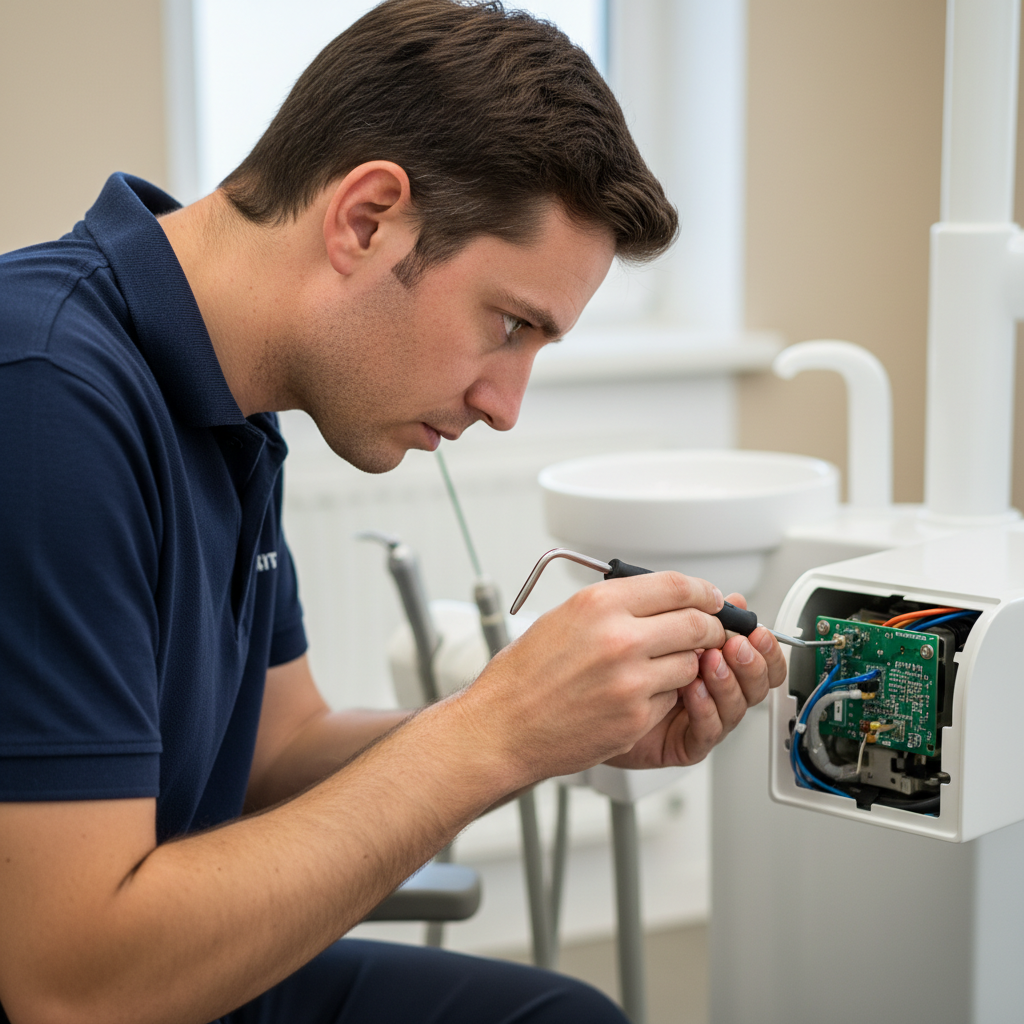
Every completed PM task and any ad-hoc repairs must be logged. This creates an invaluable service history for each chair, helping to identify recurring issues and inform future purchasing decisions. Undocumented repairs are a significant operational risk, as they erase vital data that could predict future failures.
Mastering Spare Parts Inventory Management
Effective inventory management is a balancing act. Stocking too few parts leads to extended downtime while you wait for shipments, while stocking too many ties up capital in components that may never be used. A data-driven approach based on equipment usage and failure rates is the solution.
A Heuristic-Based Inventory Strategy
For large fleets, we recommend a tiered approach to inventory based on component criticality and wear rate. This ensures you have the right parts on hand to address the most common and critical failures without overstocking.
| Part Category | Description | Recommended Stock Level |
|---|---|---|
| Critical Electronics | Control modules, main boards | 1 spare per 15-25 chairs |
| Core Mechanicals | Hydraulic pumps, lift motors | 1 spare per 20-30 chairs |
| High-Wear Items | Handpiece hoses, upholstery kits, gaskets | 1 spare per 8-12 chairs |
| Consumables | Filters, traps, light bulbs | Sufficient stock for 3-6 months |
The Reorder Point Formula
To avoid stockouts, use a simple formula to determine when to reorder parts:
Reorder Point = (Average Daily Failures × Lead Time in Days) + Safety Stock
- Average Daily Failures: Calculated from your maintenance logs.
- Lead Time: The time it takes for a part to arrive from your vendor.
- Safety Stock: A buffer to account for shipping delays or a sudden spike in failures. A common safety stock is 1.5 times the consumption during the lead time.
This structured approach is a core component of a quality management system, aligning with principles outlined by regulatory bodies like the FDA’s 21 CFR Part 820 regulations, which emphasize process control and traceability.
Empowering Your Team and Measuring Success
The best maintenance strategy is only as effective as the people who execute it. Investing in your technical team and establishing clear performance metrics are the final pieces of the puzzle.
Training and Vendor Relationships
For any organization with 30 or more chairs, having trained in-house technicians is a significant advantage. We recommend training at least two technicians per 30 chairs to ensure coverage during vacations or sick leave. These technicians should be empowered to perform common repairs, reducing reliance on external vendors for every issue.
However, a strong relationship with your equipment vendor is still crucial. A solid Service Level Agreement (SLA) that guarantees emergency parts shipment within 48-72 hours is non-negotiable. This provides a critical backstop for complex failures that are beyond the scope of your in-house team. This is particularly important for equipment sold in regulated markets, where compliance with regulations like the EU’s CE Marking is required for market access and support.
Key Performance Indicators (KPIs) to Track
You cannot improve what you do not measure. Tracking a few key metrics will provide clear insight into the health and efficiency of your maintenance program.
- Uptime: The percentage of time equipment is available for use. The target should be ≥98%.
- Mean Time to Repair (MTTR): The average time it takes to repair a chair after a failure. With trained technicians and on-site parts, a target of 30-120 minutes for common faults is achievable.
- First-Time Fix Rate (FTFR): The percentage of repairs completed successfully on the first attempt. A high FTFR indicates accurate diagnosis and a well-stocked inventory.
- Spare Parts Turn Rate: Measures how quickly your spare parts are being used. This helps identify and eliminate obsolete or overstocked parts.
Wrapping Up: From Reactive Fixes to Strategic Asset Management
Streamlining maintenance for a fleet of dental chairs is a strategic imperative, not just an operational task. By focusing on standardization, implementing a proactive PM program, managing inventory intelligently, and empowering your technical team, you can transform your equipment fleet from a source of frustration into a reliable, efficient, and cost-effective asset. This systematic approach reduces downtime, lowers the total cost of ownership, and ultimately allows your organization to focus on its core mission: providing excellent patient care and clinical training.
Disclaimer: This article is for informational purposes only and does not constitute professional technical or medical advice. Equipment maintenance should always be performed by qualified technicians in accordance with manufacturer guidelines and local regulations.
About the Author