Skip to content
 EN
EN  ZH
ZH 
Repair or Replace: A TCO Analysis for Your Dental Chair

Beyond the Sticker Price: Understanding the True Cost of Your Dental Chair
When is the right time to replace your dental chair? This is a critical financial and operational question for any dental practice. Making the decision too early means wasting capital, but waiting too long can lead to escalating repair bills, clinic downtime, and compromised patient care. A comprehensive analysis weighs the costs of maintaining an old unit versus investing in a new one, helping you make a financially sound decision based on Total Cost of Ownership (TCO) data, not just the initial purchase price.
TCO provides a complete picture of an asset’s lifetime cost. It goes beyond the initial capital outlay to include all direct and indirect expenses associated with owning, operating, and eventually retiring a piece of equipment. For a dental chair, these costs can be substantial and are often overlooked in initial budget planning.
The Hidden Costs That Erode Profitability
The most common mistake in evaluating a dental chair is focusing solely on the purchase price. The real costs emerge over the chair’s 10 to 15-year lifespan. These include scheduled annual maintenance, replacement parts, and technician labor. However, several hidden costs can have an even greater impact:
- Downtime: A non-functional chair means a non-productive operatory. Every hour the chair is out of service translates directly to lost revenue. A conservative estimate is losing one to two treatment slots for every major failure, a significant financial hit.
- Upholstery and Wear: Tears in upholstery are not just cosmetic; they are an infection control risk. The cost of reupholstery or component replacement can be surprisingly high and must be factored into long-term maintenance budgets.
- Infection Control Obsolescence: As standards for infection control evolve, older chairs may not support modern protocols or materials, requiring costly retrofits or creating compliance risks.
- Technician Expenses: Many practices only count the invoice for a repair. They neglect to track the technician’s travel time and billable hours, which can significantly inflate the true cost of a service call. Logging every service call is critical; it reveals repeat-fault patterns that signal a failing unit.
The Tipping Point: Key Metrics for the Repair-or-Replace Decision
Relying on intuition to decide when to replace a chair is a recipe for financial inefficiency. Instead, a data-driven approach using established industry heuristics provides clear triggers for action. These rules of thumb help remove emotion from the decision and ground it in financial reality.
The 15% Rule: When Annual Maintenance Becomes a Red Flag
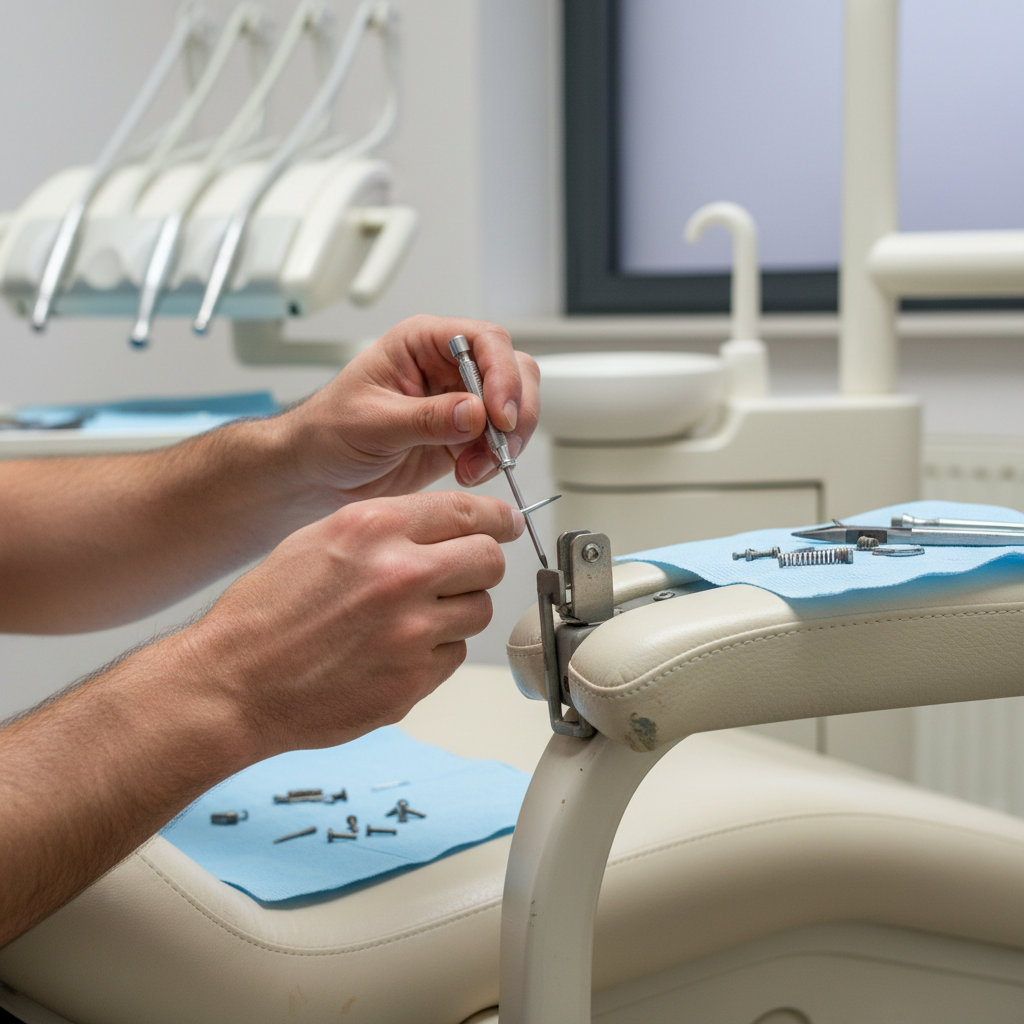
A widely accepted benchmark is to seriously consider replacement when a chair’s annual maintenance costs exceed 10-15% of the cost of a new, comparable unit. For example, if a new chair costs $20,000, and you are spending over $2,000-$3,000 annually to keep your old one running, you have reached a critical decision point. This spending pattern indicates that the chair is no longer a reliable asset and is beginning to actively drain clinic resources that could be better invested in new technology.
The 40% Threshold: Cumulative Repairs vs. Replacement Value
Another powerful metric is the cumulative repair cost. Once the total amount you have spent on repairs for a single chair reaches approximately 40% of its original purchase price or current replacement cost, it is almost always more financially prudent to replace it. This threshold signals that you are pouring money into an asset with a diminishing lifespan and declining reliability. Continuing to repair it often leads to a cycle of escalating costs and unpredictable failures.
Reliability Metrics: Tracking Service Calls and Downtime
Financial metrics alone don’t tell the whole story. Operational reliability is just as important. A simple but effective rule is to flag any chair that requires more than three unscheduled service visits within a 12-month period. This frequency is a clear indicator of underlying reliability issues. Furthermore, parts for chairs older than eight to ten years often become scarce and expensive, leading to longer repair times and extended downtime. If the chair’s expected remaining useful life is under three years, replacement becomes the strategically sound option.
A Practical TCO Analysis Framework
To put these principles into practice, clinics can use a simple checklist and a comparison table. This framework helps standardize the evaluation process for every chair in the practice.
Checklist: Evaluating Your Current Dental Chair’s Health
Use this checklist annually to assess the status of each dental chair:
- [ ] Age: Is the chair over 10 years old?
- [ ] Annual Repair Cost: Did last year’s maintenance exceed 15% of a new chair’s price?
- [ ] Cumulative Repair Cost: Have total repairs exceeded 40% of the replacement cost?
- [ ] Service Calls: Did the chair require more than three emergency service calls in the last 12 months?
- [ ] Parts Availability: Are replacement parts becoming difficult or expensive to source?
- [ ] Downtime: Has the chair caused significant lost production hours in the past year?
- [ ] Ergonomics: Does the chair lack the necessary adjustability for practitioner comfort (e.g., seat height range of 450–600 mm, backrest tilt of ±15°)?
- [ ] Infection Control: Does the chair meet current infection control standards?
If you check three or more boxes, it is time to conduct a formal repair-versus-replace cost analysis.
TCO Calculation: Repair vs. Replace
| Cost Factor | Option A: Repair Existing Chair (1-Year Projection) | Option B: Invest in New Chair (1-Year Projection) |
|---|---|---|
| Initial Outlay | $0 | -$20,000 (Example Cost) |
| Annual Maintenance | -$2,500 (Projected) | -$300 (Under Warranty) |
| Consumables & Parts | -$1,000 (Projected) | -$200 |
| Lost Revenue (Downtime) | -$1,500 (Projected 2 Failures) | $0 |
| Total 1-Year Cost | -$5,000 | -$20,500 |
| 3-Year Projected Cost | -$15,000 | -$21,500 |
While repairing seems cheaper in year one, the analysis shifts dramatically over a longer horizon. The new chair’s costs are predictable and primarily consist of the initial investment, while the old chair represents ongoing and unpredictable financial risk.
The Strategic Value of Upgrading
Moving beyond a purely financial analysis, replacing an aging dental chair offers significant strategic advantages that contribute to a healthier practice for clinicians, staff, and patients.
Enhancing Ergonomics and Practitioner Well-being
Modern dental chairs are engineered with a deep understanding of ergonomics. Proper adjustability is not a luxury; it is essential for preventing the chronic musculoskeletal pain that affects many dental professionals. Key adjustment ranges to look for include a seat height of 450–600 mm, a backrest tilt of at least ±15°, and a headrest reach of 80–120 mm. An ergonomic chair reduces fatigue, improves focus, and can extend a practitioner’s career.
Meeting Modern Compliance and Safety Standards
The regulatory landscape for medical devices is constantly evolving. Investing in a new dental chair ensures compliance with the latest international standards, such as those outlined by the International Organization for Standardization (ISO 13485:2016), which governs quality management systems for medical devices. For practices operating in or exporting to Europe, adherence to CE Marking and the EU Medical Device Regulation (MDR) is mandatory. Similarly, equipment sold in the United States must meet the stringent quality system regulations detailed in FDA 21 CFR Part 820. A new chair is designed from the ground up to meet these requirements, protecting your practice from compliance risks.
The ROI of Reliability
Ultimately, the greatest benefit of a new dental chair is reliability. It provides peace of mind, allowing you to focus on patient care instead of equipment failures. The return on investment comes from maximized clinic throughput, improved operational efficiency, and the elimination of unpredictable, budget-draining repair cycles. A reliable chair is a foundational asset that supports every revenue-generating procedure in the operatory.
Key Takeaways
Making the repair-or-replace decision for a dental chair should be a strategic process, not a reactive one. By shifting the focus from upfront cost to Total Cost of Ownership, you can identify the precise moment when an old chair stops being an asset and becomes a liability.
Remember the key triggers:
- Annual maintenance exceeding 15% of replacement cost.
- Cumulative repairs reaching 40% of replacement cost.
- More than three service calls in 12 months.
By tracking these metrics and proactively planning for replacement, you can ensure your practice remains efficient, profitable, and equipped to provide the highest standard of care.
Disclaimer: This article is for informational purposes only and does not constitute professional financial or legal advice. Equipment purchasing decisions should be made in consultation with your financial advisor and equipment specialists.
References
About the Author