 EN
EN  ZH
ZH 
Over-the-Patient vs. Rear Delivery: A Workflow Analysis

The Ergonomic Foundation of Clinical Excellence
Before comparing specific systems, it’s crucial to understand the principles of dental ergonomics. The goal is to create a workspace that minimizes physical strain and maximizes efficiency. For me, years of clinical practice and operatory design have shown that consistent, small movements, when repeated thousands of times, are what lead to chronic pain and career-ending injuries. The core objective is to minimize reaching, twisting, and elevating the shoulders.
Practitioner insights reveal a simple heuristic for instrument placement: keep primary instruments within a 40–50 cm forward radius and positioned 5–10 cm below your seated elbow height. This “strike zone” minimizes shoulder elevation and forearm strain. Furthermore, flexible handpiece hoses should be around 70–90 cm long to allow 180-degree access to the oral cavity without creating tension or pulling against the handpiece. Adhering to these principles is not just about comfort; it’s about preserving your musculoskeletal health for a long and productive career. Extensive research, documented in archives like PubMed, consistently links poor dental ergonomics to a higher prevalence of musculoskeletal disorders among dental professionals.
The High Cost of Inefficient Workflow
A poorly designed operatory doesn’t just cause physical strain; it directly impacts the clinic’s bottom line. Inefficient instrument handoffs, time spent searching for equipment, and increased cleanup time all add up. This lost time reduces patient throughput and creates a stressful work environment. Investing in an ergonomic setup is an investment in your practice’s productivity and, as we’ve explored previously, understanding how chair durability impacts your clinic’s financial health is a key part of this long-term financial planning.
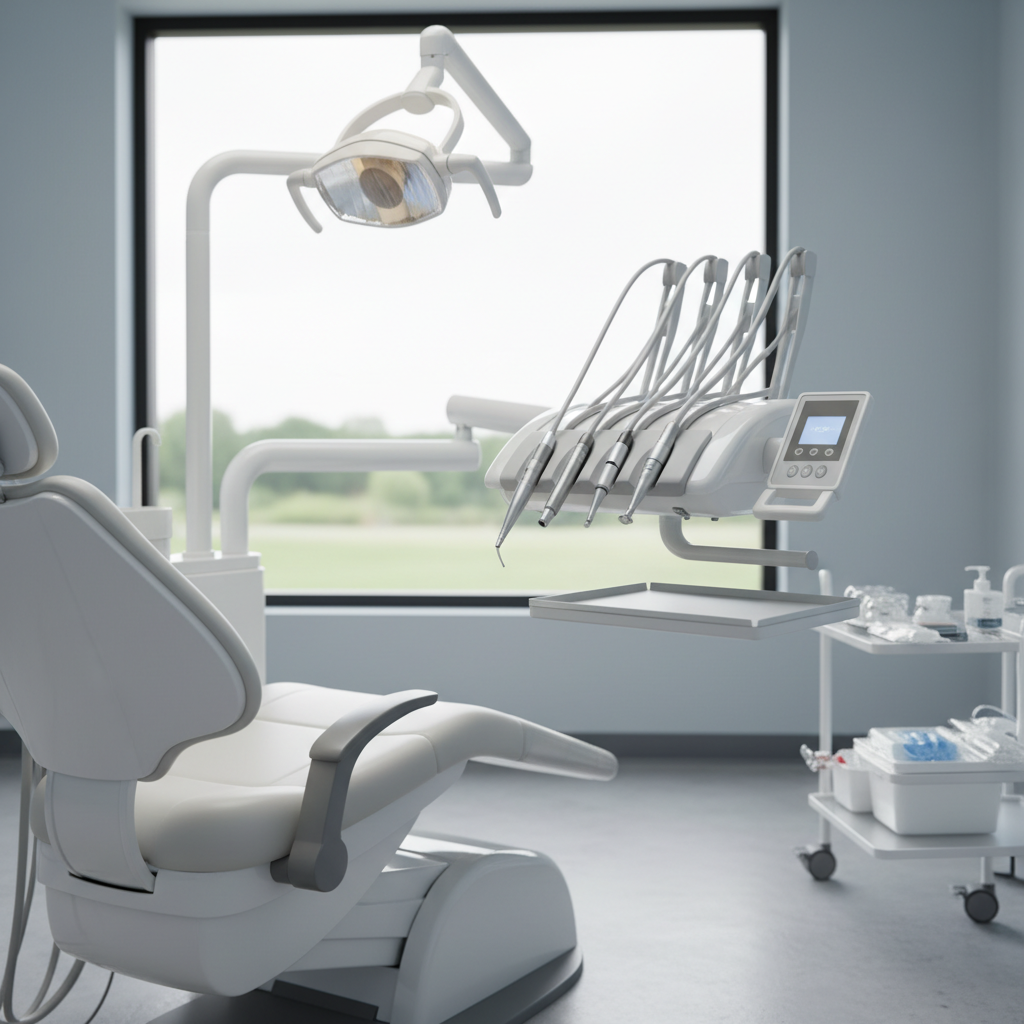
A Deep Dive: The Over-the-Patient (OTP) Delivery System
Over-the-patient (OTP) delivery systems, also known as continental-style systems, feature an articulated arm mounted to the chair base or a cabinet, which positions the instrument tray directly over the patient’s chest. This design has been a mainstay in dentistry for decades, primarily due to its direct and efficient workflow for the practitioner.
Workflow and Ergonomic Advantages
The primary advantage of an OTP system is direct access. All essential handpieces and instruments are within the operator’s immediate field of view and reach, minimizing the need for torso rotation. My experience in high-throughput practices confirms that keeping high-use instruments within a 30° arc of the body’s midline drastically reduces twisting and eye strain. This layout allows for seamless, single-handed instrument transfers, which can shave valuable seconds off procedure times.
For four-handed dentistry, an OTP system allows the dentist to remain focused on the oral cavity while the assistant retrieves additional items. This clear division of labor enhances concentration and reduces the cognitive load on the operator.
Common Pitfalls and Considerations
Despite its ergonomic benefits for the clinician, the OTP system has its challenges. The most frequently cited issue is increased patient anxiety. The presence of a mechanical arm and instruments directly in their line of sight can be intimidating for some patients, particularly children or those with dental phobias. Creating a comfortable and non-threatening environment is crucial, and an OTP setup requires a deliberate effort to manage patient perception.
A common mistake I often see is overloading the delivery arm with too many accessories. While it’s tempting to have every gadget within reach, an overloaded arm becomes heavy and difficult to maneuver, which negates its ergonomic benefits and can lead to arm and shoulder fatigue. It’s critical to find a balance between accessibility and maneuverability.
An Analysis: The Rear Delivery System
Rear delivery systems place the main instrumentation in a fixed cabinet or console located behind the patient’s head. This approach creates a distinctly different workflow and operatory environment compared to OTP systems.
Key Benefits: Operatory Space and Patient Perception
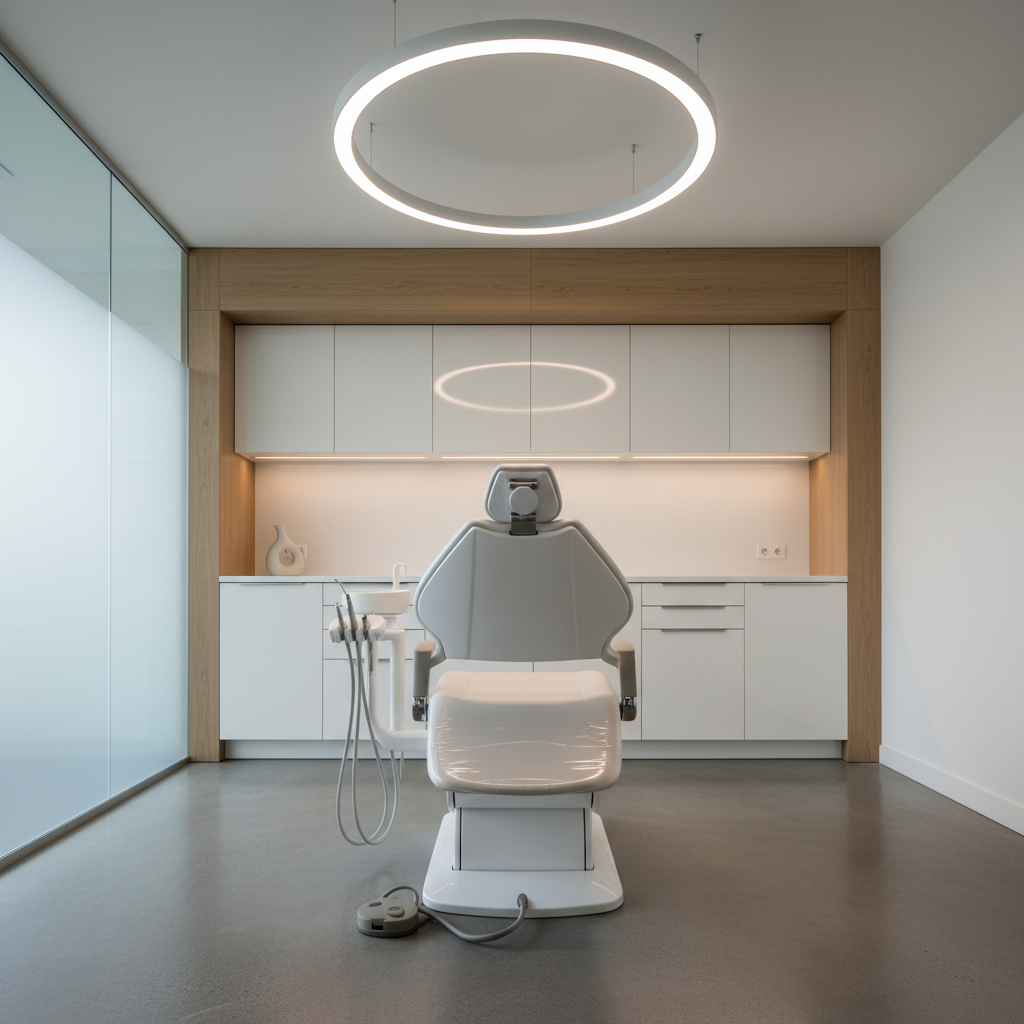
The most significant advantage of rear delivery is the creation of an open, uncluttered space around the dental chair. With no delivery arm over the patient, the room feels larger and more welcoming. This can be a major factor in reducing patient anxiety and is particularly well-suited for practices focused on patient experience, such as pediatric or cosmetic clinics. For smaller operatories (under 9 square meters), my experience shows that a rear delivery setup is often superior for reducing hose clutter and preventing team members from tripping over equipment.
The clean aesthetic also allows for better patient communication, as there are no physical barriers between the dentist and the patient during consultation. All equipment, regardless of its configuration, must meet stringent quality standards like those outlined in ISO 13485:2016 – Quality Management Systems, ensuring that safety and performance are never compromised for aesthetics.
Ergonomic Challenges and Workflow
The main drawback of rear delivery is the ergonomic toll it takes on the operator. Retrieving an instrument requires the dentist to twist their torso and look away from the patient—a repetitive motion that significantly increases the risk of back and neck strain. A typical procedure can involve dozens of these movements, which accumulate over a day and a career.
This system heavily relies on efficient four-handed technique. The assistant becomes the primary manager of instrument transfers, which requires excellent coordination and communication. If the assistant is not proficient, or if the dentist frequently works alone, the rear delivery system can reduce efficiency by 10-15% due to the time spent on instrument handoffs.
Head-to-Head Comparison: A Decision Framework
Choosing between these two systems involves weighing trade-offs between operator ergonomics, team workflow, and the patient environment. There is no single “best” answer, only the best fit for a specific practice style.
| Feature | Over-the-Patient (OTP) Delivery | Rear Delivery |
|---|---|---|
| Operator Ergonomics | Excellent. Minimizes twisting and reaching; keeps instruments in the primary field of view. | Poor to Fair. Requires significant torso rotation and looking away from the patient. |
| Assistant Ergonomics | Good. Clear access to the patient, but may have to reach around the delivery arm. | Excellent. Unobstructed access to the patient and often centralized supply access. |
| Workflow Efficiency | High. Ideal for solo practitioners and fast-paced, two-handed and four-handed procedures. | Moderate to High. Highly dependent on proficient four-handed teamwork. Slower for solo work. |
| Patient Perception | Fair. Can cause anxiety for some patients due to visible instruments. | Excellent. Creates an open, non-intimidating, and clean environment. |
| Operatory Space | Good. Compact footprint but the arm can feel intrusive. | Excellent. Maximizes open space, ideal for small operatories and a clean aesthetic. |
| Initial Cost & Setup | Generally comparable to rear delivery, but high-end articulated arms can increase cost. | Cost is comparable, but requires careful cabinet design and integration. |
Debunking a Common Myth
A common myth is that rear delivery is inherently more organized. In reality, while it hides the primary instruments, it can lead to disorganized mobile carts and countertop clutter if not managed with strict protocols. True organization comes from a holistic workflow design, not just the location of the handpiece unit. An OTP system, when properly configured, can be just as organized by keeping only essential instruments on the tray.
Making the Right Choice for Your Practice
Your decision should be guided by your primary clinical focus and operational priorities. The equipment must not only be functional but also compliant with regional regulations, such as the FDA’s 21 CFR Part 820 in the United States, to ensure safety and quality.
Scenario 1: The High-Throughput, Multi-Specialty Clinic
For a practice focused on high volume and complex procedures (e.g., endodontics, oral surgery), the over-the-patient system is typically the superior choice. The speed gained from direct instrument access and reduced handoff time is critical. When paired with a well-balanced, articulated arm, the OTP setup minimizes operator fatigue during long procedures, directly contributing to clinical precision.
Scenario 2: The Pediatric, Cosmetic, or Spa-Like Practice
For clinics where patient comfort and environmental aesthetics are paramount, rear delivery is a compelling option. The open, uncluttered feel helps in managing anxious patients and creates a high-end feel. It forces a commitment to disciplined four-handed dentistry, which, when perfected, can be a smooth and elegant workflow. This is also a consideration when designing a practice focused on ergonomics for dentists treating special needs patients, where minimizing environmental triggers is key.
Pro Tip: Map Your Procedures Before You Buy
Before committing to a layout, I always recommend that clinicians physically map out 2-3 of their most common procedures. Use your existing operatory or an empty room to walk through the steps of instrument transfer. Time the handoffs. Note every time you have to twist, reach, or turn your head. This simple exercise provides invaluable, data-driven insight into which system truly fits your personal workflow. Pay close attention to the sterilization workflow as well; aim to design a direct, one-handed pathway from the delivery system to the sterilization center to reduce handling time and limit touchpoints.
Wrapping Up: A Decision of Efficiency and Longevity
The choice between an over-the-patient and a rear delivery system is one of the most impactful decisions in operatory design. There is no one-size-fits-all solution.
- Over-the-Patient (OTP) systems prioritize the operator’s ergonomic health and procedural speed, making them ideal for fast-paced, high-volume clinics.
- Rear delivery systems prioritize patient perception and operatory aesthetics, creating a clean, open environment that excels in practices focused on patient experience.
Ultimately, this decision is an investment in your clinic’s efficiency and, more importantly, in the long-term health and well-being of you and your clinical team. By carefully analyzing your workflow, patient base, and practice philosophy, you can design an operatory that supports both clinical excellence and career longevity.
Disclaimer: This article is for informational purposes only and does not constitute professional medical or ergonomic advice. The information provided is not a substitute for a consultation with a qualified ergonomist or healthcare professional. Always consult with an expert before making significant changes to your workspace, especially if you have pre-existing health conditions.
References
About the Author