Skip to content
 EN
EN  ZH
ZH 
New vs. Refurbished Dental Chairs for Large Practices

The True Lifecycle of a Dental Chair: Beyond the Purchase Price
When equipping a large dental practice or training center, the decision between new and refurbished dental chairs isn’t just about the initial invoice. It’s about understanding the total cost of ownership (TCO) and the operational lifespan of your equipment. Experienced clinic managers often treat their dental chairs like fleet vehicles, focusing on performance cycles and reliability rather than just calendar years.
A brand-new, well-maintained dental chair can be expected to last between 7 to 10 years under moderate use, which translates to about 50-100 patient sessions per week. In contrast, a refurbished unit typically offers a much shorter lifespan of 3 to 5 years. This is because “refurbished” can mean anything from a full mechanical overhaul to a simple cosmetic touch-up. For high-traffic environments, understanding this distinction is critical to avoiding costly downtime and ensuring patient safety. The financial impact of dental chair reliability and downtime can be significant, turning a seemingly good deal into a long-term liability.
New Dental Chairs: The Case for Predictability and Long-Term Value
Opting for new dental chairs provides a baseline of quality, compliance, and reliability that is essential for large-scale operations. While the initial capital expenditure is higher, the long-term benefits often outweigh the upfront cost, especially when managing a fleet of chairs.
Unwavering Compliance and Warranty
New equipment comes with the manufacturer’s assurance of compliance with the latest medical device regulations. This includes critical standards such as ISO 13485:2016 – Quality Management Systems, which governs the quality management system for medical devices, ensuring they meet safety and efficacy requirements. For practices operating in or exporting to specific regions, compliance with regulations like the EU’s Medical Device Regulation (MDR) or the FDA’s 21 CFR Part 820 is non-negotiable. A new chair is guaranteed to meet these standards out of the box, accompanied by a full manufacturer’s warranty that covers parts and labor, eliminating unpredictable repair costs in the early years.
The Advantage of Standardization
For dental schools and large clinics, standardizing on a single model of a new dental chair simplifies everything from user training to maintenance. Technicians only need to stock one set of spare parts, and clinicians can move between operatories without needing to readjust to different controls or chair ergonomics. This efficiency is a core component of cost-effective dental chair integration strategies. When purchasing for a large fleet, a good rule of thumb is to maintain a spare chair ratio of one backup for every 8-12 active chairs to ensure seamless operations during maintenance cycles.
Refurbished Dental Chairs: A High-Stakes Gamble
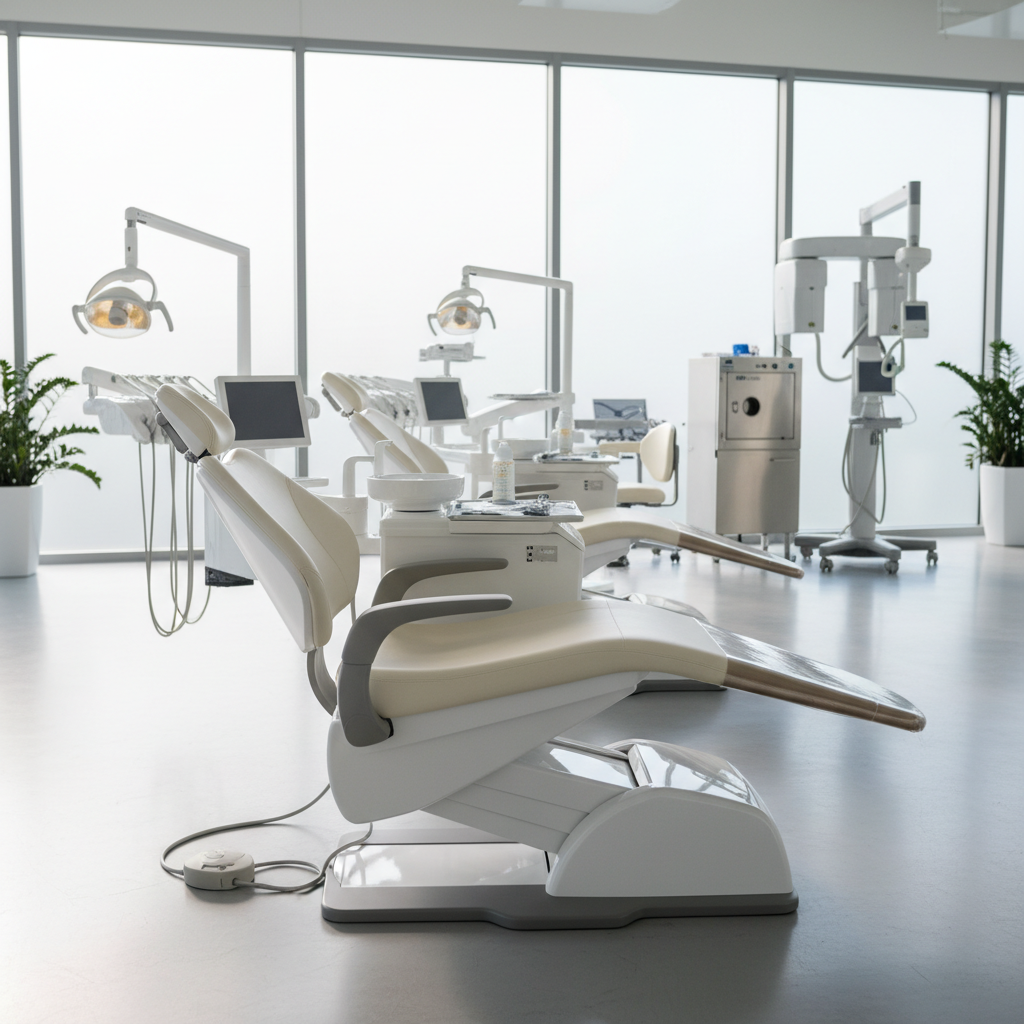
Refurbished chairs can appear to be a cost-effective solution, but they introduce a high degree of variability and risk. The value of a refurbished unit depends entirely on the quality and extent of the refurbishment process.
Common Misconception: “Refurbished” Equals “Rebuilt”
A prevalent myth is that a refurbished chair has been fully restored to factory specifications. In reality, many units receive only cosmetic fixes—new upholstery and a paint job—while the core mechanical and electronic components remain untouched. This is why a pre-purchase inspection is not just recommended; it’s essential. Accepting a cosmetic-only refurbishment for a high-use clinic is a recipe for failure.
The Pre-Purchase Inspection Checklist
Before you even consider a refurbished chair, a thorough inspection using a detailed checklist is crucial. This goes far beyond kicking the tires. It’s a deep dive into the components that determine reliability and safety.
Here is a 10-point checklist to use when evaluating a refurbished dental chair:
- Actuator Performance: Test the full range of motion. Is it smooth and quiet, or does it show signs of hesitation or strain?
- Leak Test: Check all hydraulic and pneumatic lines for any signs of leaks, which are a common failure point in older chairs.
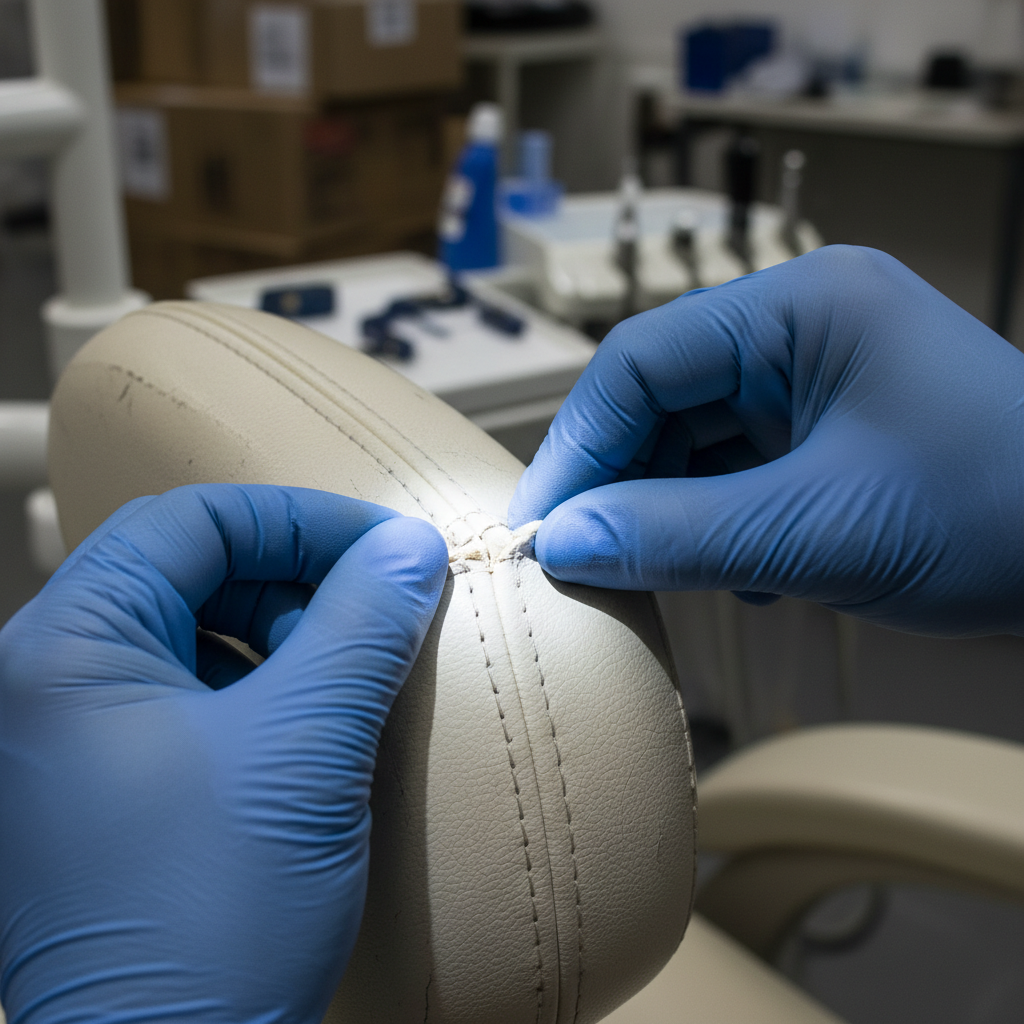
- Upholstery Condition: Look beyond the surface. Pull at the seams to test their integrity. Ensure coverings are rated for autoclave safety.
- Control Electronics: Test every button and function on the control console. Check that any spare ports are functional for future integrations.
- Structural Integrity: Inspect the armrests, headrest, and base for wear, cracks, or instability.
- Caster and Wheel Lock: Ensure the chair moves freely when intended and locks firmly in place.
- Parts Verification: Check for manufacturer part numbers on key components. Non-standard parts can make future repairs a nightmare.
- Warranty Terms: Never purchase without a warranty. Secure at least a 6-12 month warranty that explicitly covers parts.
- Backup Systems: If the chair has a battery or backup power system, test its function and capacity.
- Service History: If possible, request the unit’s service history to understand its past issues and repairs.
New vs. Refurbished: A Head-to-Head Comparison
To make an informed decision, it helps to see the trade-offs side-by-side.
| Feature | New Dental Chair | Refurbished Dental Chair |
|---|---|---|
| Expected Lifespan | 7–10 years | 3–5 years |
| Warranty | Full manufacturer warranty (1-3 years typical) | Limited (6-12 months, parts-only) or none |
| Initial Cost | High | Low to Medium |
| Total Cost of Ownership | Predictable; lower over the long term | Unpredictable; potentially high due to repairs |
| Compliance | Guaranteed to meet current standards (ISO, MDR, FDA) | Uncertain; may not meet new regulations |
| Technology | Latest ergonomic and patient comfort features | Outdated technology and features |
| Parts Availability | Readily available | May use non-standard or discontinued parts |
| Ideal Use Case | High-traffic clinics, training centers, new practices | Low-traffic operatories, budget-constrained startups |
A Practical Decision Framework for Clinic Managers
Making the right choice comes down to a simple, data-driven process. Follow these steps to determine the best path for your practice.
- Analyze Your Needs: First, quantify your usage. A chair in a high-volume clinic seeing 100+ patients a week has vastly different requirements than one in a small, part-time practice.
- Apply the 40-50% Rule: A key industry heuristic is that if the price of a refurbished chair is more than 40-50% of the cost of a comparable new model, you should favor buying new. The reduced lifespan, lack of a comprehensive warranty, and risk of downtime quickly erode the initial savings.
- Budget for the Long Term: When evaluating cost, think in terms of TCO. A practical budgeting tip for high-use settings is to allocate 0.5% to 1.5% of the chair’s initial capital cost per month for preventive maintenance and spare parts. For a new chair, this cost is minimal in the early years, while for a refurbished chair, it can manifest immediately.
Key Takeaways: Investing in Reliability
For large practices and dental training institutions, a dental chair is a workhorse. While the low initial cost of a refurbished chair is tempting, it often introduces hidden costs and operational risks that high-traffic environments cannot afford. The “fleet vehicle” mindset is key: prioritize reliability, standardization, and predictable maintenance costs.
New dental chairs offer a guaranteed level of compliance, a full warranty, and the latest technology, leading to a lower total cost of ownership and greater peace of mind. A refurbished chair should only be considered if it passes a rigorous 10-point inspection, comes with a solid parts warranty, and is priced significantly below 50% of a new model. For most large-scale operations, investing in new equipment is the most cost-effective and reliable long-term strategy.
Disclaimer: This article is for informational purposes only and does not constitute professional medical or financial advice. Equipment purchasing decisions should be made in consultation with qualified procurement specialists and financial advisors, taking into account the specific needs and regulatory requirements of your practice.
References
About the Author