 EN
EN  ZH
ZH 
Upgrading to LED: A Smart Move for Your Dental Clinic

Discover the tangible benefits of switching to LED operatory lighting, from significant energy savings to improved illumination quality. This article breaks down the long-term ROI for a modern dental practice.
As a dental professional, the quality of your operatory lighting directly impacts everything from diagnostic accuracy to procedural efficiency and even your physical well-being. For years, I struggled with the subtle but persistent frustrations of older halogen lights—the constant heat on my head, the yellowish tint that made shade-matching a guessing game, and the nagging awareness of high energy bills. The switch to LED technology wasn’t just an upgrade; it was a fundamental improvement to my practice’s bottom line and my daily work experience.
An LED upgrade is more than a simple bulb swap; it is a strategic investment that pays dividends in cost savings, clinical precision, and staff comfort. This guide provides a practical, experience-based breakdown of why and how to make the switch.
The Core Metrics of Clinical Illumination: Beyond Just Brightness
Effective operatory lighting is a science. Achieving clarity without causing eye strain or distorting tissue color requires a balance of several key metrics. Understanding these factors is the first step in appreciating the clinical superiority of modern LED systems.
Illuminance (Lux): Finding the Sweet Spot
Illuminance, measured in lux, is the amount of light that falls on a specific surface. While it’s tempting to think “brighter is better,” the goal is targeted, sufficient light, not overwhelming brightness. For detailed restorative work, I aim for an illuminance in the 30,000–50,000 lux range at the tooth surface. This level of brightness is typically enough to make small oral details distinct without needing to squint, even with normal ambient clinic lighting.
If you don’t have a light meter, a practical heuristic I use is to adjust the intensity so that fine details inside the oral cavity are perfectly clear without causing any reflective glare off the tooth surfaces. The light should feel clarifying, not harsh.
Color Rendering Index (CRI) and Color Temperature (CCT)
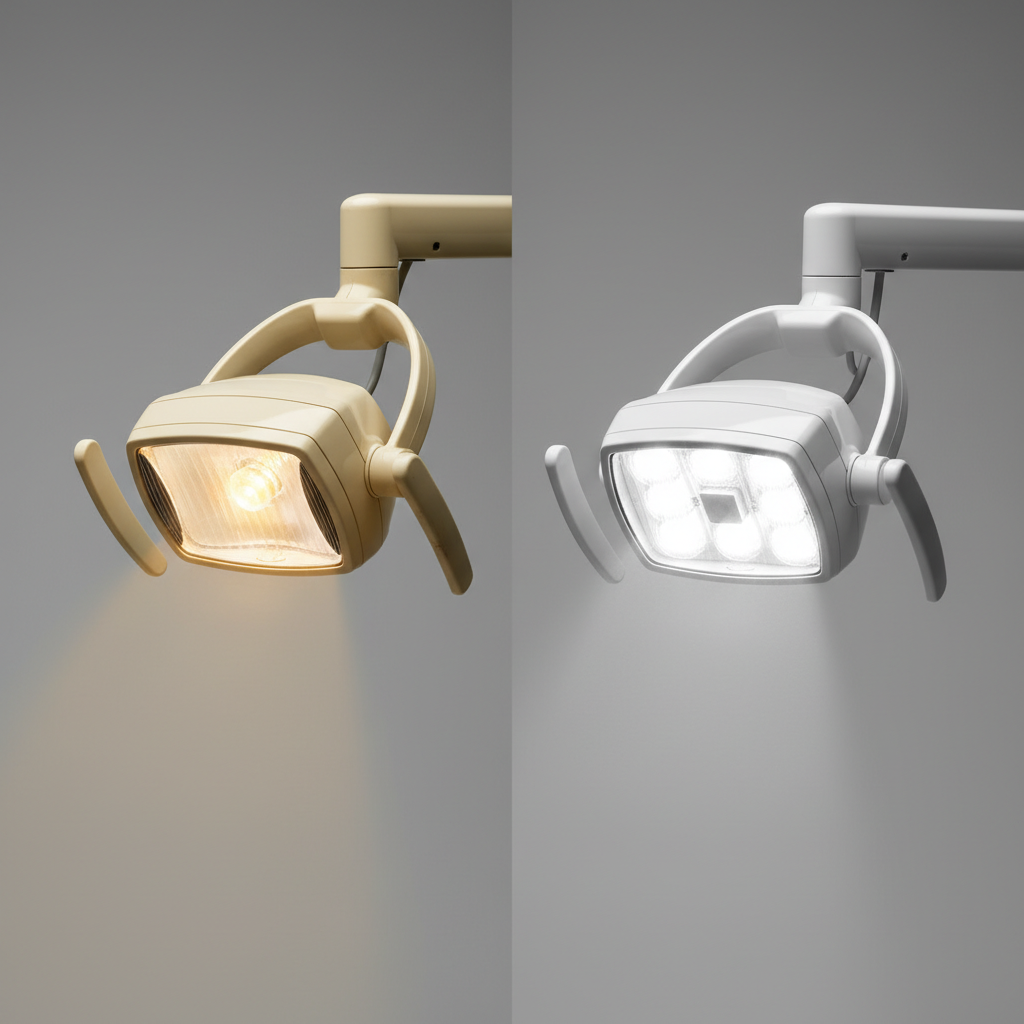
This is where LEDs truly outshine their halogen predecessors. I used to find that halogen lights, with their warm, yellowish hue, could make it difficult to accurately assess tissue health or match composite shades. The solution lies in two critical metrics:
- Color Rendering Index (CRI): This is a scale from 0 to 100 measuring how accurately a light source reveals the true colors of an object. For clinical work, you should never settle for less than a CRI of 90 or higher. This ensures that reds, pinks, and the subtle variations in tooth enamel are rendered faithfully, which is critical for diagnostics and aesthetic dentistry.
- Correlated Color Temperature (CCT): Measured in Kelvin (K), CCT describes the color appearance of the light. I’ve found the ideal range for a dental setting is 4000–5000 K. This range provides a neutral, white light that balances accurate color representation with patient and practitioner comfort. In my experience, CCTs above 5500 K can create a harsh, bluish light that makes oral tissues appear washed out and can accelerate eye fatigue over a long day.
Debunking a Common Misconception: The Wattage Myth
A frequent mistake I see clinics make is purchasing lights based primarily on wattage, assuming it correlates directly with brightness and quality. This is a holdover from the era of incandescent bulbs. In reality, wattage only measures energy consumption, not light output or quality. A well-designed 15-watt LED fixture can produce more useful, higher-quality light than a 50-watt halogen bulb due to superior optics and efficiency. Focusing on lux, CRI, and CCT will give you a far more accurate measure of performance.
The Tangible ROI of an LED Upgrade
While the clinical benefits are compelling, the financial arguments make the decision to upgrade even easier. The return on investment from switching to LED technology is clear, measurable, and often faster than practice managers expect. Investing in modern lighting can be a key part of a strategy for boosting clinic ROI with integrated dental chair tech.
LED vs. Halogen: A Comparative Look
To understand the long-term value, it helps to see a direct comparison. Based on my experience and typical product specifications, the differences are stark.
| Feature | Halogen Lighting | LED Lighting |
|---|---|---|
| Energy Consumption | High (Typically 50-90 watts) | Low (Typically 15-30 watts) |
| Average Lifespan | 1,000–4,000 hours | 20,000–50,000+ hours |
| Heat Output | High (Can be uncomfortable) | Minimal (Cool to the touch) |
| Color Accuracy (CRI) | Good (Often 85-90) | Excellent (Typically 90+) |
| Color Temperature (CCT) | Warm/Yellowish (Around 3000 K) | Neutral White (4000-5000 K) |
| Maintenance | Frequent bulb replacements | Infrequent driver/module replacement |
| Upfront Cost | Lower | Higher |
| Long-Term Cost | High (Energy + Replacements) | Low (Significant energy savings) |
Calculating Your Energy Savings
The most immediate return comes from a dramatic reduction in energy use. LED fixtures typically use 40–60% less electricity than comparable halogen units. Let’s model a conservative scenario for a single operatory:
- Old Halogen Bulb: 70 Watts
- New LED Fixture: 25 Watts
- Energy Savings: 45 Watts
- Operating Hours: 6 hours/day, 5 days/week, 50 weeks/year = 1,500 hours/year
- Annual Energy Reduction: 45 Watts * 1,500 hours = 67,500 Watt-hours or 67.5 kWh
- Estimated ROI: With an average electricity cost of $0.20/kWh, the annual savings are $13.50 per chair. For a clinic with five operatories, this amounts to nearly $70 per year in direct energy savings alone.
While this seems modest, the real financial gain comes from eliminating maintenance.
Reduced Maintenance and Lifetime Value
Halogen bulbs require frequent, sometimes annual, replacement. In contrast, an LED fixture’s light source can last for 20,000 to 50,000 hours. In a typical clinic, this translates to over a decade of use without needing a replacement. My experience shows that the most common failures in LED systems are not the diodes themselves but the driver electronics or mechanical joints in the arm. This is why I prioritize modular designs—the ability to replace a driver or a lens without replacing the entire light head saves significant time and money.
Clinics that make the switch typically recoup the higher upfront cost of LED fixtures within 2 to 4 years, depending on their usage intensity and local electricity costs.
A Practical Guide to Selecting the Right LED Operatory Light
Once you’ve decided to upgrade, the selection process begins. Beyond the core metrics, several practical features determine a light’s usability and long-term value.
Pre-Purchase Checklist
Before committing, I recommend running through this quick checklist:
- Confirm Dimmability: Does the light offer multiple intensity settings without any perceptible PWM flicker? Flicker can cause subconscious eye strain.
- Verify Spare Part Availability: Ask the manufacturer or distributor about the availability and cost of replacement drivers and lenses. A light is only as durable as its most fragile component.
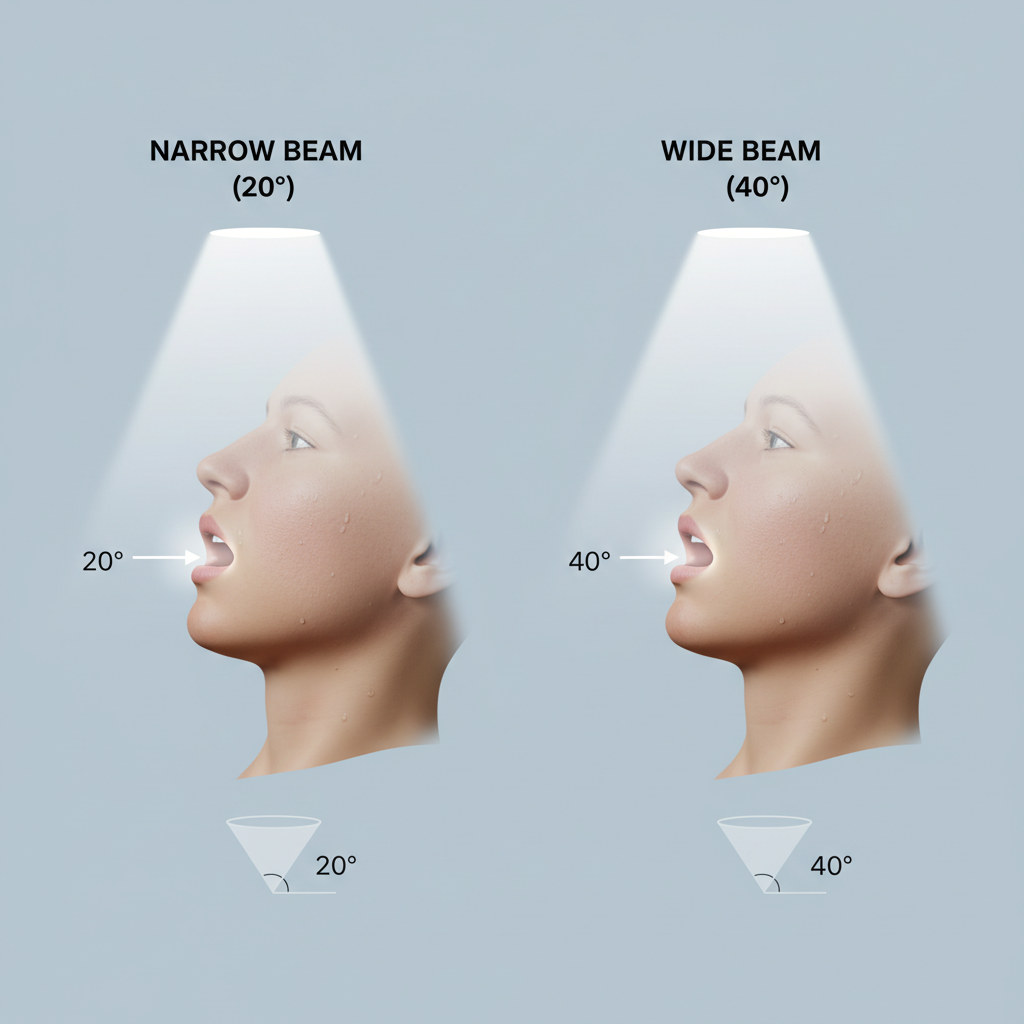
- Check Beam Control: A good operatory light should have a well-defined beam angle, typically between 20–40 degrees, to illuminate the oral cavity without spilling excess light onto the patient’s face and eyes.
- Assess Ergonomics: Ensure the arm reach and mounting system allow the light head to be positioned 30–60 cm from the patient’s mouth. This flexibility is key to avoiding shadows from your head or instruments. An ergonomic setup can significantly boost clinic productivity.
- Verify Certifications: Ensure the product complies with relevant safety and quality standards. For medical devices, this is non-negotiable. According to the FDA’s Quality System Regulation, manufacturers must adhere to strict design and production controls. Similarly, products sold in Europe must bear the CE Marking, indicating conformity with health and safety standards. A manufacturer’s adherence to a quality management system like ISO 13485:2016 is another strong indicator of reliability.
Expert Warning: Common Pitfalls to Avoid
I often see clinics make the same few mistakes when upgrading their lighting. Being aware of these can save you from a poor investment:
- Mismatching CCT: Purchasing an operatory light with a 4500 K CCT but having ceiling lights that are 3500 K can create a visually jarring environment and disrupt color perception. Aim for consistent color temperature across your entire operatory.
- Underestimating Maintenance Access: Some lights have sleek, seamless designs that look great but are difficult to service. A cover that is hard to remove will delay cleaning and simple repairs.
- Ignoring the Heat Sink: While LEDs run cooler than halogens, they still produce some heat. A well-engineered heat sink is crucial for ensuring a long LED lifespan. Check that the fixture has adequate ventilation or a solid metal body to dissipate heat effectively.
Wrapping Up: A Clearer, More Profitable Future
Upgrading your operatory lighting to LED technology is one of the most impactful, high-return investments a modern dental clinic can make. It moves your practice beyond the limitations of outdated halogen systems to a new standard of clinical precision and operational efficiency.
The benefits are clear: superior illumination for better diagnostic and restorative outcomes, a dramatic reduction in energy consumption and maintenance costs, and a more comfortable environment for both patients and staff. By focusing on the right metrics—lux, CRI, and CCT—and verifying practical features like modularity and compliance, you can confidently select a system that will serve your practice reliably for years to come.
Disclaimer: This article is for informational purposes only and does not constitute professional medical or financial advice. The technical specifications and performance metrics are based on general industry knowledge and practitioner experience. Always consult with a qualified professional and verify product specifications before making a purchase.
References
About the Author