 EN
EN  ZH
ZH 
Chair Features for ISO & CE Infection Control Compliance

Navigating Compliance: Critical Dental Chair Features for Infection Control
For dental clinics aiming to meet international standards, demonstrating compliance with regulations like CE and standards such as ISO is a fundamental requirement. A cornerstone of this effort lies in the selection of core equipment, particularly the dental chair. The right features do more than enhance ergonomics; they form an active defense against cross-contamination and biofilm proliferation. Understanding which dental chair infection control features are critical for compliance is essential for creating a certifiably safe and efficient practice.
This article breaks down the essential infection-control features of modern dental chairs, explaining how each contributes to meeting stringent regulatory demands and enhancing patient and staff safety.
1. Surface Design and Materials: The First Line of Defense
The most immediate and frequent infection control task is surface disinfection. The design and materials of a dental chair’s upholstery and surfaces are paramount in making this process effective and repeatable.
Seamless and Minimalist Upholstery
Stitches, seams, and crevices are prime locations for bio-contaminants to accumulate, making them difficult to clean and disinfect thoroughly. Modern infection control chairs prioritize seamless or heat-sealed upholstery, particularly in high-contact zones. Practitioner insights confirm that chairs with welded or heat-sealed vinyl or polyurethane upholstery show a noticeable reduction in visible soiling and allow for faster, more effective surface disinfection cycles. The goal is to create a smooth, non-porous barrier that prevents microbial ingress and simplifies cleaning protocols.
Chemical-Resistant Materials
A chair’s surfaces must endure repeated exposure to a variety of chemical disinfectants without cracking, fading, or degrading. Material durability is a key factor in long-term compliance. A compromised surface not only looks unprofessional but can also harbor pathogens in microscopic cracks. When evaluating a chair, it’s crucial to verify that its materials are rated to withstand the common disinfectants used in a clinical setting. This resilience is a key aspect of equipment longevity and directly impacts your clinic’s financial health, as detailed in our analysis on How Chair Durability Impacts Your Clinic’s Financial Health.
Ergonomic and Accessible Design
Effective cleaning requires easy access. Chairs designed with infection control in mind feature smooth, flowing lines and avoid horizontal recesses or complex shapes where dust and aerosols can settle. Removable components that can be separately cleaned or sterilized further enhance the cleanability of the entire unit.
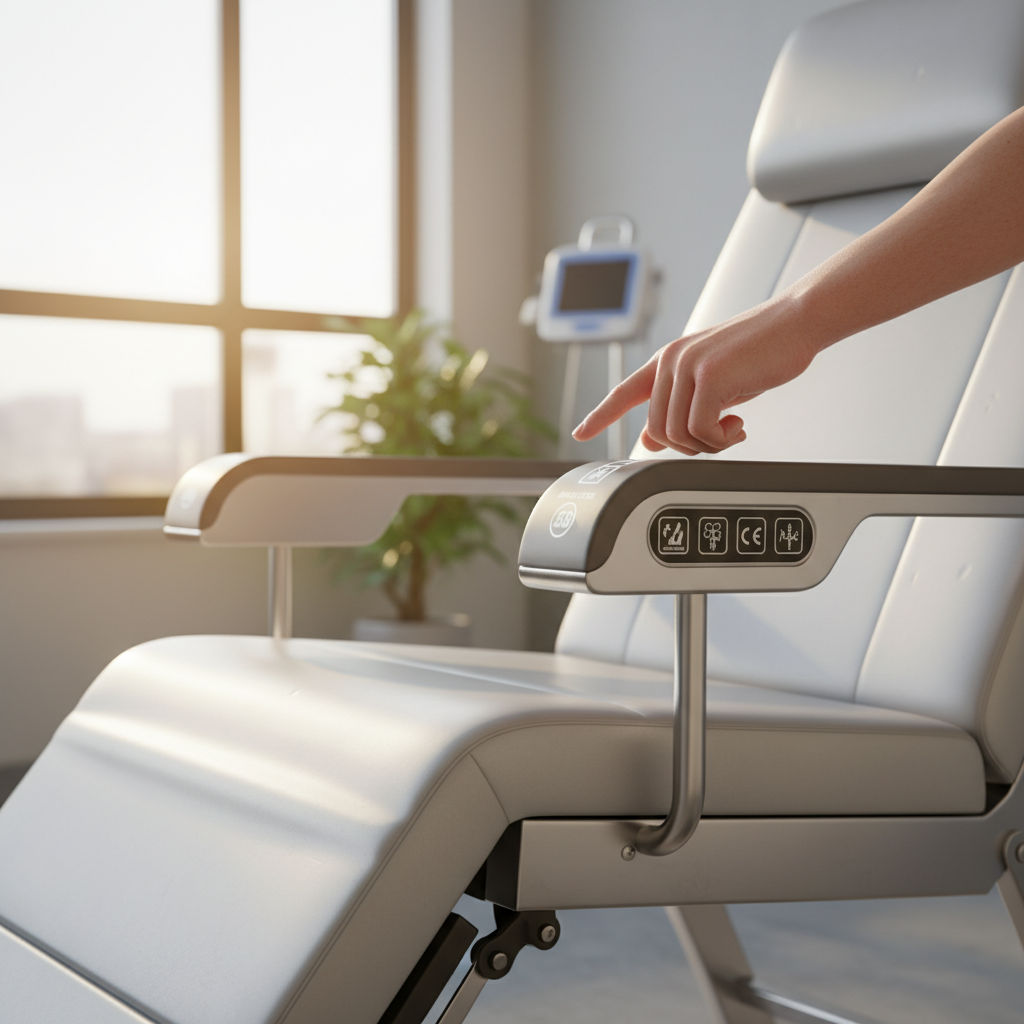
2. Hands-Free Controls: Minimizing Cross-Contamination
Every touchpoint is a potential vector for cross-contamination. Reducing the need for manual adjustments during a procedure is a significant step toward a safer environment. Hands-free controls are a practical and effective way to achieve this.
Integrated Foot Controls
The foot control is the most established and essential hands-free tool. It allows the operator to adjust patient positioning and activate instruments without touching surfaces with contaminated gloves. High-volume clinics often prioritize robust, multi-function foot controls that are intuitive and durable. This simple feature fundamentally breaks a key link in the chain of infection.
Pro Tip: Balance Functionality with Simplicity
While fully hands-free operation is the ideal, experienced teams find that a balanced approach is often most practical. A common and effective setup combines a comprehensive foot control with a single, sterilizable tabletop touchpoint or an elbow-activated lever. This configuration minimizes touchpoints while retaining usability for functions that are less convenient to manage via foot pedal. Overly complex control layouts are often bypassed by staff, negating their benefit. The key is to integrate controls that fit naturally into the clinical workflow.
A dentist using a foot pedal to adjust a dental chair, demonstrating hands-free operation.
3. Integrated Waterline Disinfection: A Proactive Approach to Biofilm
Perhaps the most persistent and insidious infection control challenge in a dental unit is the management of biofilm within the dental unit waterlines (DUWLs). These narrow tubes create an ideal environment for microbial colonies to grow. Both CE marking under the EU MDR and FDA regulations scrutinize waterline safety.
The Dangers of Biofilm
Biofilm is a complex community of microorganisms that adheres to the inner surfaces of the waterlines. If left untreated, it can contaminate the water and aerosol spray, posing a risk to both patients and staff. Effective waterline management is therefore a non-negotiable aspect of compliance.
Automated Flushing and Disinfection Systems
Modern dental chairs increasingly incorporate integrated systems to manage waterline quality. These systems automate crucial maintenance tasks, ensuring they are performed consistently.
- Automated Flushing: Many systems can perform an automated daily flush at the start of the day, a practice widely recommended by clinicians. A 20–30 second flush per line clears stagnant water. A shorter flush of around 20 seconds between patients is also a common protocol for high-flow lines.
- “Shock” Treatments: These systems can facilitate or automate the periodic “shock” treatment with a high-concentration disinfectant to eliminate established biofilm, a practice common in busy clinics.
Independent Water Bottle Systems
An independent water bottle system is a critical feature for infection control. It isolates the dental unit from municipal water supplies, which can fluctuate in quality and pressure. This allows the clinic to use distilled or specially treated water, providing complete control over the water source and simplifying the introduction of maintenance solutions.
A close-up diagram illustrating the path of a dental unit waterline disinfection system, showing the clean water bottle and internal tubing.
4. Design for Serviceability and Maintenance
Long-term compliance depends on consistent maintenance. A chair that is difficult to service is a chair that will likely fall out of compliance over time.
Easy Access for Technicians
Technicians report that service time is drastically reduced when key components are easily accessible. Chairs designed for serviceability feature logically placed access panels that allow a technician to reach waterline manifolds, electrical connectors, and filters within 90–120 seconds. This not only reduces downtime but also encourages preventative maintenance. Manufacturers should provide clear validation protocols and readily available spare parts lists to support this.
Durable Connectors and Couplings
Quick-disconnect couplings and handpiece connectors are frequent points of failure and potential contamination. High-quality designs with smooth bore paths and durable O-rings are essential. Clinics should keep spare connector kits on-site and include O-ring replacement as part of their scheduled maintenance plan to prevent unexpected downtime.
Common Misconception: “Any ‘Infection Control’ Chair is Compliant”
A frequent myth is that a chair marketed with “infection control features” is automatically compliant. In reality, compliance is a much deeper issue. A chair with seamless upholstery (a passive feature) is a good start, but it doesn’t address the active threat of waterline biofilm.
True compliance, as outlined by standards like ISO 13485:2016 – Quality Management Systems, requires a validated system. This means the manufacturer must provide evidence that its disinfection systems are effective and that its materials can withstand specified cleaning protocols. A truly compliant chair is part of a complete system, supported by clear instructions, maintenance schedules, and performance data.
Feature and Compliance Checklist
To aid in decision-making, this table maps key features to their compliance benefits.
| Feature | Compliance & Safety Benefit |
|---|---|
| Seamless, Welded Upholstery | Reduces microbial harborage points; simplifies cleaning protocols and ensures effective surface disinfection. |
| Chemical-Resistant Materials | Ensures surface integrity after repeated disinfection; prevents cracks that can harbor pathogens. |
| Hands-Free Foot Controls | Minimizes cross-contamination by reducing manual contact with surfaces during procedures. |
| Independent Water Bottle System | Isolates the unit from variable municipal water; allows use of treated/distilled water for better quality control. |
| Automated Waterline Flushing | Ensures consistent daily and between-patient flushing protocols are followed, reducing biofilm risk. |
| Integrated “Shock” Treatment | Simplifies the process for intensive weekly or periodic waterline disinfection, ensuring efficacy. |
| Easily Accessible Components | Reduces service time and cost; encourages regular preventative maintenance to maintain performance. |
Wrapping Up: An Investment in Safety and Trust
Selecting a dental chair is not merely a capital expense; it is a foundational investment in your clinic’s safety, efficiency, and reputation. The features that support infection control—from seamless surfaces and hands-free controls to automated waterline management and service-friendly design—are integral to meeting international compliance standards like CE and ISO.
By prioritizing these practical, evidence-based features, clinic decision-makers can ensure they are not just buying a piece of equipment, but are implementing a robust system that protects patients, supports staff, and builds a trustworthy practice.
Disclaimer: This article is for informational purposes only and does not constitute professional medical or regulatory advice. Dental clinics should consult with infection control experts and regulatory bodies to ensure full compliance with all applicable standards and regulations.
References
About the Author