 EN
EN  ZH
ZH 
Integrated vs. Standalone Dryer: Which is Best?

Should you get a compressor with a built-in dryer or a separate unit? This is a critical decision for any dental practice, impacting everything from your budget and floor space to the long-term health of your equipment and patient safety. Choosing the right configuration is not just about buying a machine; it’s about investing in your clinic’s operational reliability.
This article cuts through the confusion. We will compare the pros and cons of integrated versus standalone air dryers, providing a clear framework based on cost, space, maintenance, and performance. By the end, you’ll be able to confidently select the best setup for your dental clinic’s specific needs.
The Critical Role of Dry Air in Dentistry
Clean, dry air is not a luxury in a dental setting—it is a fundamental requirement. The air from a compressor is used to power handpieces, operate air-water syringes, and dry treatment sites. If this air contains moisture, oil, or microscopic particles, it can lead to significant problems.
Key Risks of Contaminated Air:
- Patient Safety: Moisture can compromise the integrity of restorative materials like bonds and composites, leading to premature failure. Worse, it creates a breeding ground for microorganisms, which can be propelled directly into a patient’s mouth.
- Equipment Damage: Modern dental handpieces and delivery units have intricate, high-precision internal components. Moisture and oil residue cause corrosion and clogs, leading to costly repairs and operational downtime.
- Inaccurate Diagnostics: Contaminated air can interfere with the function of diagnostic equipment, potentially affecting treatment outcomes.
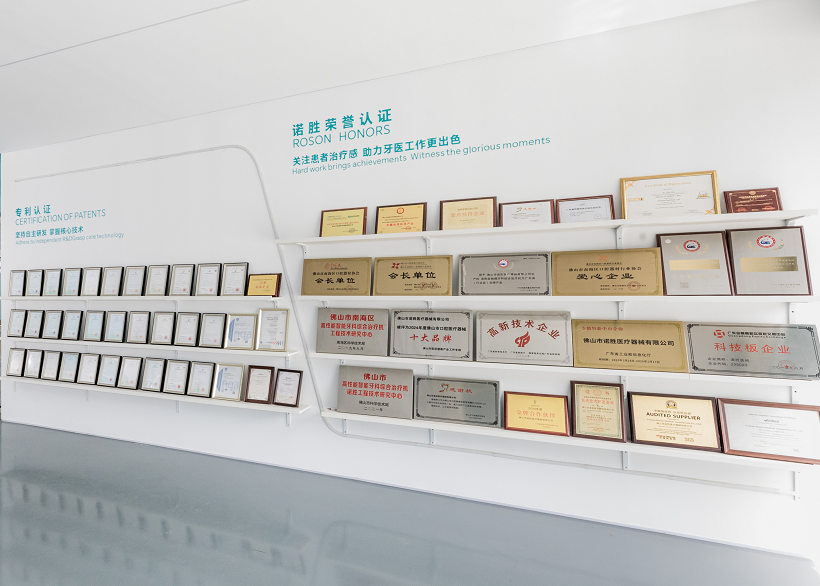
To ensure consistent quality and safety, dental equipment must adhere to stringent standards. For instance, manufacturing processes that follow guidelines like ISO 13485:2016 demonstrate a commitment to quality management for medical devices. This framework ensures that every component is designed and built to prevent contamination and deliver reliable performance.
Integrated Dryers: The All-in-One Solution
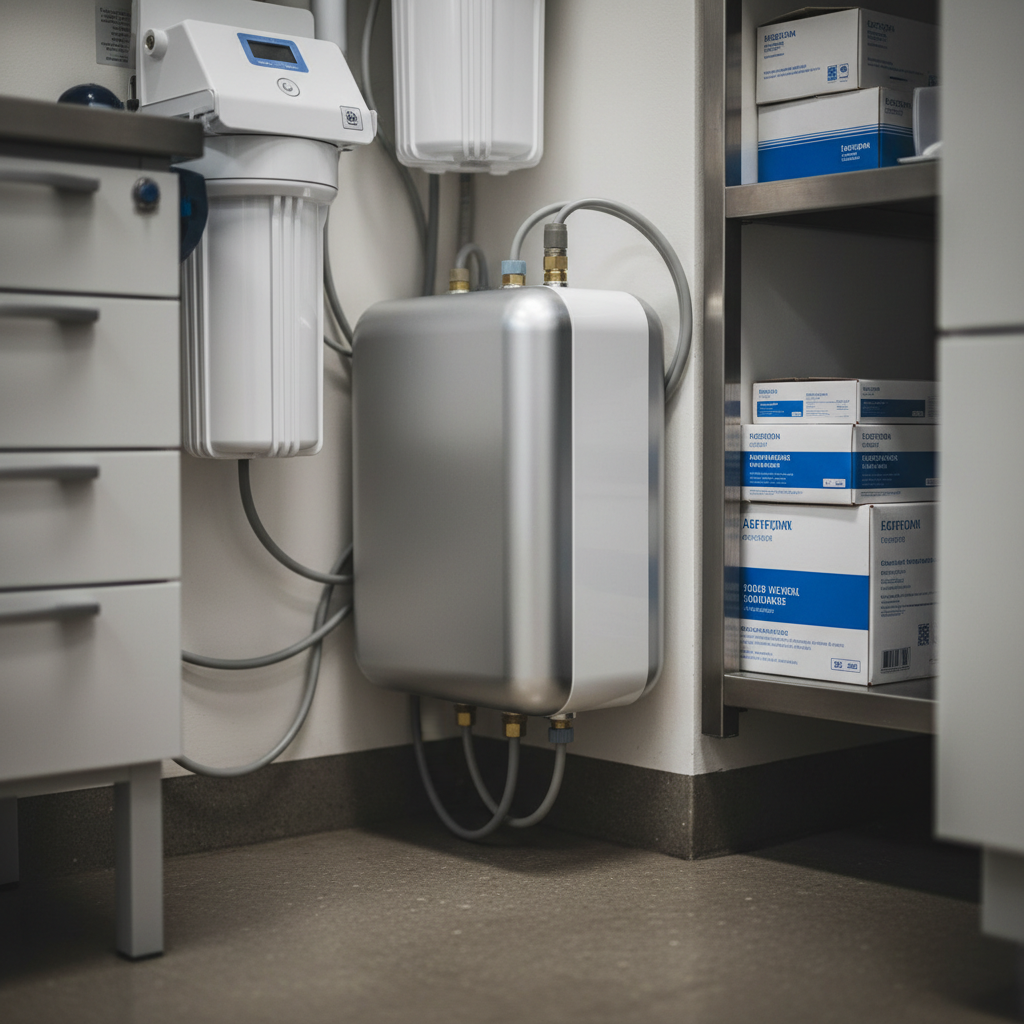
An integrated dryer is built directly into the compressor chassis, creating a single, compact unit. This design is often appealing for its simplicity and apparent convenience. For many smaller practices, it can be a perfectly viable starting point.
Advantages of Integrated Dryers
- Space Efficiency: The most obvious benefit is the smaller footprint. For clinics where every square foot is precious, combining two machines into one is a major advantage.
- Simplified Installation: With fewer components and connections, installation is generally faster and less complex than setting up a separate compressor and dryer.
- Lower Initial Cost: Typically, an all-in-one unit has a lower upfront purchase price compared to buying a compressor and a standalone dryer of equivalent capacity.
The Downsides and Common Pitfalls
The convenience of an integrated system comes with trade-offs. I often see clinics outgrow their integrated units faster than expected. The primary issue is that the dryer shares the same operational load as the compressor. During periods of high demand—for instance, when multiple operatories are running simultaneously—the integrated dryer can become overwhelmed. This leads to moisture “carryover” into the air lines, negating the dryer’s purpose.
A common mistake is to size the unit based on average use, not peak demand. This forces the unit to cycle constantly, increasing wear and reducing its ability to effectively remove moisture. For this reason, integrated dryers are best suited for clinics with 1–2 operatories and modest, predictable duty cycles.
Standalone Dryers: The Dedicated Workhorse
A standalone air dryer is a separate piece of equipment dedicated to a single task: removing moisture from the compressed air. It is installed in-line between the compressor and the air storage tank or distribution lines.
Advantages of Standalone Dryers
- Superior Performance: Because it operates independently, a standalone dryer can be sized to handle the compressor’s maximum output, ensuring a consistent supply of dry air even during peak clinical activity. This is crucial for practices with three or more chairs or those performing procedures that require heavy instrument use.
- System Flexibility: This modular approach allows you to pair any dryer with any compressor. You can upgrade one component without replacing the other, which can be a more cost-effective strategy for future-proofing your operatory as your practice grows.
- Enhanced Reliability & Maintenance: Servicing a standalone dryer is straightforward and does not require taking the compressor offline. If the dryer fails, it can often be bypassed temporarily (though this is not recommended for patient care) or replaced without disrupting your entire compressed air system.
Considerations for Standalone Systems
The primary drawbacks are the higher initial investment and the larger physical footprint. You need dedicated space for both the compressor and the dryer, along with appropriate plumbing to connect them. However, for a busy practice, the reliability and consistent performance are well worth the trade-off.
Decision Framework: Integrated vs. Standalone
Choosing the right system requires weighing the trade-offs in the context of your clinic’s specific operational needs. A small, single-practitioner office has very different requirements from a large, multi-specialty clinic.
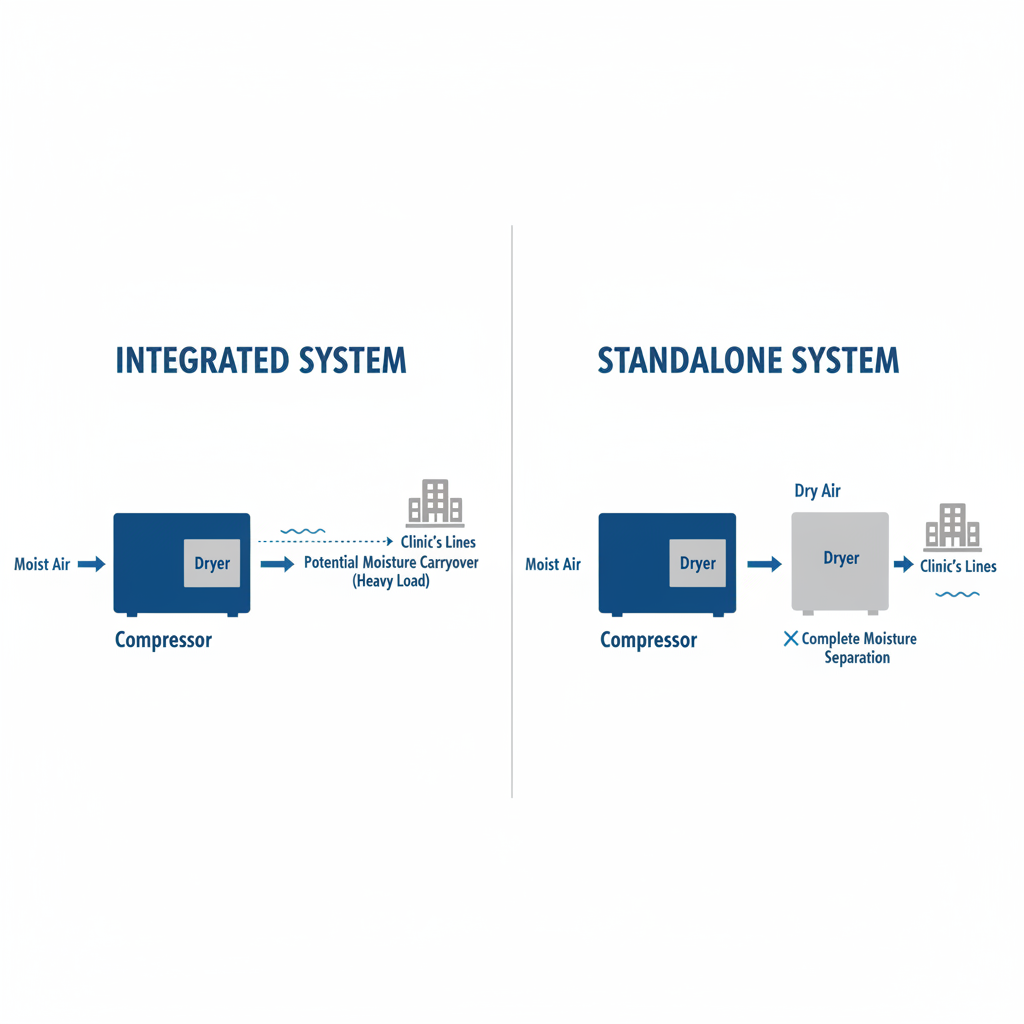
Here is a head-to-head comparison to guide your decision:
| Feature | Integrated Dryer System | Standalone Dryer System |
|---|---|---|
| Performance | Adequate for low-to-moderate demand; may struggle during peak use. | Excellent; provides consistent dry air even at maximum compressor output. |
| Ideal Clinic Size | 1–2 operatories | 3+ operatories or high-use clinics |
| Upfront Cost | Lower | Higher |
| Footprint | Compact, all-in-one unit | Larger; requires space for two separate units |
| Installation | Simpler, fewer connections | More complex; requires plumbing between units |
| Reliability | Generally reliable for intended use, but a single failure affects both systems. | High; modularity isolates potential points of failure. |
| Maintenance | Can be complex; may require servicing the entire compressor unit. | Easier; dryer can be serviced or replaced independently. |
Debunking a Common Myth: “Integrated is Always Cheaper”
A frequent misconception is that an integrated system always represents a better value. While the initial purchase price is often lower, the total cost of ownership can tell a different story. If an undersized integrated unit in a busy clinic allows moisture into your lines, the cost of repairing or replacing damaged handpieces and other dental equipment can quickly exceed the initial savings. According to research highlighted on platforms like ScienceDirect, microbial and particulate contamination from compressed air systems is a documented risk, making air quality a critical factor in long-term operational costs.
Installation & Maintenance Best Practices
Proper setup and routine maintenance are just as important as selecting the right type of dryer. A poorly installed system will perform inefficiently, regardless of its specifications.
Key Installation Tips:
- Sizing Headroom: Always size your dryer with a 10–20% capacity buffer beyond your measured peak air demand (L/min). This prevents the unit from being overworked and ensures a consistent pressure dew point—a practical target is around or below +3°C for general dental use.
- Proximity is Key: Install the dryer and first-stage filtration within 1–3 meters of the compressor outlet. This minimizes the length of pipe where hot, moist air can cool and cause condensation to form before it even reaches the dryer.
- Condensate Management: Use a dedicated condensate trap and an automatic drain at the compressor. It’s also wise to install drains at any low points in the air distribution lines to prevent water from pooling.
Maintenance Schedule
Routine checks are essential for ensuring your system complies with quality regulations, such as those outlined by the FDA in 21 CFR Part 820, which governs medical device manufacturing and quality control. A mistake I often see is facilities that neglect routine drain checks, leading to oil and water carryover.
Create a schedule based on your clinic’s duty cycle:
- Light Use (e.g., < 20% duty cycle): Annual service of filters and dryer components.
- Moderate Use (e.g., 20-50% duty cycle): Semi-annual service.
- Heavy Use (e.g., > 50% duty cycle): Quarterly service.
Always test air lines for moisture after the initial installation and following any service event to confirm performance.
Wrapping Up: Making the Right Choice for Your Practice
The decision between an integrated and a standalone air dryer is a strategic one. There is no single “best” answer—only the right answer for your specific context.
- Choose an integrated dryer if: You are opening a new or small practice (1–2 operatories), your budget is a primary concern, and your available utility space is limited.
- Choose a standalone dryer if: You run a medium-to-large practice (3+ operatories), perform procedures requiring high volumes of clean air, and prioritize long-term reliability and performance over initial cost.
Ultimately, the goal is to deliver clean, dry, and safe compressed air 100% of the time. By evaluating your clinic’s current and future needs against the factors we’ve discussed, you can make an informed investment that protects your patients, your equipment, and your practice.
Disclaimer: This article is for informational purposes only and does not constitute professional engineering or dental advice. Always consult with a qualified equipment specialist to assess your clinic’s specific needs and ensure compliance with all local and national regulations.
References
About the Author