 EN
EN  ZH
ZH 
The Mechanics of Hydraulic Dental Chair Lifts

The Heart of the Clinic: Why Lift Mechanics Matter
In the high-throughput environment of a modern dental clinic, the dental chair is more than just furniture; it is the primary engine of clinical workflow. While upholstery comfort and aesthetic design often catch the eye, the true determinant of a chair’s long-term value lies hidden beneath the base: the lift mechanism. For distributors and clinic managers focused on durability and return on investment (ROI), understanding the mechanics of hydraulic lift systems is essential.
A chair that stalls, drifts, or moves jerkily does not just frustrate the clinician; it disrupts the delicate precision required in dental procedures and erodes patient confidence. The lift system must deliver consistent, smooth positioning for patients ranging from children to bariatric adults, dozens of times a day, year after year.
This article dissects the engineering principles behind hydraulic dental chair lifts, contrasts them with electromechanical alternatives, and provides actionable maintenance strategies to maximize equipment lifespan.
TL;DR: Key Insights for Decision Makers
- Mechanism Efficiency: Hydraulic systems utilize Pascal’s Law to move heavy loads with minimal wear, offering smoother starts and stops compared to screw-drive systems.
- Reliability Metrics: With proper seal maintenance, hydraulic units frequently outlast electromechanical motors in high-duty cycles.
- Maintenance Reality: Fluid integrity is paramount; viscosity changes at high temperatures can alter performance.
- Strategic Choice: For clinics prioritizing long-term durability and heavy lifting capacity, hydraulics remain the industry standard.
The Hydraulic Advantage: Core Mechanics Explained
At its core, a hydraulic dental chair lift operates on a closed-loop fluid dynamic system. Unlike mechanical gears that rely on metal-on-metal contact to generate movement, hydraulic systems use incompressible fluid to transmit force. This design is inherently robust, reducing the friction and heat generation that often plague purely mechanical alternatives.
How the System Works
The operation begins with an electric motor driving a hydraulic pump. This pump pushes hydraulic fluid (typically oil) from a reservoir into a cylinder.
- Pressurization: The pump generates pressure, typically regulated between 8–12 bar for standard dental applications.
- Actuation: This pressurized fluid extends the cylinder (the ram), lifting the chair structure.
- Positioning: To hold the chair in place, a check valve locks the fluid within the cylinder, creating an incredibly stable column of oil that resists drift.
- Descent: To lower the chair, a solenoid valve opens, allowing gravity and the patient’s weight to push the fluid back into the reservoir at a controlled rate.
Fluid Dynamics and Load Management
The smoothness of a hydraulic lift—often described as a “gliding” sensation—is a direct result of fluid dynamics. Because the fluid is incompressible, the movement is immediate yet cushioned. There is no “lash” or play often found in gear-driven systems.
Pro Tip: In our field analysis, we observe that the most robust systems employ limit valves and relief settings calibrated to 1.2–1.5 times the expected maximum load. This safety factor prevents the pump from stalling or overheating if a particularly heavy load is applied, or if the chair encounters a physical obstruction.
Comparative Analysis: Hydraulic vs. Electromechanical Systems
One of the most common decisions distributors and clinic owners face is choosing between hydraulic and electromechanical (worm gear/screw drive) systems. While both can be effective, they serve different priorities regarding maintenance, noise, and longevity.
Debunking the “Messy Hydraulics” Myth
A persistent misconception in the industry is that hydraulic chairs are inherently “messy” or prone to leaking oil on the clinic floor.
- The Reality: Modern hydraulic systems use advanced nitrile or polyurethane seals and precision-machined fittings. Leaks are rarely a design flaw but rather a symptom of neglected maintenance (e.g., ignoring seal replacement intervals). When maintained correctly, a hydraulic system is as clean as any motor-driven unit.
Technical Comparison Table
| Feature | Hydraulic System | Electromechanical (Screw Drive) |
|---|---|---|
| Load Capacity | High. Excellent for heavy lifting; fluid column supports weight effortlessly. | Moderate. Heavy loads place significant stress on the worm gear and motor. |
| Movement Quality | Smooth & Silent. Fluid damping eliminates vibration; “soft start/stop” is inherent. | Mechanical. Can suffer from vibration or “judder” if gears wear; motor whine is common. |
| Wear Points | Seals & Fluid. Low friction on moving metal parts. | Gears & Threads. High friction; metal-on-metal wear over time. |
| Reliability | High in High-Duty Cycles. Heat is dissipated through the fluid. | Variable. Motors can overheat in continuous high-volume use. |
| Maintenance | Periodic. Fluid changes and seal checks required. | Low to Moderate. Greasing gears; motor brush replacement (if brushed). |
| Cost Implications | Higher initial manufacturing cost, but often lower long-term repair costs. | Lower initial cost, but motor/gearbox replacement can be expensive. |
Expert Insight: For high-volume clinics seeing 30+ patients per day, the heat dissipation properties of hydraulic fluid offer a distinct advantage. Electromechanical motors can experience thermal throttling or accelerated brush wear under such intense duty cycles.
Operational Reliability: Managing Heat and Pressure
Reliability is not just about the hardware; it is about how the hardware is operated. Understanding the limits of hydraulic fluid is critical for maintaining consistent performance.
The Impact of Temperature on Viscosity
Hydraulic fluid viscosity is temperature-dependent. Most dental chairs utilize ISO VG 32–46 hydraulic oils.
- Optimal Range: These fluids perform best at room temperatures between 18°C and 28°C.
- The Danger Zone: Our data indicates that viscosity can drop by approximately 10–15% when fluid temperature exceeds 40°C. If the system is operated continuously without rest in a hot environment (above 60°C), the fluid becomes too thin. This leads to “internal leakage” where fluid bypasses the pump vanes, resulting in slow lift speeds or an inability to hold heavy loads.
Diagnosing Air Ingress
The enemy of hydraulic precision is air. A “spongy” feeling when the chair stops, or a jerky ascent, is almost always caused by aeration.
- Symptoms: Cavitation noise (a distinct growling or rattling sound from the pump) or uneven descent.
- Fix: Bleeding the system is a standard corrective action. However, persistent aeration suggests a loose intake fitting or a low fluid level in the reservoir.
Maintenance Protocols for Longevity
To transition from a reactive “fix-it-when-it-breaks” model to a proactive reliability model, clinics must adopt a structured maintenance cadence. Neglect is the primary cause of premature hydraulic failure.
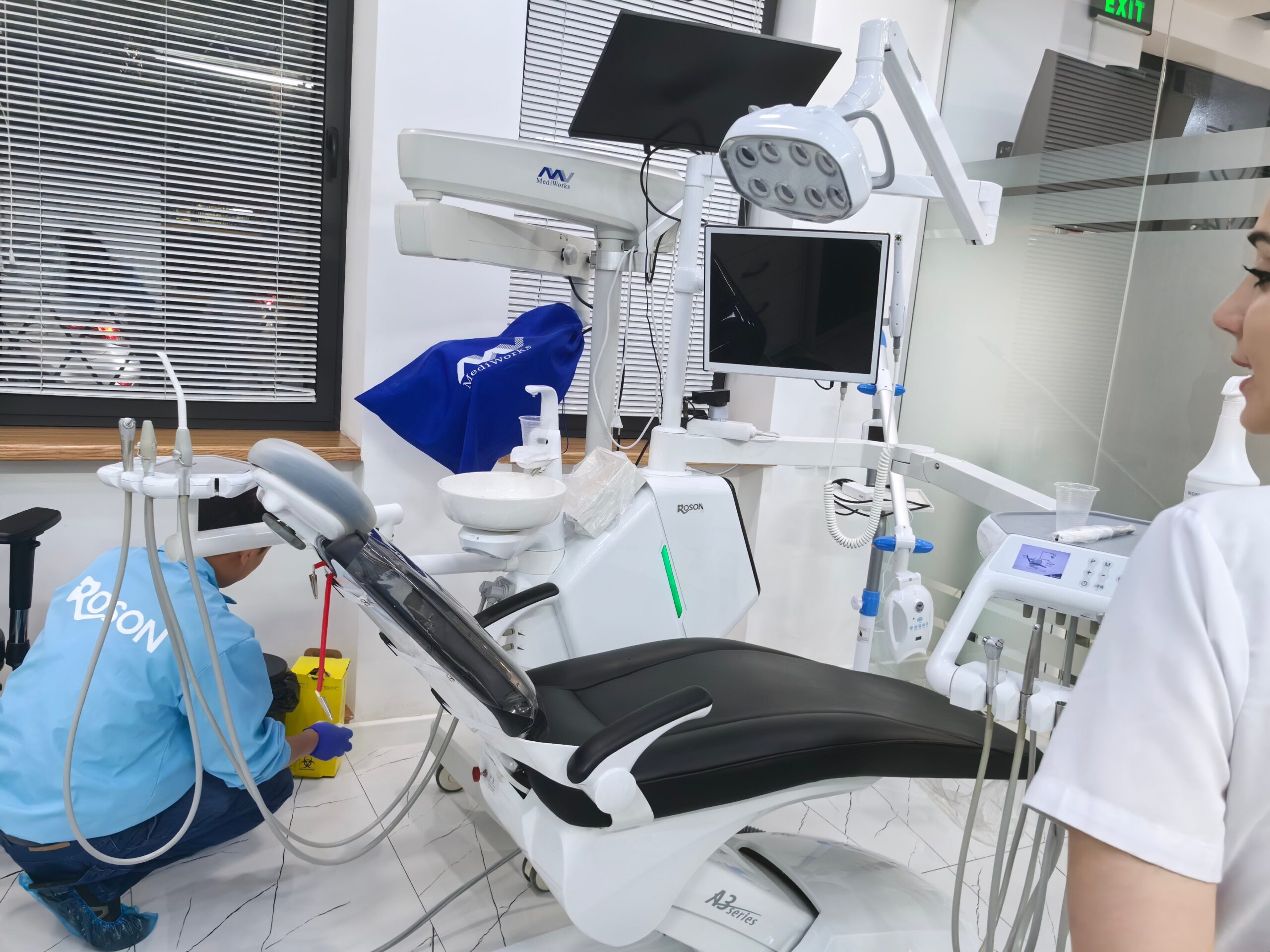
The Field Service Checklist
Drawing from practitioner-level insights, we recommend the following maintenance schedule for hydraulic dental chairs:
Quarterly (Every 3 Months)
- [ ] Visual Inspection: Remove the base cover and inspect the area around the cylinder and pump for any sheen or dampness that indicates a weeping seal.
- [ ] Aural Check: Listen for cavitation during the lift cycle.
- [ ] Safety Stop Test: Verify that the mechanical safety stop (anti-crush mechanism) engages correctly.
Annually (Every 12 Months)
- [ ] Fluid Analysis: Check the hydraulic fluid color. Darkening indicates oxidation or particulate contamination. A burnt smell indicates overheating.
- [ ] Lubrication: Grease the scissor-lift pivot points (if applicable) to reduce side-loading on the hydraulic cylinder.
- [ ] Fitting Torque: Check high-pressure hose fittings. Vibration can loosen these over time. Torque to manufacturer specs.
Biennially (Every 24 Months)
- [ ] Fluid Replacement: Flush and replace the hydraulic fluid. For chairs in high-use clinics, shorten this interval to 12 months.
- [ ] Seal Review: Proactively replace cylinder seals if the chair is over 5 years old, even if no leaks are visible, to prevent sudden failure.
Expert Warning: Never top up a system with a different grade of oil. Mixing fluids with different additive packages can cause foaming or seal degradation. Always stick to the specified ISO VG grade.
Regulatory Compliance and Safety Standards
For distributors importing equipment or clinics ensuring liability protection, adherence to international standards is non-negotiable. Quality management in manufacturing directly correlates to the safety and reliability of the lift mechanism.
Key Standards to Verify
- ISO 13485:2016: This is the gold standard for medical device quality management. According to the ISO 13485:2016 overview, this standard specifies requirements for a quality management system where an organization needs to demonstrate its ability to provide medical devices that consistently meet customer and applicable regulatory requirements. For a dental chair, this certification ensures that the hydraulic assembly process is validated and consistent.
- FDA 21 CFR Part 820: For equipment entering the US market, compliance with the FDA Quality System Regulation is mandatory. This regulation governs the methods used in, and the facilities and controls used for, the design, manufacture, packaging, labeling, storage, installation, and servicing of all finished devices intended for human use. It ensures that the lift mechanism has undergone rigorous design validation.
- CE Marking & EU MDR: The European Medical Device Regulation (MDR) places strict requirements on clinical evaluation and post-market surveillance. A CE-marked chair demonstrates conformity with European health, safety, and environmental protection standards.
Safety Mechanisms
Beyond paperwork, physical safety features are critical.
- Mechanical Locks: A physical maintenance lock should always be engaged before a technician places their hands inside the base mechanism.
- Overload Protection: As noted in industry reports by Frost & Sullivan, the integration of intelligent overload protection sensors is a growing trend that prevents structural damage to the chair and injury to the patient.
Wrapping Up: The Mechanics of Value
The hydraulic lift system is the silent workhorse of the dental operatory. Its ability to handle heavy loads with grace and precision makes it the preferred choice for clinics that value durability and patient comfort. While electromechanical systems offer a lower barrier to entry, the hydraulic system’s longevity—when paired with disciplined maintenance—often yields a superior total cost of ownership.
By understanding the fluid dynamics, respecting the maintenance intervals, and verifying regulatory compliance, dental professionals can ensure their equipment remains a reliable asset rather than a liability.
Disclaimer: This article is for informational purposes only and does not constitute professional technical or medical advice. Maintenance procedures should only be performed by qualified service technicians. Always consult the specific manufacturer’s service manual for your equipment.
References
About the Author