Skip to content
 EN
EN  ZH
ZH 
Key Dental Chair Features for Effective Student Training

Durability and Maintenance: The Foundation of a High-Traffic Clinic
In a dental school or large clinic, equipment undergoes constant use by operators with varying levels of experience. Therefore, the primary consideration for a dental chair must be its durability. Chairs built for high-traffic environments are not a luxury; they are a necessity for maintaining operational continuity and managing costs. Look for chairs constructed with a robust steel frame and high-quality, resilient materials that can withstand the rigors of daily, repetitive use.
A common mistake is purchasing feature-rich chairs that require vendor-specific maintenance or proprietary parts. While advanced features can be appealing, they often introduce complexity and dependency, leading to longer downtimes and higher service costs. A more strategic approach is to standardize on chairs with modular designs and easily sourced consumables. This ensures that your in-house maintenance team can handle most repairs quickly, a critical factor detailed in discussions on The Financial Impact of Dental Chair Reliability & Downtime.
Pro Tip: Prioritize Mechanical Simplicity
For training programs, prioritizing mechanical systems (pneumatic or hydraulic) over advanced electronics significantly reduces downtime. These systems are generally easier for maintenance staff to learn, troubleshoot, and repair. The simplicity also translates to the student experience, allowing them to focus on the patient and procedure rather than navigating a complex interface.
To ensure longevity and performance, a consistent maintenance routine is essential. Here is a practical checklist based on common heuristics for high-use settings:
| Frequency | Task | Purpose |
|---|---|---|
| Daily | Visual Inspection | Check for visible wear, damage to upholstery, and loose components. |
| Weekly | Lubricate Joints | Apply lubricant to articulated joints as specified by the manufacturer to ensure smooth motion. |
| Quarterly | Check Seals & Hoses | Inspect all hydraulic and pneumatic seals and hoses for leaks or signs of degradation. |
| Annually | Professional Servicing | Schedule a comprehensive check-up by a qualified technician. |
In high-traffic labs, a good rule of thumb is to keep one spare for common replaceable parts—like a headrest or an upholstery panel—for every 6–8 chairs. Furthermore, factor the upholstery’s lifespan, which is typically 3–5 years under heavy student use, into the total cost of ownership.
Ergonomics and Adjustability: Accommodating a Diverse User Base
Effective dental education requires a chair that can be adjusted for a wide range of patient body types and procedural requirements. Proper ergonomics are not just about patient comfort; they are crucial for training students to work in postures that prevent musculoskeletal injuries over their careers.
Key ergonomic specifications to look for include:
- Patient Seat Height: To accommodate everyone from children to tall adults, a seat height range of approximately 420–540 mm is ideal for most clinics. An additional ±30 mm of fine-tuning adjustment allows for precise positioning.
- Backrest Tilt: The chair should support a wide range of procedures with a backrest tilt from at least -10° (Trendelenburg position) for syncope management to +60° for standard examinations.
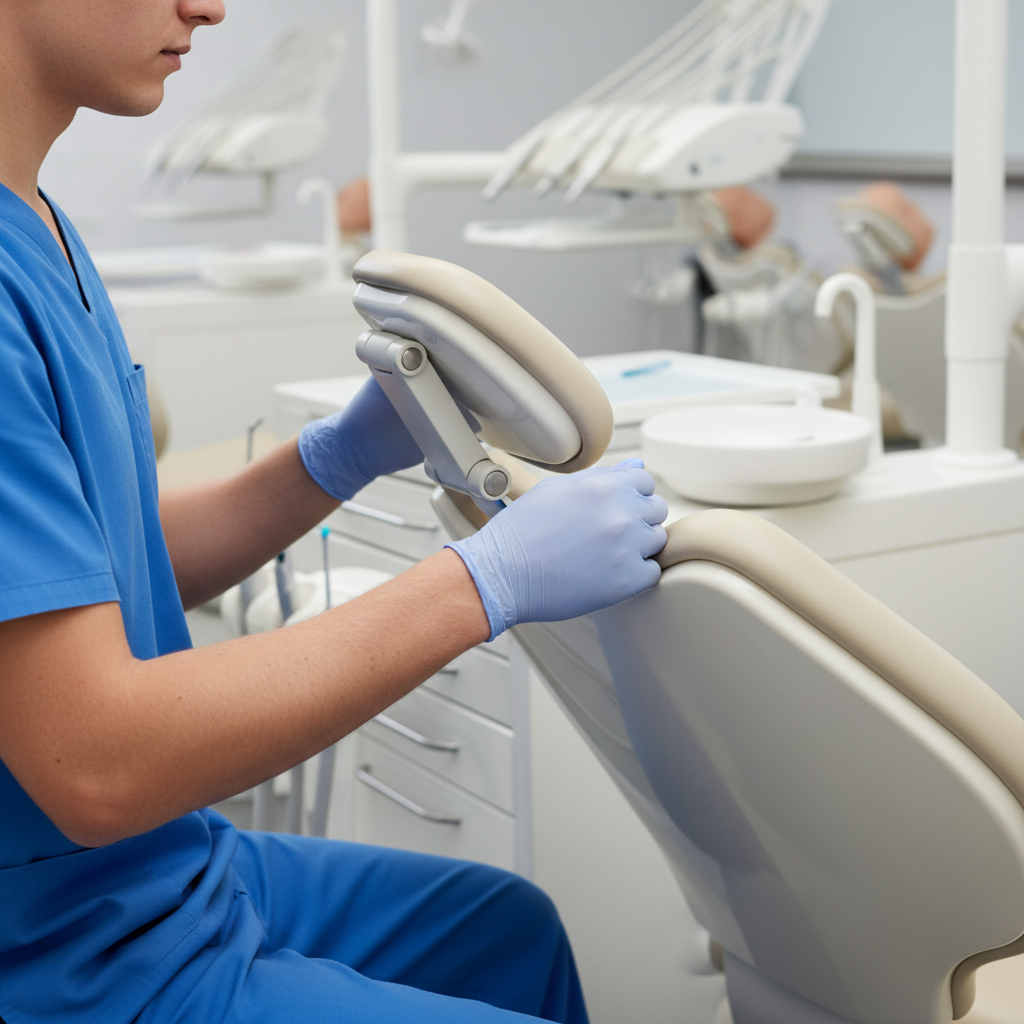
- Headrest Adjustability: A dual-axis articulating headrest is essential. It should permit a forward/back travel of approximately 60–80 mm to comfortably support the patient’s head in the correct position, reducing strain on the student’s back and neck. This level of adaptability is also a cornerstone of providing care for patients with unique needs, a topic explored further in Ergonomics for Dentists Treating Special Needs Patients.
Investing in highly adjustable chairs has a clear return, as it creates a more versatile and accessible clinical environment. The principles behind The ROI of an Accessible Dental Chair in Your Practice apply directly to training institutions, where the ability to treat a diverse patient pool is a core part of the curriculum.
Simplicity and Control: Designing for the Learning Curve
While advanced technology has its place, the training environment demands simplicity and intuitive operation. Complex touchscreen interfaces can overwhelm students, diverting their attention from the patient and the procedure. In a learning context, the goal is to build foundational skills and muscle memory.
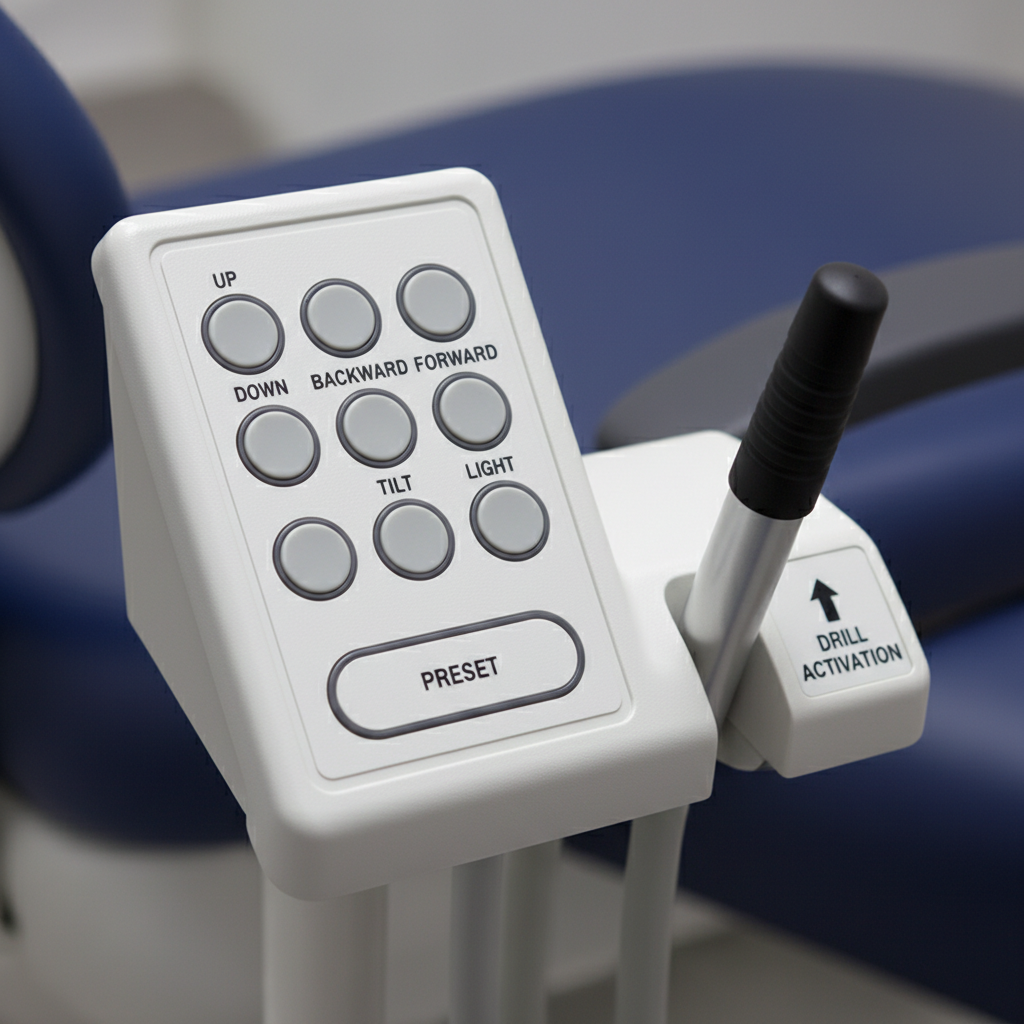
For this reason, chairs with simple, repeatable controls are superior for student training. Controls such as single-lever adjustments or clearly labeled, tactile multi-button presets reduce the likelihood of student error. This design philosophy ensures that students can make adjustments confidently and quickly without a steep learning curve.
Common Misconception: More Features Equal Better Training
A pervasive myth is that chairs loaded with the latest technology provide a better educational experience. In reality, the opposite is often true for novice users. The cognitive load of managing a complex interface can interfere with the primary learning objectives. For a training institution, the most effective chair is one that is easy to operate, allowing students to focus on mastering clinical techniques rather than the equipment itself.
Total Cost of Ownership and Regulatory Compliance
When procuring dental chairs for an educational institution, decision-makers must look beyond the initial purchase price and evaluate the Total Cost of Ownership (TCO). This includes the initial investment as well as ongoing expenses related to maintenance, repairs, parts, and potential downtime.
An effective procurement strategy involves Cost-Effective Dental Chair Integration Strategies that favor standardization and long-term value. Furthermore, all equipment must meet stringent regulatory standards to ensure safety and quality. Compliance is non-negotiable.
For products sold in Europe, a CE Marking – European Conformity is mandatory, indicating that the chair meets EU safety, health, and environmental protection requirements. Additionally, adherence to quality management systems like ISO 13485:2016 – Quality Management Systems demonstrates a manufacturer’s commitment to consistent quality and safety in medical device production. In the United States, similar requirements are outlined by the FDA in 21 CFR Part 820. Verifying these certifications is a critical step in the selection process, ensuring the equipment is legally compliant and built to a professional standard.
Key Takeaways
Selecting the right dental chairs for a training center is a strategic decision that impacts student learning, operational efficiency, and financial sustainability. To equip a dental school for success, prioritize the following criteria:
- Durability: Opt for chairs with robust construction and materials designed to withstand the demands of a high-traffic environment.
- Ease of Maintenance: Standardize on equipment with modular designs and readily available parts to minimize downtime and service costs.
- Ergonomic Range: Ensure chairs offer extensive adjustability in seat height, backrest tilt, and headrest position to accommodate diverse patients and train students in proper posture.
- Simple Controls: Choose intuitive, tactile controls over complex touchscreens to reduce the learning curve and minimize operational errors.
- Lifecycle Cost & Compliance: Evaluate the total cost of ownership and verify all necessary regulatory certifications, such as CE and ISO 13485, to guarantee safety and quality.
By focusing on these core features, training institutions can create a reliable and effective learning environment that prepares the next generation of dental professionals.
This article is for informational purposes only and does not constitute professional medical or financial advice. Decision-makers should consult with procurement specialists and clinical directors to select equipment that meets their institution’s specific needs and regulatory obligations.
References
About the Author