 EN
EN  ZH
ZH 
Dental Chair Repair vs. Replace: A Decision Guide

Introduction: The Critical Decision Point
When a core piece of equipment like a dental chair begins to fail, it creates an immediate and costly problem for any dental practice. The choice isn’t just about fixing a broken item; it’s a critical business decision with long-term financial and operational consequences. Do you invest in a potentially expensive repair, or is it more prudent to replace the unit entirely? Making the wrong call can lead to spiraling costs, unexpected downtime, and even compromised patient safety.
Facing a major dental chair issue? This guide helps you weigh the costs and benefits of repairing versus replacing your equipment, ensuring you make the most cost-effective decision for your practice’s budget. We will move beyond the initial repair quote to explore a comprehensive decision-making framework, covering financial heuristics, safety compliance, and operational best practices. A deeper understanding of this topic can be found in our TCO analysis for your dental chair.
The Financial Heuristic: When Repair Costs Signal Replacement
A practical rule of thumb used by experienced field technicians is the 50% heuristic. If a quoted repair cost exceeds approximately 50% of the price of a comparable new chair, replacement is often the more financially sound option. However, the repair quote is only one part of the equation. To make a truly informed decision, you must calculate the Total Cost of Repair and compare it against the Total Cost of Replacement.
Debunking a Common Misconception: The Hidden Cost of Downtime
A frequent mistake clinic managers make is underestimating the cost of downtime. A non-operational chair isn’t just an inconvenience; it’s a direct loss of revenue. You must calculate this loss and factor it into your decision.
Downtime Cost = (Average Daily Revenue Per Chair) x (Number of Days Out of Service)
If a chair is out of commission for three days for a repair, that is three days of lost production. This hidden cost can quickly make an otherwise affordable repair an expensive liability.
To help clarify this financial analysis, we’ve developed a comparison table:
| Cost Factor | Repair | Replace |
|---|---|---|
| Upfront Cost | Parts & Labor Quote | New Chair Purchase Price |
| Downtime Cost | (Daily Revenue) x (Repair Days) | (Daily Revenue) x (Installation Days) |
| Shipping/Freight | Cost of shipping parts | Cost of shipping new chair |
| Future Reliability | Moderate to Low (older parts may fail) | High (new components, full warranty) |
| Technology/Features | None (maintains status quo) | Access to modern ergonomics, integration, and efficiency |
| Warranty | Limited (often 30-90 days on parts) | Full Manufacturer’s Warranty (1-3 years typical) |
By filling this out, you get a much clearer picture of the true financial impact, which often reveals the long-term value of replacement, especially when balancing affordability and durability.
Beyond the Sticker Price: Critical Factors in Your Decision
While the financial analysis is crucial, other factors related to safety, compliance, and long-term strategy must be weighed. These elements directly impact your practice’s risk profile and operational integrity.
Age and Technology Obsolescence
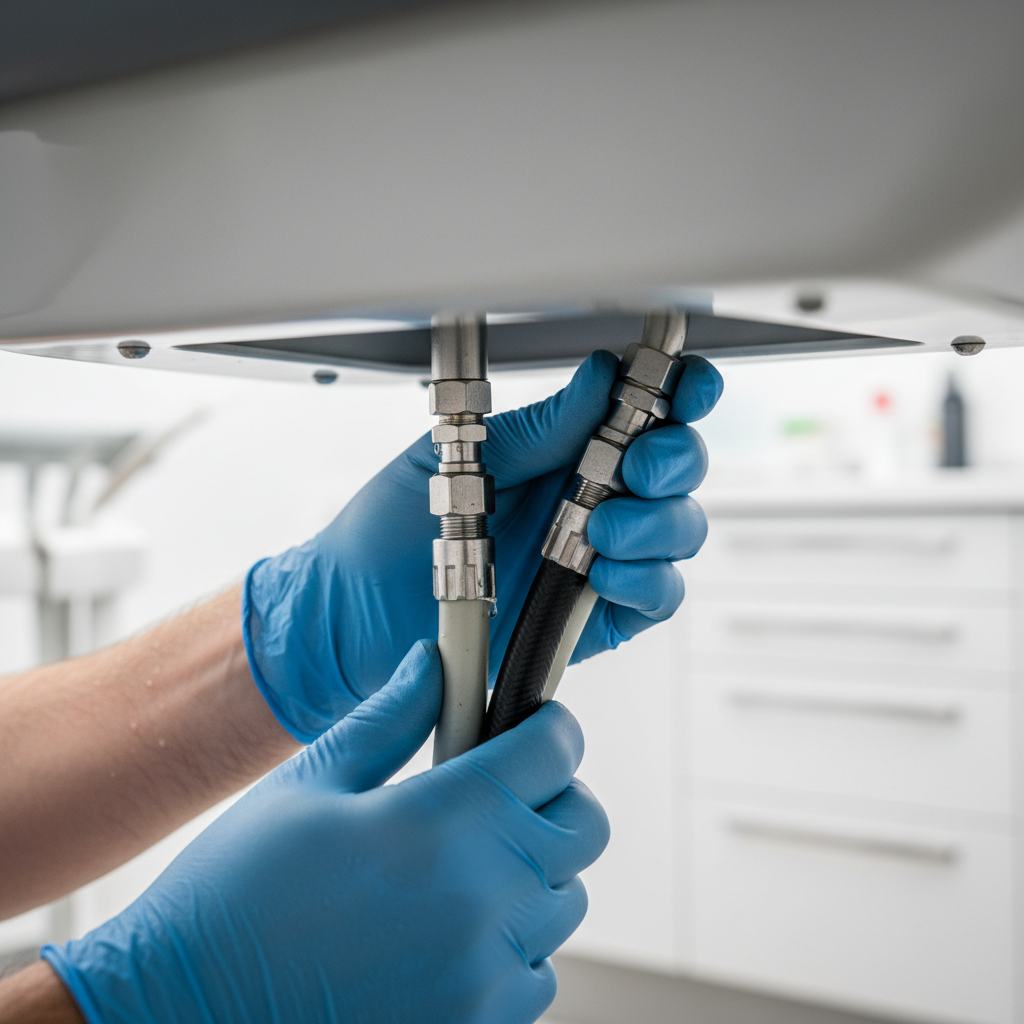
Most dental chairs have a practical service life of 8 to 10 years. Beyond this point, even with repairs, you face diminishing returns. Metal fatigue, brittle plastics, and the unavailability of spare parts become persistent issues. Furthermore, technology in the dental field evolves. Newer chairs may offer improved patient comfort, better ergonomics for your staff, and seamless integration with modern dental tools. Pursuing a cost-effective dental chair integration strategy with a new unit can yield productivity gains that an old, repaired chair cannot match.
Safety, Compliance, and Infection Control
This is a non-negotiable aspect of your decision. An aging or improperly repaired chair can pose significant risks. For instance, intermittent motor faults are not just a nuisance; they can be an electrical safety hazard. More critically, compromised upholstery is a major infection control vector. Cracks, tears, or exposed foam cannot be reliably sterilized and can harbor contaminants. In these cases, replacement is the only responsible choice.
Maintaining equipment to meet quality standards is essential for regulatory compliance. Key international standards like ISO 13485:2016 – Quality Management Systems establish a framework for ensuring medical device safety and efficacy. Similarly, devices sold in the United States must adhere to the FDA’s Quality System Regulation under 21 CFR Part 820, while those in Europe must comply with the EU Medical Device Regulation (MDR). Using a chair with visible signs of degradation could put your practice at odds with these critical regulations.
Proper upholstery care is your first line of defense. For guidance on this, see our Dental Chair Upholstery: A Cleaning & Care Guide.
A Practical Inspection Checklist
Before making the final call, conduct a thorough inspection of the chair. This checklist, based on common field service findings, can help you identify red flags that point toward replacement.
-
1. Assess the Hydraulics and Actuators:
- What to look for: Check for any fluid leakage around the chair’s base and hydraulic lines. Note the speed and smoothness of chair movements.
- Repair or Replace?: Minor, slow “micro-drops” of hydraulic fluid may be repairable if the fix can be completed within 4-8 hours. However, significant pooling of fluid or jerky, unreliable movements suggest a major system failure where replacement is often more economical.
-
2. Evaluate the Motors and Electrical Systems:
- What to look for: Listen for unusual grinding or straining noises from the lift and backrest motors. Time the chair’s movements—has the runtime to reach full height or recline declined by more than 20% from its original speed?
- Repair or Replace?: A noticeable increase in noise or a significant drop in performance indicates critical wear on motor brushes and other internal components. These are often signs of imminent failure, tipping the decision toward replacement.
-
3. Inspect Upholstery and Frame Integrity:
- What to look for: Press firmly on the seat and backrest. Does the foam feel compressed and fail to rebound? Look for cracks, tears, or hardening of the upholstery, especially at the seams.
- Repair or Replace?: If the cushioning has lost over 20-25% of its original loft, it can no longer provide proper patient support and should be replaced. Cracked upholstery is an infection control risk, making replacement the only safe option. To learn more about material longevity, explore our guide on maximizing durability in dental chair upholstery.
-
4. Check Spare Parts Availability:
- What to look for: Before committing to a repair, ask your technician to confirm the lead time for all necessary parts.
- Repair or Replace?: If the lead time for critical components is longer than six weeks, the extended downtime cost will almost certainly make replacement the better choice.
If replacement is the right path, it’s an opportunity to select equipment that meets your practice’s evolving needs. Consider using a checklist for choosing comfortable chairs to ensure your next investment also enhances the patient experience with affordable chairs that don’t compromise on comfort.
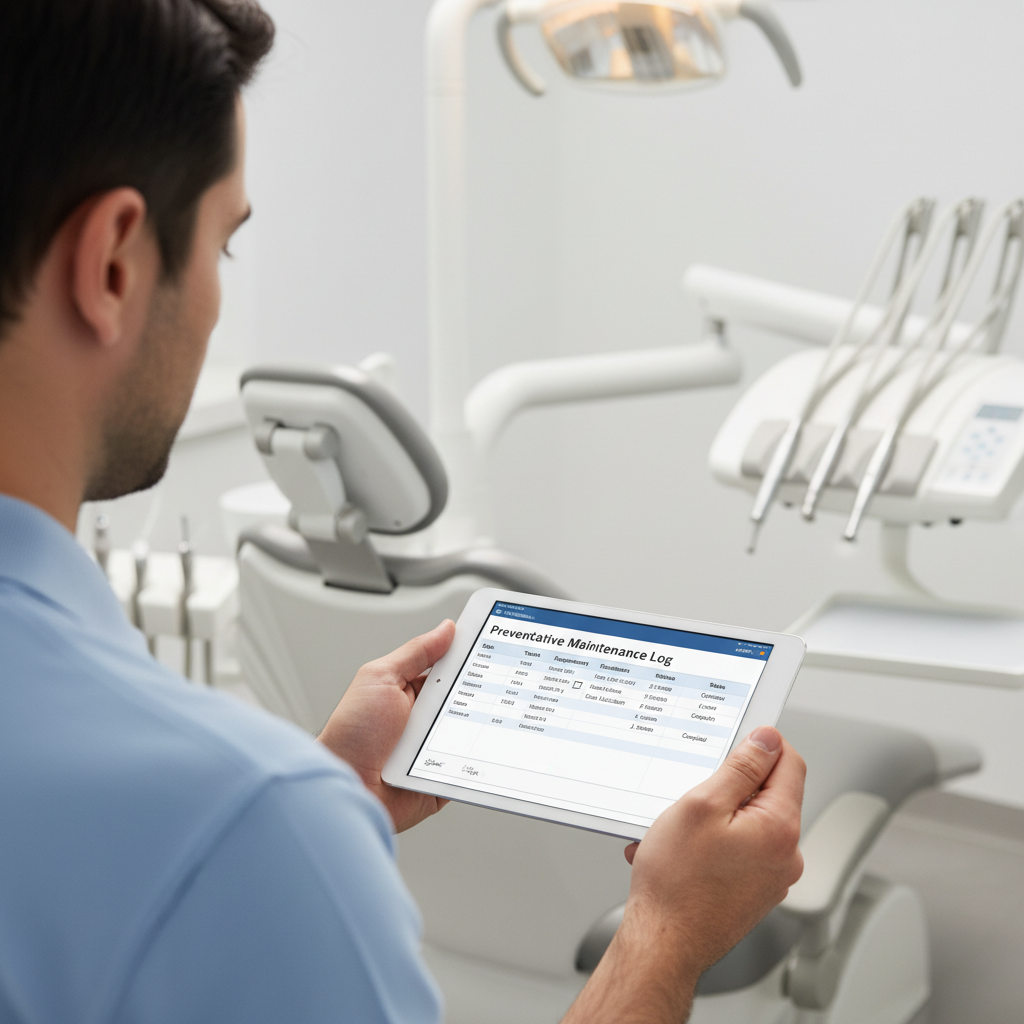
The Strategic Value of a Service Log
One of the most effective, yet often overlooked, tools for managing dental equipment is a simple service log. Practices that diligently maintain a running log for each chair—noting the date, problem, parts replaced, and technician notes—consistently see better outcomes. Our analysis of real-world maintenance programs shows that this simple habit can extend a chair’s effective lifespan by roughly 20%.
A detailed service history provides invaluable data. It helps you identify recurring problems, track the cost of ownership over time, and make evidence-based decisions when the “repair vs. replace” question arises. This log is a key part of understanding how chair durability impacts your clinic’s financial health and moves you from a reactive to a proactive maintenance culture.
Key Takeaways
Making the right call on your dental chair is a strategic decision that balances immediate costs with long-term value. To ensure you choose wisely, follow this decision framework:
- Apply the 50% Rule: If the total cost of a repair (including downtime) approaches or exceeds half the cost of a new chair, lean toward replacement.
- Respect the 8-10 Year Lifespan: For chairs approaching a decade of service, replacement is almost always the more prudent long-term investment.
- Prioritize Safety and Compliance: Never attempt to repair a chair with compromised infection control surfaces (e.g., cracked upholstery) or significant electrical faults. The risk is not worth the savings.
- Use the Inspection Checklist: Systematically evaluate the hydraulics, motors, and upholstery to identify critical wear that signals replacement is necessary.
- Maintain a Service Log: Track every issue and repair. This data is your most powerful tool for maximizing equipment lifespan and making informed financial decisions in the future.
Disclaimer
This article is for informational purposes only and does not constitute professional engineering or financial advice. The information provided is intended to be a general guide. Dental clinic owners and managers should consult with qualified service technicians and financial advisors to assess their specific situations before making any purchasing or repair decisions.
References
About the Author