 EN
EN  ZH
ZH 
Calculating the ROI of Dental Chair Preventative Care

The True Cost of a Broken Dental Chair
A dental chair isn’t just a piece of furniture; it’s the centerpiece of your operatory and a primary revenue-generating asset. When it fails, the direct cost of the repair is often the smallest part of the financial damage. The real cost lies in downtime. To understand the value of preventative care, you must first quantify the loss from an out-of-service chair.
Consider a clinic that sees an average of one patient per hour per chair, with an average treatment fee of $200. If a chair is down for a full day (8 hours), the immediate lost revenue is $1,600. If sourcing a specialized part takes three days, that figure balloons to $4,800, not including the technician’s labor and parts costs. This calculation doesn’t even account for the administrative overhead of rescheduling frustrated patients, the potential for them to seek care elsewhere, or the damage to your clinic’s reputation for reliability.
Calculating this potential loss is the first step toward justifying a preventative maintenance budget. It reframes the conversation from “How much does maintenance cost?” to “How much does a breakdown cost?”
The Compounding Effect of Neglect
One common mistake I’ve seen is failing to log and address minor faults, like a slow recline motor or a slightly sticky instrument holder. These small issues rarely fix themselves; instead, they often indicate a deeper, developing problem. A sticky valve might seem like a minor annoyance until it fails completely, causing a water leak that damages flooring and cabinetry. This is why we rigorously document every small fault. Addressing it early might cost $50 for a new seal, while ignoring it could lead to thousands in repairs and downtime. This proactive approach is a core tenet of managing the long-term value of a durable dental chair.
A Practitioner-Proven Framework for Preventative Maintenance
Moving from a reactive to a preventative maintenance model requires a structured schedule. Based on my experience managing equipment across multiple clinics, I’ve found a tiered approach to be most effective. High-volume clinics should consider shortening the inspection intervals to stay ahead of wear and tear.
Here is a sample schedule that provides a strong starting point for most practices:
| Frequency | Key Tasks | Purpose | Estimated Time |
|---|---|---|---|
| Daily | Wipe down upholstery with approved cleaner, check for visible damage, run self-contained water lines. | Infection control and immediate fault detection. | 5 minutes |
| Monthly | Inspect and clean solids collector filter, check lubricant levels, test all chair functions (lift, recline, light). | Prevent clogs and ensure smooth operation. | 15-20 minutes |
| Quarterly | Full preventative maintenance inspection by a trained technician (internal or external). | Calibrate systems, replace high-wear seals, inspect electrical connections and water lines. | 1-2 hours |
| Annually | Comprehensive service by a certified technician. | In-depth inspection of all mechanical and electrical systems, replacement of key component kits. | 2-4 hours |
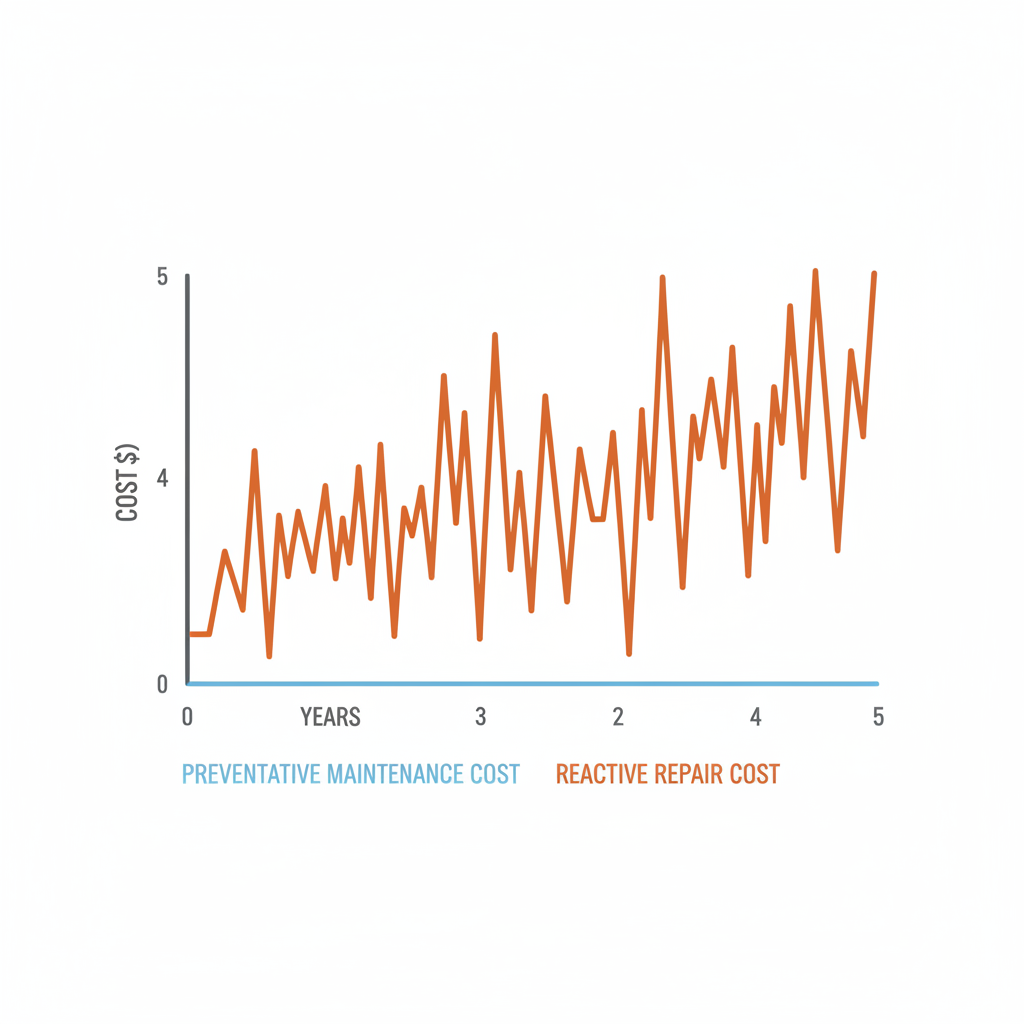
Adhering to a schedule like this can reduce the incidence of major, unexpected breakdowns by 50–70% compared to a purely reactive approach.
Common (and Costly) Maintenance Mistakes
Experience has shown that even well-intentioned teams can make costly errors. Here are a few pitfalls to avoid:
- Using Harsh Disinfectants: Certain chemical cleaners can degrade upholstery, gaskets, and electrical seals over time, leading to premature cracking and failure. Always use manufacturer-recommended or industry-approved cleaning agents. The quality of your upholstery has a significant impact on long-term ROI and durability.
- Skipping Filter and Lubricant Changes: Clogged filters and old lubricants are two of the most common causes of mechanical failure. These are simple, inexpensive tasks that prevent major system strain.
- Ignoring Staff Training: Your dental assistants and hygienists are the first line of defense. A 15-30 minute monthly training session on visual checks, basic troubleshooting, and proper daily shutdown procedures empowers them to catch problems early.
How to Budget for Dental Chair Maintenance
A reliable rule of thumb is to budget 2–5% of the chair’s original purchase price per year for preventative maintenance and consumables. For a $15,000 chair, this means setting aside $300–$750 annually. This budget typically covers expenses like replacement filters, seals, upholstery care products, and minor labor for inspections.
This proactive spending is an investment, not just a cost. It helps avoid the hidden costs of a low-price dental chair that might have higher maintenance needs over its lifespan.
Maintaining an On-Hand Parts Inventory
While you can’t stock every component, keeping a small inventory of high-wear items is a smart strategy to minimize downtime. I recommend keeping at least a 6–12 month supply of the following:
- O-rings and seals
- Suction filters and traps
- Fuses
- Syringe tips and tubing
For larger components like foot pedals or upholstery repair kits, identify a reliable supplier with fast shipping times before you need them. The goal is to shorten the repair cycle from days to hours.
Calculating the ROI of Your Preventative Care Program
To get buy-in from clinic leadership, you need to speak their language: Return on Investment (ROI). The formula is straightforward:
ROI (%) = (Net Benefit / Total Cost of Maintenance) x 100
Where:
- Net Benefit = Avoided Repair Costs + Avoided Downtime Losses + Increased Residual Value
- Total Cost of Maintenance = Annual Spend on Parts, Labor, and Consumables
Case Study: A Data-Driven Example
Let’s model this for a mid-size clinic with one chair over a one-year period.
| Metric | Reactive-Only Model | Preventative Model | Notes |
|---|---|---|---|
| Annual Maintenance Cost | $0 | $500 | Budgeted 2.5% of a $20,000 chair. |
| Major Breakdown Incidents | 1 | 0 | Preventative care caught the issue early. |
| Cost of Major Repair | $1,500 | $0 | Includes parts and emergency technician fees. |
| Downtime from Breakdown | 2 days (16 hours) | 0 hours | |
| Lost Revenue from Downtime | $3,200 (@ $200/hr) | $0 | |
| Total Annual Cost | $4,700 | $500 |
In this scenario, the net benefit of the preventative program is $4,200 (the costs avoided from the reactive model). The ROI calculation would be:
- Net Benefit: $4,200
- Cost of Maintenance: $500
- ROI: ($4,200 / $500) x 100 = 840%
This powerful ROI demonstrates that preventative maintenance isn’t an expense; it’s one of the most effective investments a clinic can make to protect its financial health.
Debunking a Common Myth: “If It Isn’t Broken, Don’t Fix It”
A pervasive myth in equipment management is that maintenance should be purely reactive. This approach treats a breakdown as a random, unavoidable event. However, industry data and experience prove otherwise. Most “sudden” failures are the result of cumulative wear and tear that is detectable and preventable. Adopting a preventative mindset is fundamental to balancing affordability and long-term durability.
Upholding Quality and Compliance Standards
Beyond the financial case, a documented maintenance program is a critical component of your clinic’s quality management system. Adhering to established protocols demonstrates a commitment to safety and operational excellence. For manufacturers, robust quality control is mandated by international standards. For instance, ISO 13485:2016 specifies the requirements for a quality management system where an organization needs to demonstrate its ability to provide medical devices that consistently meet customer and applicable regulatory requirements. Similarly, in the United States, the FDA’s 21 CFR Part 820 outlines current good manufacturing practice (CGMP) regulations that govern the methods used in, and the facilities and controls used for, the design and manufacturing of medical devices.
While these regulations apply to manufacturers like ROSON, a clinic that implements and documents its own maintenance processes aligned with these principles builds a powerful case for its own commitment to patient safety and quality. According to a report from Frost & Sullivan, there is a growing market trend toward prioritizing total cost of ownership over initial purchase price, and a reliable maintenance program is key to that calculation.
Key Takeaways
Shifting from a reactive repair cycle to a proactive maintenance strategy is a powerful lever for improving your clinic’s financial performance and operational stability. The initial investment in time and resources pays for itself many times over by preventing costly downtime and extending the functional lifespan of your most critical assets.
To summarize:
- Quantify Your Risk: Calculate your hourly revenue per chair to understand the true financial impact of downtime.
- Implement a Schedule: Use a tiered schedule (daily, monthly, quarterly, annually) to formalize your maintenance process.
- Budget Proactively: Allocate 2-5% of the chair’s purchase price annually for preventative care.
- Calculate Your ROI: Use the data from your own clinic to demonstrate the overwhelming financial benefit of your maintenance program.
By treating your dental chairs as long-term investments, you can ensure they remain reliable, revenue-generating assets for years to come.
Frequently Asked Questions (FAQ)
How often should a brand new dental chair be serviced?
Even new chairs benefit from a professional inspection after the first 6-12 months to ensure everything is calibrated correctly after the initial settling-in period. After that, follow a standard annual service schedule.
Can my in-house staff perform all maintenance?
In-house staff are perfect for daily and monthly checks. However, quarterly and annual services should be performed by a technician certified to work on your specific chair model to ensure compliance and avoid voiding any warranties.
What is the single most important maintenance task?
While all tasks are important, regular inspection and cleaning of the suction system filters and traps are critical. A clogged suction system can halt operations immediately and is one of the most common—and preventable—causes of a service call.
Disclaimer
This article is for informational purposes only and does not constitute professional financial or medical advice. The calculations and scenarios presented are illustrative examples. Clinic owners should consult with their financial advisors and certified equipment technicians to develop a maintenance and budgeting plan tailored to their specific circumstances.
References
About the Author