 EN
EN  ZH
ZH 
How a Well-Maintained Chair Impacts Patient Trust

The condition of your dental chair is a direct reflection of your practice’s standards. It is often the first and last thing your patient experiences during their visit. A clean, fully functional, and well-maintained chair does more than just provide a place for treatment; it enhances patient comfort, ensures safety, and builds profound, often subconscious, trust in the quality of your care. Neglecting it can silently erode patient confidence, no matter how skilled the clinician.
In my experience, clinicians often underestimate how closely patients observe their surroundings. A small tear in the upholstery, a jerky motion in the chair’s adjustment, or a noisy actuator can plant a seed of doubt about the practice’s overall attention to detail. This article provides a comprehensive framework for dental chair maintenance, moving beyond simple cleaning to establish a proactive system that preserves equipment longevity, ensures regulatory compliance, and solidifies patient trust.
The Silent Communicator: What Your Dental Chair Says to Patients
A dental chair is not just a piece of medical equipment; it is the centerpiece of the patient experience. Its condition sends a powerful, non-verbal message about the quality, cleanliness, and professionalism of your practice. Patients sitting in a chair that looks and feels cared for are more likely to feel relaxed and confident in the care they are about to receive.
First Impressions and Perceived Quality
From the moment a patient enters the operatory, they are forming an opinion. A pristine, modern-looking chair signals investment and a commitment to high standards. Conversely, visible signs of wear and tear can communicate the opposite. I have seen firsthand in many clinics how minor aesthetic flaws can cause a disproportionate loss of trust.
Common issues that patients notice include:
- Cracked or Faded Upholstery: Worn material can look unhygienic and suggests the equipment is old or poorly managed. For more on this, see our Dental Chair Upholstery: A Cleaning & Care Guide.
- Noisy or Jerky Movements: Unexpected sounds or abrupt adjustments can be startling, creating anxiety and a feeling of insecurity.
- Loose Components: A wobbly headrest or loose hand controls can make a patient feel unsafe, questioning the stability and reliability of the equipment being used for their procedure.
These seemingly small details collectively shape the patient’s perception of your practice. A well-maintained chair helps build a foundation of trust before you even begin a conversation.
The Psychology of Cleanliness and Safety
In a healthcare setting, cleanliness is inextricably linked to safety. A visibly clean chair is the first indicator of proper infection control. Patients expect and deserve to be treated in a sterile environment. Any sign of neglect, such as stains or debris, can immediately undermine their confidence in your practice’s hygiene protocols. Proactive maintenance ensures that every patient is greeted by a chair that is not just clean but looks and feels deeply sanitized, reinforcing their sense of safety and well-being.
The Foundation of Trust: Safety and Compliance
Beyond patient perception, rigorous maintenance is a cornerstone of operational safety and regulatory compliance. A malfunctioning dental chair is not just an inconvenience; it is a significant liability that can compromise patient and staff safety. Adhering to established standards is non-negotiable for building a trustworthy practice.
Adherence to Regulatory Standards
Regulatory bodies have established strict guidelines to ensure medical devices are safe and effective. For example, standards like ISO 13485:2016 outline the requirements for a quality management system for medical devices. Similarly, regulations from bodies like the FDA in the United States and the principles of CE Marking in Europe mandate that equipment is manufactured and maintained to specific safety protocols. Following a documented maintenance schedule is a key part of demonstrating compliance with these critical standards, which is essential for protecting your patients and your practice from legal and financial risk.
Debunking a Common Maintenance Myth
A common myth I frequently encounter is that any strong, hospital-grade disinfectant is suitable for cleaning dental chairs. This is a critical misunderstanding. In reality, many abrasive or non-approved chemical agents can severely damage chair components. Using harsh cleaners can cause upholstery to become brittle, fade, and crack prematurely. They can also degrade sensitive rubber and plastic seals, leading to failures in hydraulic or pneumatic systems. Always use manufacturer-recommended, pH-neutral cleaning agents. This approach is detailed in our guide on Maximizing Durability in Dental Chair Upholstery, which explains how proper material care is vital for longevity.
A Practical Maintenance Framework for Dental Chairs
Effective maintenance is not about reacting to problems; it’s about implementing a proactive schedule to prevent them. Based on my experience with countless clinics, a structured approach is the most effective way to ensure reliability and maximize the lifespan of your equipment. The following schedule breaks down tasks into manageable intervals.

Preventative Maintenance Schedule
A systematic approach ensures that nothing is overlooked. This table provides a clear, actionable checklist for your clinical team.
| Frequency | Task | Purpose | Responsible Party |
|---|---|---|---|
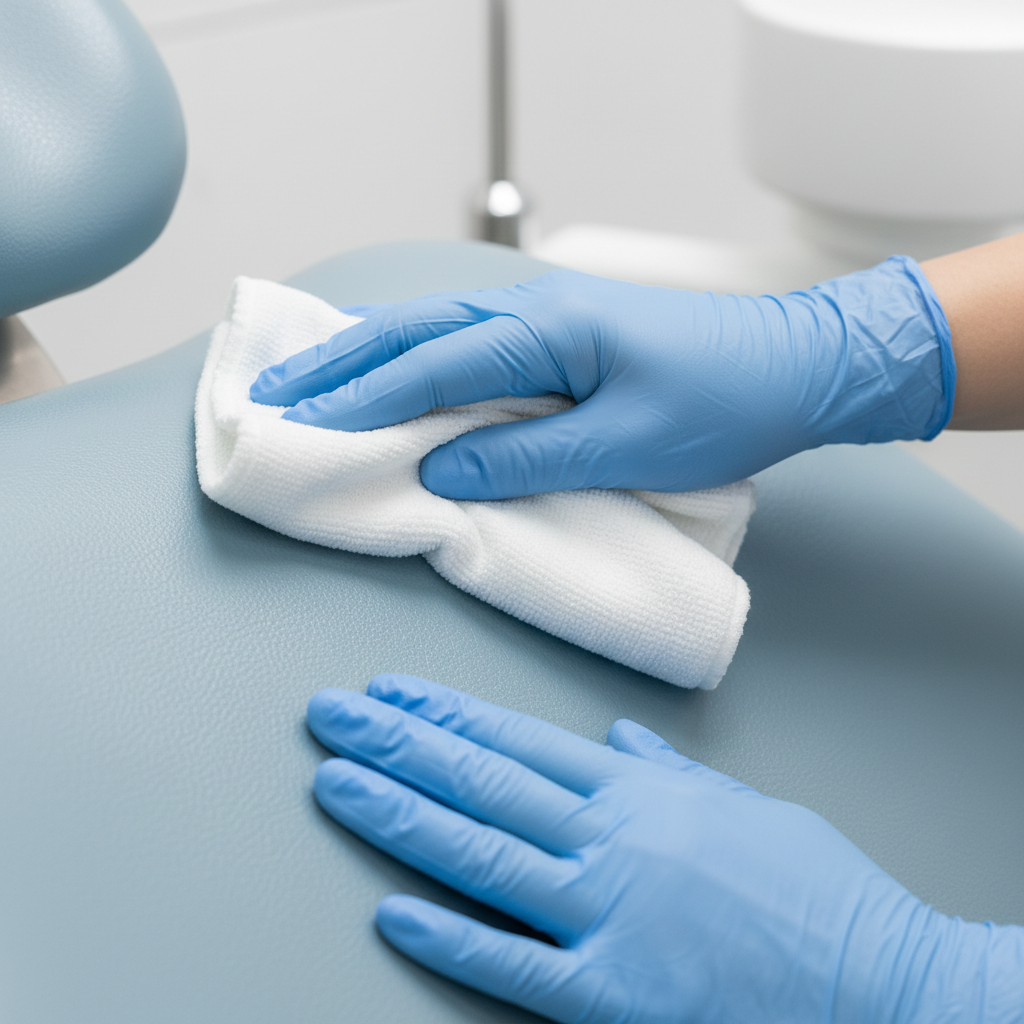
| After Every Patient | Wipe down all high-touch surfaces with an approved disinfectant. | Infection control and patient safety. | Clinical Staff |
| Weekly | Perform a 5-minute functional check: test all controls, brakes, headrest adjustments, and inspect upholstery seams for initial signs of wear. | Early detection of functional issues and cosmetic wear. | Lead Assistant/Practice Manager |
| Monthly | Conduct a detailed visual inspection of upholstery, hydraulic/pneumatic lines, and seals for leaks or damage. | Prevent fluid leaks and major upholstery failures. | Designated Maintenance Staff |
| Semi-Annually | Perform a comprehensive mechanical service: lubricate all pivot points, check and tighten fasteners, test actuator motor currents, and inspect internal wiring for frays. | Ensure smooth, quiet operation and prevent mechanical or electrical failures. | Qualified Technician |
The Importance of Consumable Stock
One of the most common reasons for extended downtime is waiting for simple replacement parts. A lesson I’ve learned is that keeping a small stock of critical consumables is one of the highest-return investments a practice can make. For each chair type in your clinic, I recommend stocking:
- Headrest Covers: Easily replaced to maintain a fresh appearance.
- A Basic Seal Kit: Allows for quick repairs of minor hydraulic or pneumatic leaks.
- One Spare Hand or Foot Control: These are high-use items prone to failure, and having a spare can prevent a chair from being out of service entirely.
This simple inventory can turn a week of downtime into a 30-minute fix.
Troubleshooting Common Chair Issues to Minimize Downtime
Even with preventative maintenance, issues can arise. The key to efficient troubleshooting is a methodical approach. Instead of guessing, train your staff to log symptoms and map them to likely causes. This simple discipline can, in my experience, cut repair times in half.
Common Symptoms and Likely Causes
-
Symptom: The chair makes a groaning or squeaking noise during adjustment.
- Likely Cause: Pivot points require lubrication. This is the most common cause and is easily fixed with the semi-annual service.
-
Symptom: The chair slowly drifts down or fails to hold its position.
- Likely Cause: A hydraulic or pneumatic leak. Check the seals and lines for any visible fluid or listen for hissing sounds.
-
Symptom: The chair’s movements are slow or hesitant.
- Likely Cause: This could indicate motor wear or low hydraulic fluid. If fluid levels are normal, test the actuator motor current during your semi-annual check to identify a weakening motor before it fails completely.
-
Symptom: A function (e.g., backrest tilt) is completely unresponsive.
- Likely Cause: An electrical issue, often with the hand/foot control or a flexed cable. Swapping with a known-good spare control is the fastest way to diagnose the problem.
By documenting these observations before calling a technician, you provide valuable information that enables a faster, more accurate repair.
The Long-Term ROI of Proactive Maintenance
Investing time and resources into dental chair maintenance is not a cost center; it is a direct investment in your clinic’s profitability and reputation. A well-maintained chair contributes to the bottom line in several powerful ways.
First, it extends the functional lifespan of the asset, delaying the need for costly replacement. As explored in How Chair Durability Impacts Your Clinic’s Financial Health, maximizing the life of major equipment has a significant positive effect on a clinic’s balance sheet. Second, it drastically reduces downtime. An out-of-service operatory means lost revenue and scheduling chaos. Proactive maintenance prevents these disruptions.
Finally, the trust and confidence you build with patients lead to higher retention and more referrals. A comfortable, reliable experience is a key part of the overall value you provide. This focus on The ROI of Patient Comfort in Your Dental Practice is what separates good clinics from great ones.
Key Takeaways
Ultimately, your dental chair is a critical component of your practice’s success. Its condition directly influences patient trust, operational safety, and financial health.
To summarize:
- Patient Perception is Reality: Patients judge your practice by what they see. A well-maintained chair signals quality and attention to detail.
- Maintenance is a System, Not a Task: Implement a structured schedule for daily, weekly, monthly, and semi-annual checks to move from a reactive to a proactive model.
- Safety and Compliance are Non-Negotiable: Proper maintenance is essential for adhering to critical safety standards like those outlined by the EU MDR – Medical Device Regulation and other regulatory bodies.
- Proactive Care Delivers Strong ROI: Investing in maintenance reduces downtime, extends equipment life, and enhances patient loyalty, delivering tangible financial returns.
By treating your dental chair as the important asset it is, you are investing in a safer, more professional, and more profitable practice.
Disclaimer: This article is for informational purposes only and does not constitute professional medical or technical advice. Always consult the manufacturer’s guidelines for your specific equipment and rely on qualified technicians for complex repairs or service. Adherence to local and national regulatory standards is the responsibility of the dental practice.
References
- ISO 13485:2016 – Quality Management Systems: https://www.iso.org/standard/59752.html
- FDA 21 CFR Part 820 – Quality System Regulation: https://www.fda.gov/regulatory-information/search-fda-guidance-documents/quality-system-regulation-medical-devices
- CE Marking – European Conformity: https://ec.europa.eu/growth/single-market/ce-marking_en
- EU MDR – Medical Device Regulation: https://ec.europa.eu/health/md_sector/overview_en
About the Author