 EN
EN  ZH
ZH 
Choosing a Dental Chair for Optimal Infection Control

In the high-stakes environment of dental healthcare, the dental chair is more than just patient furniture; it is the central vector for clinical workflow and, critically, infection control. For clinic managers and distributors serving the B2B market, selecting a dental unit is not merely a question of aesthetics or price. It is a rigorous exercise in risk management and regulatory compliance.
A common oversight in procurement is prioritizing immediate comfort or visual appeal over the engineering features that support long-term hygiene. However, as regulatory bodies like the FDA and EU authorities tighten standards, the “cleanability” of a device has become as important as its mechanical function. This guide provides a technical framework for evaluating dental chairs through the lens of infection control, balancing rigorous hygiene standards with the practical realities of cost and durability.
The “Seamless” Standard: Engineering Surfaces for Hygiene
The most visible aspect of infection control is the physical design of the chair’s upholstery and chassis. In a busy clinic, turnover time is money, but speed cannot come at the expense of sterility.
Minimizing Trap Points
Pathogens thrive in crevices. A fundamental heuristic for evaluating a dental chair’s hygiene profile is the “gap test.” Experienced clinicians and infection control experts recommend limiting exposed horizontal seams and gaps to under 3 mm. Gaps larger than this act as reservoirs for biological fluids and contaminants that are difficult to reach with standard surface wipes.
When auditing a potential unit, look for:
- Thermoformed or Vacuum-Formed Plastics: These manufacturing methods reduce the number of joints compared to multi-part assemblies.
- Seamless Upholstery: Stitching creates needle holes which can absorb fluids. High-grade, seamless vinyl or polyurethane allows disinfectants to pool and do their work without penetrating the cushion core.
- Flush-Mounted Controls: Membrane switches or capacitive touch panels are superior to raised physical buttons, which trap debris around their edges.
Chemical Resistance and Material Compatibility
Not all materials can withstand the hospital-grade disinfectants required for turnover. Clinics typically use quaternary ammonium compounds or 70% isopropyl alcohol solutions. Over time, incompatible upholstery will crack, creating microscopic fissures where biofilm can establish itself.
According to ISO 13485:2016 – Quality Management Systems, medical device manufacturers must demonstrate that their products meet safety and performance requirements throughout their lifecycle. This includes validating that materials do not degrade under expected cleaning protocols. Always request a vendor’s compatibility list to ensure the chair’s skin can survive your clinic’s chemical regimen.
Hands-Free Operation: Breaking the Chain of Infection
Cross-contamination often occurs when a clinician adjusts the chair position with gloved hands during a procedure. Reducing touchpoints is a primary strategy for interrupting this chain.
The Superiority of Foot Controls
While touchscreen interfaces on delivery units are modern, the most hygienic control method remains the foot pedal. A comprehensive foot control system should allow the operator to:
- Adjust seat height and backrest tilt.
- Activate and deactivate the operating light.
- Control water flow to handpieces.
By offloading these tasks to the feet, the clinician keeps their hands (and gloves) exclusively in the sterile field of the oral cavity.
Touchless Sensor Technology
Modern units increasingly integrate infrared or capacitive sensors for the operating light and bowl rinse functions. This eliminates the need for physical contact entirely. However, reliability is key; a sensor that fails mid-procedure forces a manual override, defeating its purpose.
Common Misconception: “Antimicrobial coatings replace the need for rigorous cleaning.”
The Reality: Antimicrobial additives in plastics are a secondary line of defense, not a magic shield. They may inhibit bacterial growth over 24 hours, but they do not kill viruses or bacteria instantly upon contact. They never replace the mechanical friction and chemical action of a “wipe-discard-wipe” protocol.
Waterline Hygiene: Managing the Invisible Threat
Dental Unit Waterlines (DUWLs) are notoriously prone to biofilm formation due to the long, narrow tubing and periods of stagnation. This is a critical focus area for regulators; the FDA 21 CFR Part 820 mandates that manufacturers establish design controls to ensure devices can be maintained safely.
Design Features for Biofilm Control
To support a rigorous waterline maintenance schedule, the chair design must facilitate easy access.
- Self-Contained Water Bottles: These allow clinics to use distilled water and treatment tablets rather than relying on municipal water, which may fluctuate in quality.
- Quick-Connect Fittings: Technicians should be able to detach handpiece hoses and water bottles without tools. This encourages compliance with daily flushing protocols.
- Short Internal Tubing: Minimizing the length of tubing between the source and the output reduces the surface area available for biofilm colonization.
Maintenance Heuristics
A chair is only as safe as its maintenance routine. Industry best practices suggest the following schedule, which the equipment design must support:
| Frequency | Action | Goal |
|---|---|---|
| Start of Day | 2-minute flush of all lines | Clear stagnant water from overnight. |
| Between Patients | 20-30 second flush | Eliminate retracted fluids (suck-back). |
| Weekly | Shock treatment | Remove established biofilm. |
| Annually | Replace tubing (if required) | Prevent material degradation. |
Durability and Serviceability: The Long-Term Compliance View
Infection control is also a matter of equipment longevity. A chair that falls into disrepair—with torn upholstery, leaking valves, or broken covers—becomes a hygiene hazard. The EU MDR – Medical Device Regulation emphasizes the need for devices to maintain their safety profile throughout their entire service life.
The “Right to Repair” in Infection Control
When selecting a chair, investigate the service ecosystem.
- Spare Parts Availability: Does the manufacturer provide a clear list of consumables (barrier filters, O-rings, replacement upholstery) with lead times?
- Modular Design: Can a torn seat cushion be replaced individually, or does the entire chair need reupholstering? Modular designs allow clinics to swap out damaged, contaminated components immediately without downtime.
Budgeting for Consumables
A prudent procurement strategy looks beyond the sticker price. Experienced clinic managers budget approximately 10–20% of the unit’s initial cost annually for infection control consumables and preventive maintenance. This includes barrier sleeves, specific disinfectants, and replacement filters. Assuming warranties cover these routine wear items is a costly mistake.
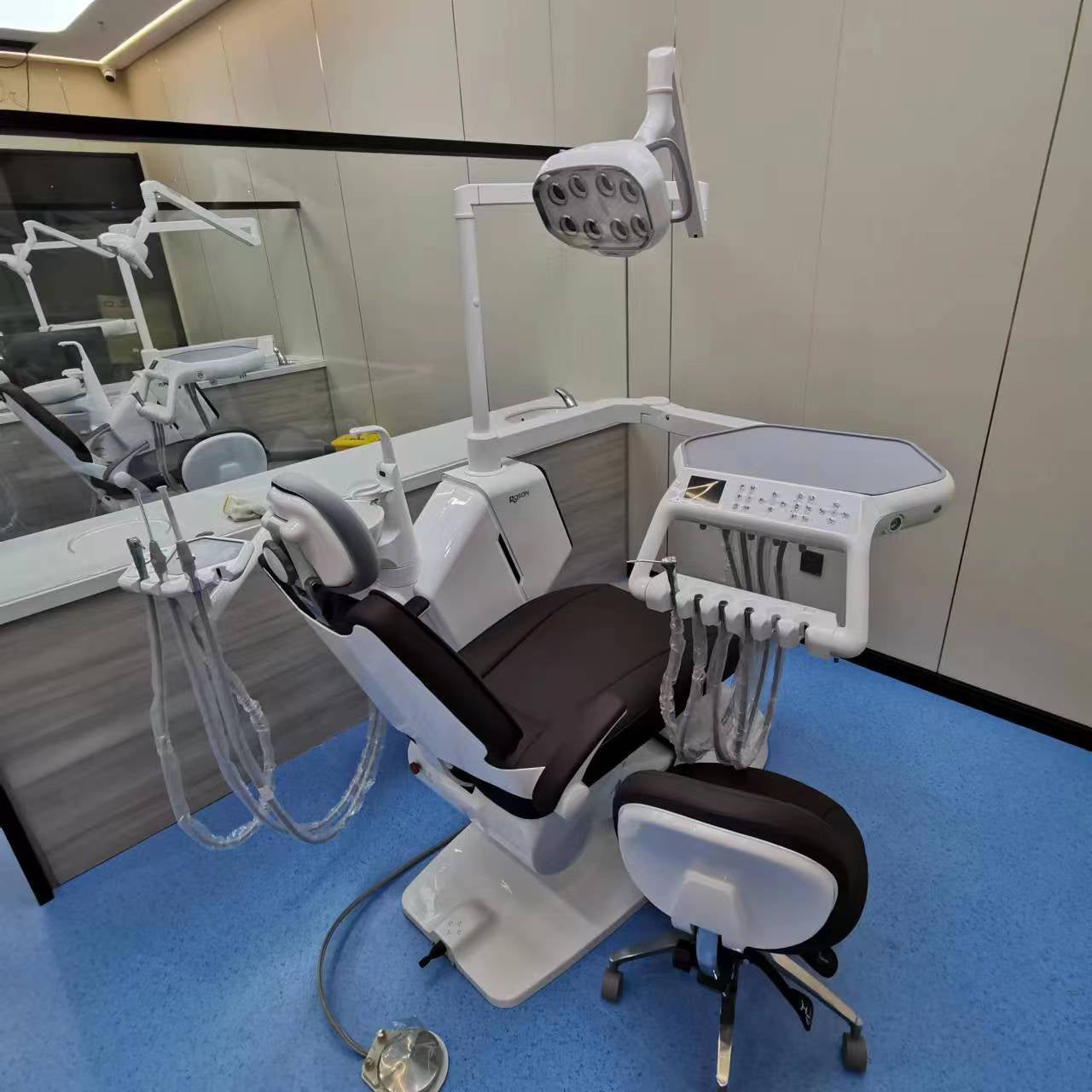
ROSON blue dental chair and integrated dental unit with overhead LED surgical light in a clinical treatment room
Wrapping Up
Selecting a dental chair for optimal infection control requires looking past the showroom shine to the engineering beneath. By prioritizing seamless surfaces, robust hands-free controls, and accessible waterline maintenance, clinics can build a defense-in-depth strategy against contamination.
Key Takeaways:
- Gap Tolerance: Ensure exposed seams and gaps are under 3 mm to eliminate trap points.
- Material Science: Verify upholstery compatibility with hospital-grade disinfectants (e.g., quaternary ammonium).
- Biofilm Defense: Choose units with self-contained water systems and quick-connect fittings for daily flushing.
- Lifecycle Safety: Budget for maintenance and verify the availability of modular spare parts to keep the unit in compliance over time.
Frequently Asked Questions (FAQ)
Q: How often should dental unit waterlines be tested?
A: While daily flushing is standard, many guidelines recommend testing water quality quarterly to ensure heterotrophic plate counts remain below 500 CFU/mL.
Q: Can I use household bleach to clean dental chair upholstery?
A: Generally, no. Bleach can degrade vinyl and polyurethane, causing cracking and brittleness. Always refer to the manufacturer’s approved compatibility list.
Q: What is the ideal seat height range for ergonomic access?
A: A range of approximately 420–560 mm accommodates most operators, allowing them to work without hunching, which indirectly supports better hygiene by reducing fatigue and procedural errors.
Disclaimer: This article is for informational purposes only and does not constitute professional medical or legal advice. Dental professionals should consult their local regulatory bodies and manufacturer guidelines for specific infection control standards.
References
About the Author