 EN
EN  ZH
ZH 
The Financial Impact of Dental Chair Reliability & Downtime

The True Cost of an Empty Chair: Beyond Repair Bills
Operational downtime in a dental clinic is more than an inconvenience; it’s a direct drain on your revenue and reputation. While a service invoice for a broken dental chair is a clear expense, the true financial impact runs much deeper. I’ve seen many practices focus on the immediate repair cost, completely undercounting the significant, cascading losses that occur every hour a chair is out of commission.

Direct Revenue Loss: A Quantifiable Impact
Every dental chair is a revenue-generating asset. When it’s non-operational, your clinic is actively losing money. A practical heuristic is that each hour of unexpected chair downtime results in one to three canceled or rescheduled appointments. The exact number depends on the average length of your procedures, but the financial consequence is immediate.
Consider a clinic that generates an average of $300 in revenue per hour from a single chair. If that chair goes down for just four hours, the direct revenue loss is already $1,200. If this happens multiple times a year, the costs quickly escalate into tens of thousands of dollars, far eclipsing the initial price difference between a standard chair and a highly reliable one.
The Ripple Effect: Indirect Costs You Can’t Ignore
The financial damage doesn’t stop at lost bookings. The secondary costs create significant operational drag and can harm your clinic’s long-term health.
- Idle Staff and Wasted Payroll: A non-functional chair means a highly skilled dentist, hygienist, or assistant cannot perform their primary duties. Yet, they remain on the payroll, leading to unproductive labor costs.
- Scheduling Chaos: Your front-office staff must scramble to reschedule affected patients, a time-consuming task that pulls them away from other critical duties like patient communication and insurance processing.
- Reputational Damage: Canceling appointments erodes patient trust. It signals potential operational issues and can lead patients to seek care at a more reliable clinic. In the digital age, a single negative review about a canceled appointment can have a lasting impact.
- Decreased Clinic Morale: Chronic equipment issues are a significant source of frustration for the entire clinical team. It creates a stressful work environment and can contribute to staff burnout and turnover.
A Practical Framework for Calculating Downtime Costs
To make informed purchasing decisions, you must move from abstract concerns to concrete numbers. Calculating the Total Cost of Downtime (TCD) provides a clear picture of how equipment reliability impacts your bottom line. This isn’t a hypothetical exercise; it’s a crucial financial planning tool for any modern practice.
Step-by-Step: From Hourly Rate to Annual Risk
Follow these steps to estimate what downtime truly costs your practice. The goal is to create a data-driven foundation for justifying investments in more durable and reliable equipment.
- Calculate Average Hourly Revenue Per Chair: Analyze your production reports to find the average revenue generated by each of your chairs per hour of operation.
- Estimate Annual Downtime Hours: Review service logs or create a conservative estimate. How many hours per year has a typical chair been out of service? Don’t forget to include the time spent waiting for a technician to arrive.
- Calculate Total Direct Revenue Loss: Multiply your average hourly revenue by the annual downtime hours. This is the most direct financial hit.
- Estimate Indirect Costs: While harder to quantify, assign a conservative estimate. A common approach is to add 15-25% of the direct revenue loss to account for the administrative burden and lost productivity.
Downtime Cost Calculation Model
Use this table to model the potential financial impact. I’ve pre-filled it with industry-standard figures, but you should replace them with your clinic’s actual data for the most accurate picture.
| Metric | Example Value | Your Clinic’s Value |
|---|---|---|
| Average Revenue per Hour per Chair | $300 | |
| Average Hours of Downtime per Incident | 4 Hours | |
| Number of Incidents per Chair, per Year | 3 | |
| Annual Downtime Hours per Chair | 12 Hours | |
| Annual Direct Revenue Loss per Chair | $3,600 | |
| Estimated Annual Indirect Cost (20%) | $720 | |
| Total Annual Downtime Cost per Chair | $4,320 |
The Financial Case for Reliability and Proactive Maintenance
Understanding the cost of downtime fundamentally shifts the purchasing conversation from “What is the cheapest chair?” to “What chair offers the best long-term value?” Reliability is not a luxury feature; it is a core component of your clinic’s financial stability.
Debunking the Myth of the “Cheapest” Chair
A common misconception is that selecting the lowest-priced equipment is the most fiscally responsible choice. This view only considers the initial capital outlay and ignores the Total Cost of Ownership (TCO). A chair that is 20% cheaper upfront but experiences even 10-15 additional hours of downtime per year can quickly become the most expensive piece of equipment you own.
True financial diligence involves evaluating a chair’s entire lifecycle cost. This includes the purchase price plus the anticipated costs of maintenance, repairs, and, most importantly, potential downtime over its operational lifespan.
The ROI of a Preventive Maintenance Schedule
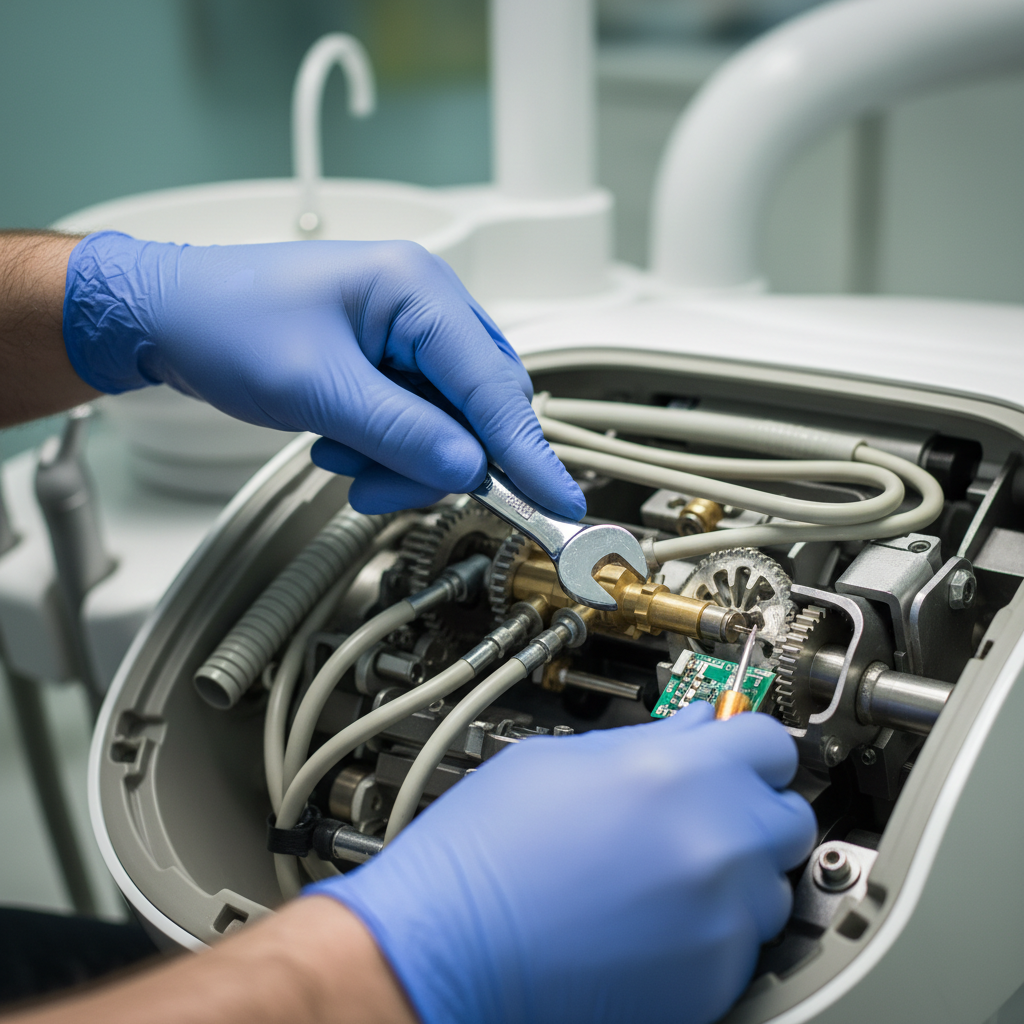
Just as with clinical care, prevention is more effective than reaction. A structured preventive maintenance program is one of the most powerful tools for maximizing uptime. My experience in clinics shows that practices with a clear maintenance schedule see dramatically fewer unexpected failures.
Here are proven intervals that deliver a clear return on investment:
- Light Inspections (Every 3 Months): Perform visual checks, test basic functions, and clean filters. This can be done by trained in-house staff.
- Hydraulic & Motor Service (Every 12-18 Months): Under heavy use, a full service of core mechanical and electrical components by a certified technician is crucial.
A good budgeting rule of thumb is to allocate approximately 10–20% of a chair’s purchase price annually for maintenance and parts in high-utilization practices. For clinics with lower usage, 5–10% is often sufficient.
Quality as a Shield: The Role of ISO and CE Certification
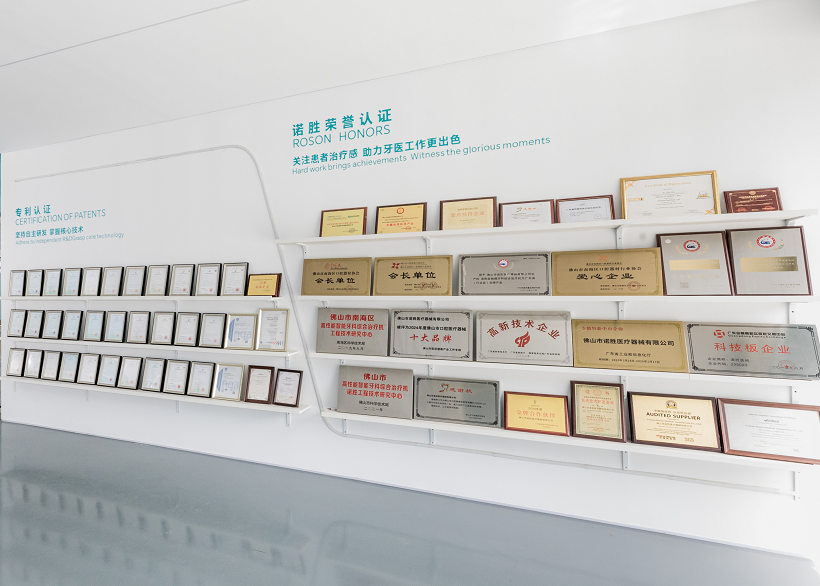
How can you assess reliability before you buy? Look for objective quality indicators. Manufacturers committed to durability often adhere to internationally recognized standards. For instance, compliance with ISO 13485:2016 – Quality Management Systems demonstrates that a manufacturer has a robust system for designing, producing, and distributing medical devices. Likewise, the CE Marking – European Conformity indicates that a product meets the high safety, health, and environmental protection requirements for sale within the European Economic Area. According to market analysis from firms like Frost & Sullivan, there is a clear trend in the dental industry towards prioritizing equipment with proven compliance and a lower total cost of ownership.
These certifications are not just paperwork; they are evidence of a deep commitment to engineering excellence and product consistency, which are the foundations of reliability.
Strategic Asset Management: Minimizing Downtime in Your Clinic
Even the most reliable equipment can eventually face issues. The goal of strategic asset management is to build resilience into your operations so that a single point of failure does not shut down a revenue stream.
Building Redundancy: Spares and Stand-by Equipment
For multi-chair practices, waiting for a technician is not a viable strategy. High-performing clinics use one of two redundancy models to ensure continuity:
- High-Failure Parts Inventory: This involves stocking 1-2 units of critical components that have a higher tendency to fail for every three chairs in your clinic. This allows a technician to make an immediate swap.
- Redundant Chair Ratio: The most effective, albeit more capital-intensive, strategy is maintaining one spare, fully-functional chair for every 3-5 active chairs. This allows patient flow to continue uninterrupted while the primary chair is being serviced.
Negotiating Smart: The Power of Service Level Agreements (SLAs)
When you purchase new equipment, the service agreement is as important as the hardware itself. A vague promise of “support” is not enough. An effective SLA should be a core part of your negotiation and include specific, guaranteed metrics:
- Guaranteed On-Site Response Time: For critical failures, a 4 to 8-hour on-site response guarantee can be the difference between losing a half-day and losing two full days of production.
- Parts Availability: The agreement should clarify lead times for critical parts. If a key component takes three weeks to arrive from overseas, your chair will be down for three weeks.
- Mean Time to Repair (MTTR): Prioritize equipment with modular components that can be swapped quickly by a technician. This design philosophy directly reduces the MTTR and gets your chair back in service faster.
Key Takeaways
Viewing your dental chair through the lens of reliability and total cost of ownership is essential for long-term financial health. The most expensive chair in your clinic is the one that sits empty due to failure.
To protect your revenue stream:
- Quantify Your Risk: Use a framework to calculate the true cost of downtime, including both direct and indirect losses.
- Prioritize Reliability: Shift your purchasing criteria from initial price to long-term value, backed by quality certifications like ISO 13485.
- Be Proactive: Implement a preventive maintenance schedule and budget accordingly.
- Build Resilience: Develop a strategy for redundancy through spare parts or stand-by equipment, and negotiate SLAs that guarantee performance.
An investment in a durable, reliable dental chair is an investment in operational uptime and financial stability. It ensures you can focus on what matters most: providing excellent care to your patients.
Frequently Asked Questions (FAQ)
How much should I budget for dental chair maintenance?
For a high-utilization practice, a common rule of thumb is to allocate 10–20% of the chair’s original purchase price for annual maintenance and parts. For practices with lower patient volume, 5–10% is often a sufficient budget.
Is a service contract (SLA) worth the cost?
In most cases, yes. An SLA with a guaranteed on-site response time acts as an insurance policy against extended downtime. Calculate your potential revenue loss for a single day of downtime; you will often find that the cost of the SLA is significantly less than the cost of just one major incident.
How can I assess a chair’s reliability before buying?
Look for objective proof. Ask the manufacturer for data on failure rates or Mean Time Between Failures (MTBF). Verify their quality management certifications, such as ISO 13485. Finally, ask for references from clinics with a similar patient volume to your own to understand their real-world experience with the equipment.
Disclaimer
This article is for informational purposes only and does not constitute professional financial or medical advice. The calculations and figures provided are intended as a framework for estimation. Clinic owners and practice managers should consult with a qualified financial advisor and conduct their own due diligence before making significant equipment investments. All decisions regarding medical equipment should comply with local, state, and federal regulations, including those set forth by bodies like the FDA.
References
About the Author