 EN
EN  ZH
ZH 
How Dental Chair Design Meets CE & ISO Safety Standards

Understanding the Regulatory Framework: Why CE and ISO Matter
For any medical device, including a dental chair, achieving compliance with international standards is not just a formality; it is a fundamental requirement for market access and a testament to a manufacturer’s commitment to safety and quality. Two of the most critical benchmarks in the global dental industry are the CE mark, regulated under the EU’s Medical Device Regulation (MDR), and the ISO 13485 standard. Understanding what they represent is the first step in appreciating the design intricacies of a modern dental chair.
According to the European Commission, the CE mark signifies that a product has been assessed by the manufacturer and deemed to meet EU safety, health, and environmental protection requirements. For a complex medical device like a dental chair, this involves a rigorous conformity assessment process. The EU’s Medical Device Regulation (MDR) further tightens these requirements, placing greater emphasis on clinical evaluation, post-market surveillance, and lifecycle traceability.
Running parallel to this is ISO 13485:2016, an internationally recognized standard that specifies requirements for a quality management system (QMS) for medical devices. This standard ensures that a manufacturer has robust processes for every stage of a device’s lifecycle, from design and development to production, storage, distribution, and servicing. It is the framework that guarantees consistency, reliability, and a focus on risk management.
Infection Control by Design: The First Line of Defense
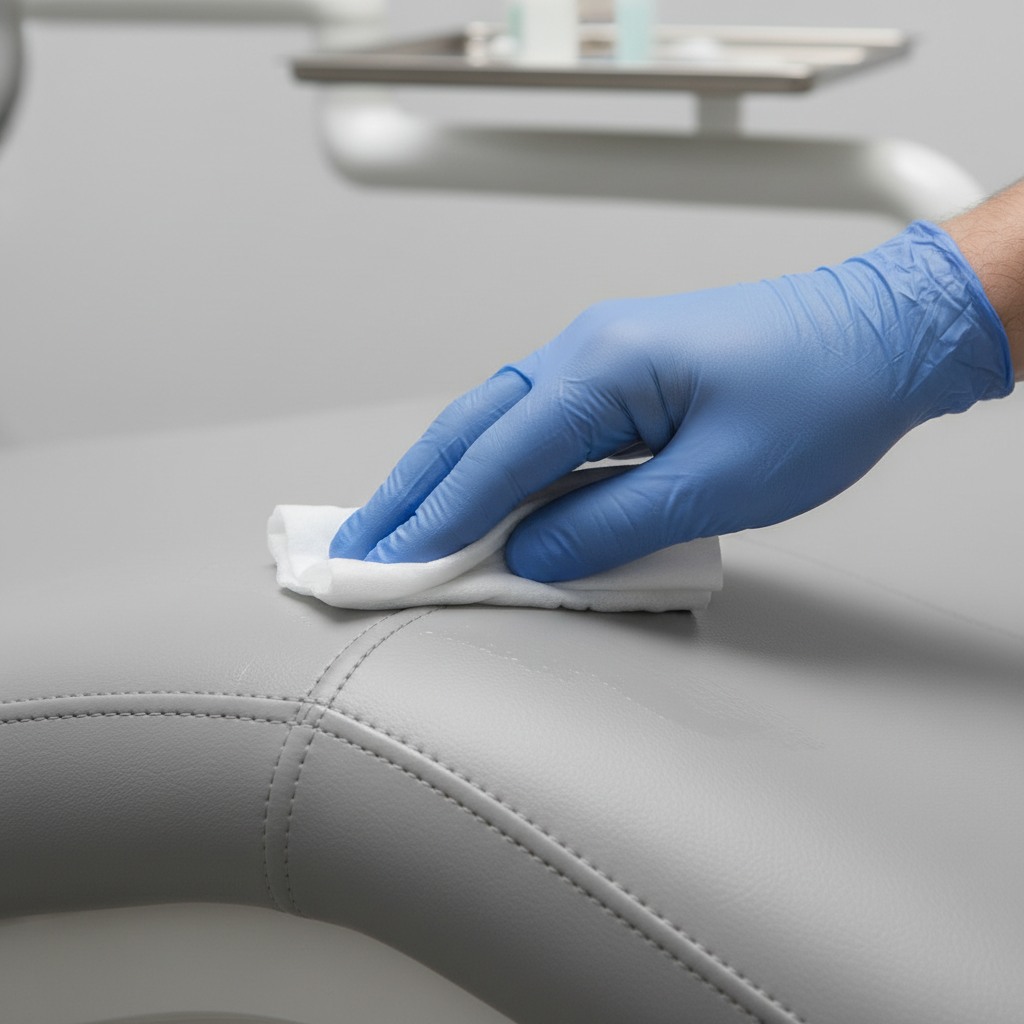
In a dental practice, the chair is at the epicenter of clinical activity, making it a primary vector for cross-contamination if not designed properly. Modern compliance standards demand that infection control is not an afterthought but is woven into the very fabric of the chair’s design. This is achieved through careful consideration of surfaces, materials, and user interfaces.
Seamless Surfaces and Hygienic Junctions
A primary area of concern for infection control is the potential for bio-contaminants to become trapped in seams, gaps, and crevices. Experienced service engineers and clinicians frequently report that upholstery seams and non-coved joints are common failure points in maintaining a sterile environment. These areas can trap fluids and organic matter, making effective disinfection nearly impossible.
To meet modern hygiene standards, chair design must prioritize smooth, continuous surfaces. This involves:
- Heat-Sealed or Welded Upholstery: Instead of traditional stitching, which creates thousands of perforations, advanced manufacturing techniques use heat or high-frequency welding to create a single, impermeable surface. This eliminates pathways for microbial ingress into the underlying foam.
- Coved Radii: All junctions, particularly between the seat, backrest, and armrests, should be designed with a minimum 3–5 mm coved radius. This curved transition, rather than a sharp 90-degree angle, eliminates corners where bacteria can accumulate and allows disinfectant wipes to maintain consistent contact with the entire surface.
- Non-Porous Coatings: All external surfaces, including metal and plastic components, must be finished with smooth, non-porous coatings. This prevents microbial adhesion and ensures that disinfectants can work effectively.
Material Science and Chemical Compatibility
The materials used in a dental chair must be able to withstand repeated exposure to potent, hospital-grade disinfectants without degrading. The constant use of cleaners based on quaternary ammonium compounds or hydrogen peroxide can cause inferior materials to crack, discolor, or become brittle over time, compromising the chair’s cleanability and safety.
Common Misconception Debunked: A common myth is that stronger, more aggressive chemicals like high-concentration bleach are better for cleaning. In reality, using incompatible disinfectants is counterproductive. These chemicals can damage painted surfaces, degrade upholstery, and void manufacturer warranties. Verification testing must always include chemical compatibility tests to ensure the chosen materials can endure the clinic’s specific cleaning protocols.
Research published in journals like ScienceDirect’s Dental Materials continuously explores the performance of advanced polymers and coatings, pushing the industry toward materials that offer both durability and superior resistance to the chemical stresses of daily disinfection.
Hands-Free Controls and Smart Integration
Minimizing the number of times a clinician must touch the chair during a procedure is a key strategy for reducing cross-contamination. Modern dental chairs incorporate several features to facilitate hands-free operation:
- Foot-Operated Controls: A multi-function foot pedal is standard for controlling patient positioning, handpiece activation, and other core functions. This allows the practitioner to make necessary adjustments without compromising the sterility of their gloves.
- Programmable Presets: Many chairs allow for storing predefined positions (e.g., entry/exit, supine, Trendelenburg). A single button press can move the chair to a saved position, reducing the need for multiple manual adjustments and minimizing the risk of error.
- Internal Cable and Tubing Management: Poor cable routing not only looks untidy but also creates a significant cleaning challenge. To meet compliance standards, all electrical harnesses and waterlines must be routed inside sealed, smooth conduits. This prevents dust and contaminants from gathering on tangled wires and makes wiping down the unit simple and effective.
Ergonomics and Mechanical Safety
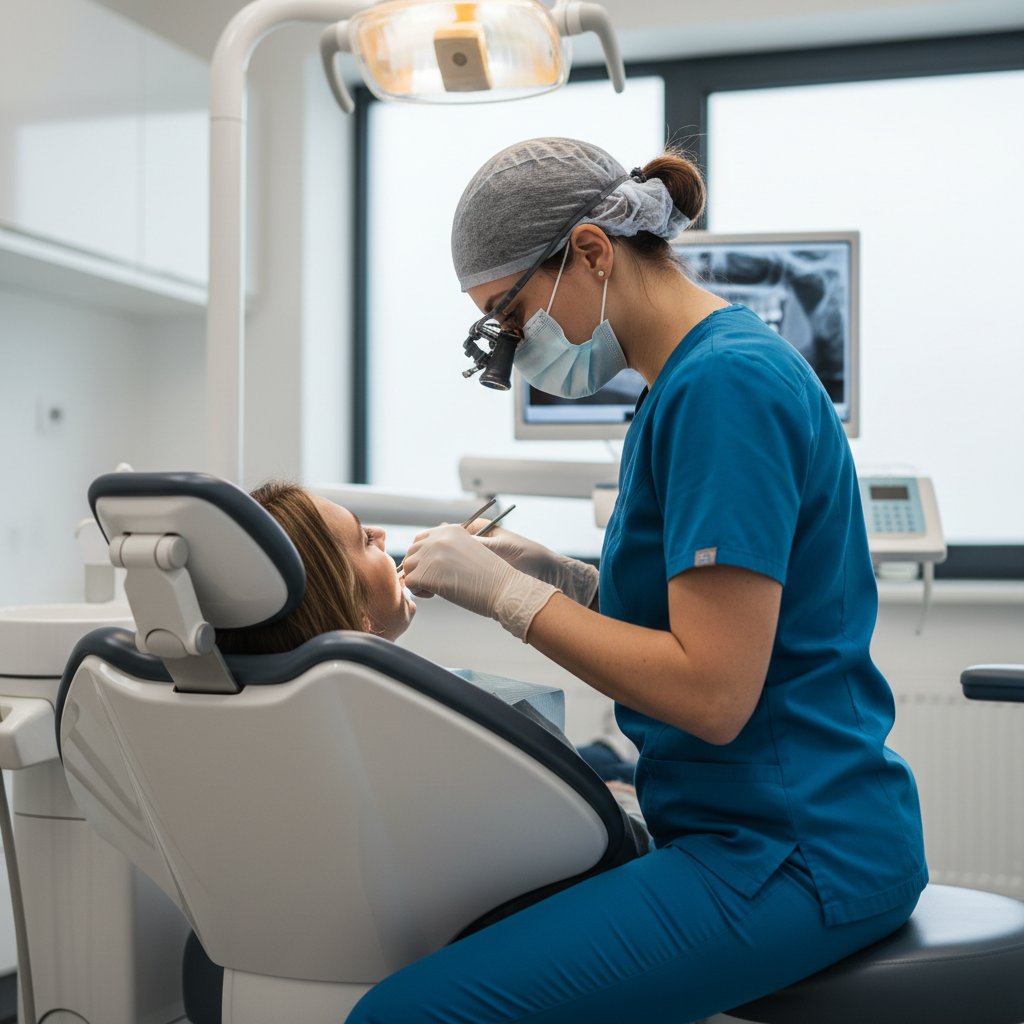
Safety is not limited to infection control. The mechanical design and ergonomic adjustability of a dental chair are critical for ensuring the well-being of both the patient and the practitioner. A chair that causes practitioner fatigue can indirectly lead to clinical errors. For a deeper look into this, consider reading about achieving practitioner ergonomics on a clinic budget.
Patient Positioning and Stability
The chair must function as a stable and secure platform for treatment. Key design features that contribute to this include:
- Precise Articulation: For common procedures, clinicians require a backrest tilt range of approximately 0–45° and a headrest adjustment of at least ±50 mm. This flexibility allows the patient to be positioned comfortably and safely for optimal access to the oral cavity.
- Robust Actuators and Braking Systems: The motors and hydraulic systems that control chair movements must be reliable and smooth, with no sudden jerks or drifts. Fail-safe braking mechanisms are essential to lock the chair securely in place, preventing any unintended movement during treatment.
- Weight Capacity and Base Stability: The chair’s base must be engineered to remain perfectly stable even when fully extended and bearing a heavy load. This is verified through rigorous load testing as part of the CE and ISO validation process.
Lifecycle Validation and Maintenance
Proving compliance is an ongoing process. A well-designed chair is one that is not only safe on day one but can be maintained in a compliant state throughout its operational life. This depends on documented validation and a clear serviceability plan.
Cleaning Validation and Traceability
To satisfy auditors and ensure long-term reliability, manufacturers must perform and document cleaning validation. This involves subjecting the chair’s materials to a high number of cleaning cycles—for example, simulating the equivalent of 10,000 patient turnovers—to prove they can withstand repeated disinfectant exposure without failure. Furthermore, ISO 13485 mandates batch traceability for all critical components. This means if a part fails, the manufacturer can quickly identify the affected batch, notify other customers, and dispatch the correct, validated spare part, minimizing downtime. The importance of this reliability cannot be overstated, as explored in the financial impact of dental chair reliability.
Preventive Maintenance Framework
Regular maintenance is essential for ensuring safety and performance. A structured maintenance schedule is a key component of a clinic’s quality management system. Our analysis of high-use clinical environments indicates the following cadence is an effective approach:
| Frequency | Task | Purpose |
|---|---|---|
| Quarterly | Functional Checks: Test all actuators, chair movements, braking systems, and handpiece functions. | Ensure smooth, predictable operation and prevent mechanical failures. |
| Quarterly | Waterline Flushing & Inspection: Perform a thorough flush and check for leaks or blockages. | Maintain water quality and prevent biofilm buildup. |
| Annually | Upholstery Inspection: Carefully examine all surfaces for cracks, tears, or signs of wear. | Proactively identify breaches in the infection control barrier. |
| As Needed | Component Replacement: Replace worn parts (e.g., seals, O-rings, filters) based on usage. | Prevent unexpected downtime and maintain original performance standards. |
Key Takeaways
Designing a dental chair that meets CE and ISO 13485 standards is a complex, multi-faceted discipline. It requires a holistic approach that integrates infection control, material science, mechanical safety, and lifecycle management. For a dental clinic, selecting a chair from a manufacturer that demonstrates this deep commitment to compliance is a direct investment in patient safety, practitioner well-being, and operational integrity. The design features are not just bullet points on a brochure; they are the tangible results of a rigorous, risk-managed process that underpins the trust between the manufacturer, the clinic, and the patient.
Disclaimer: This article is for informational purposes only and does not constitute professional medical or regulatory advice. Dental clinics should always consult with qualified professionals and refer to official equipment documentation to ensure compliance with local health and safety regulations.
References
About the Author