 EN
EN  ZH
ZH 
Dental Chair and Unit Lighting: Lux, Color Temperature & Shadow Control

Lighting affects how clearly a dentist sees teeth, soft tissue, instruments, and the working area inside the mouth. Therefore, the light attached to a dental chair and unit should be evaluated as a clinical tool, not just an accessory.
Lux describes the light reaching the treatment area. Color temperature changes whether the light appears warm or cool. Shadow control affects how much of the working field remains visible when hands, instruments, or the operator’s head block part of the beam.
What Does Lux Mean for a Dental Chair and Unit Light?
Lux indicates how much light reaches the surface being examined or treated.
For a dental chair and unit, sufficient illumination helps the dentist identify details inside a small oral working area. However, a higher brightness level does not automatically provide clearer visibility.
Very strong light may create glare on wet tooth surfaces, restorations, or metal instruments. A bright center combined with darker edges can also make the dentist’s eyes adjust repeatedly during treatment.
Useful lighting therefore depends on several factors:
- Adjustable brightness
- Even light distribution
- A suitable light-spot size
- Stable lamp positioning
- Comfortable contrast with room lighting
Why Does Higher Lux Not Always Mean Clearer Visibility?
Higher lux may reduce visibility when it creates glare or strong reflections.
The dentist should be able to increase brightness for detailed work and lower it when reflective surfaces become distracting. Adjustable intensity is more practical than one fixed setting because clinical tasks and operator preferences vary.
Light uniformity is equally important. A balanced spot helps keep both the center and surrounding treatment area visible without frequent lamp repositioning.
How Should Light Intensity Change Across Different Dental Tasks?
Light intensity should match the size and visual demands of the treatment area.
A general examination may require broad, comfortable illumination. Work inside a smaller or deeper area may need stronger light. When reflections become intense, the operator may reduce brightness while keeping the lamp correctly positioned.
Digital controls make these changes easier to view and repeat, especially when several dentists share the same treatment room.
How Does Color Temperature Affect What Dentists See?
Color temperature affects whether the illuminated area appears warm, neutral, or cool.
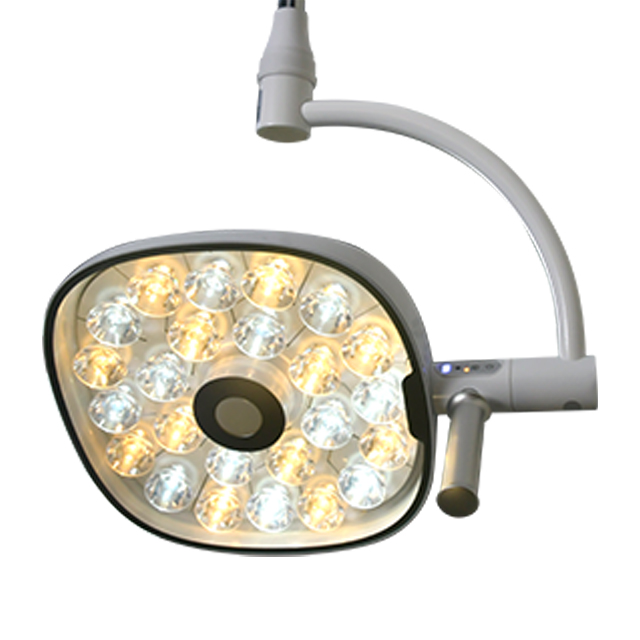
Warmer light appears more yellow, while cooler light appears whiter or slightly bluer. Neither setting is suitable for every procedure or every operator.
| Appearance | Typical Effect | Main Consideration |
| Warm | Softer, yellow appearance | Visual comfort |
| Neutral | Balanced white appearance | General treatment |
| Cool | Whiter appearance | Perceived contrast |
What Is the Difference Between Warm and Cool Dental Lighting?
Warm and cool settings change how teeth and tissue appear under the lamp.
Warm lighting may feel softer, while cooler lighting may increase perceived contrast. However, one dentist may prefer a cooler setting for detailed work while another finds it tiring during longer procedures.
Adjustable color temperature allows the operator to select a setting that works with the treatment task and surrounding room lighting.
Why Is Color Temperature Not the Same as Color Accuracy?
Color temperature describes the appearance of the light, not how accurately every color is reproduced.
A white-looking beam does not automatically mean that tooth and tissue colors appear completely natural. When comparing tooth shades, dentists should also consider reflections, room lighting, and consistency between observations.
The lamp should be adjusted when the current setting creates glare, a strong color cast, or an unnatural visual contrast.
Why Is Shadow Control Important During Dental Treatment?
Shadow control helps preserve visibility when part of the light beam is blocked.
The dentist’s head may interrupt the beam when leaning forward. Hands and instruments may also create moving shadows directly over the tooth.
A narrow or uneven spot can make these shadows more noticeable. Balanced light distribution and flexible lamp positioning help reduce repeated interruptions.
Which Light Designs Help Maintain Visibility?
A practical dental light should provide an even working field and remain stable after repositioning.
The dentist should be able to direct the lamp from different operating angles without interfering with the instrument table or assistant area.
Lamp and chair positions must also work together. When the patient is reclined, the beam usually needs to be redirected toward the new angle of the oral cavity. When the chair returns upright, the lamp should be repositioned to avoid shining unnecessarily toward the patient’s eyes.
How Does the Roson A3 Support Adjustable Dental Lighting?
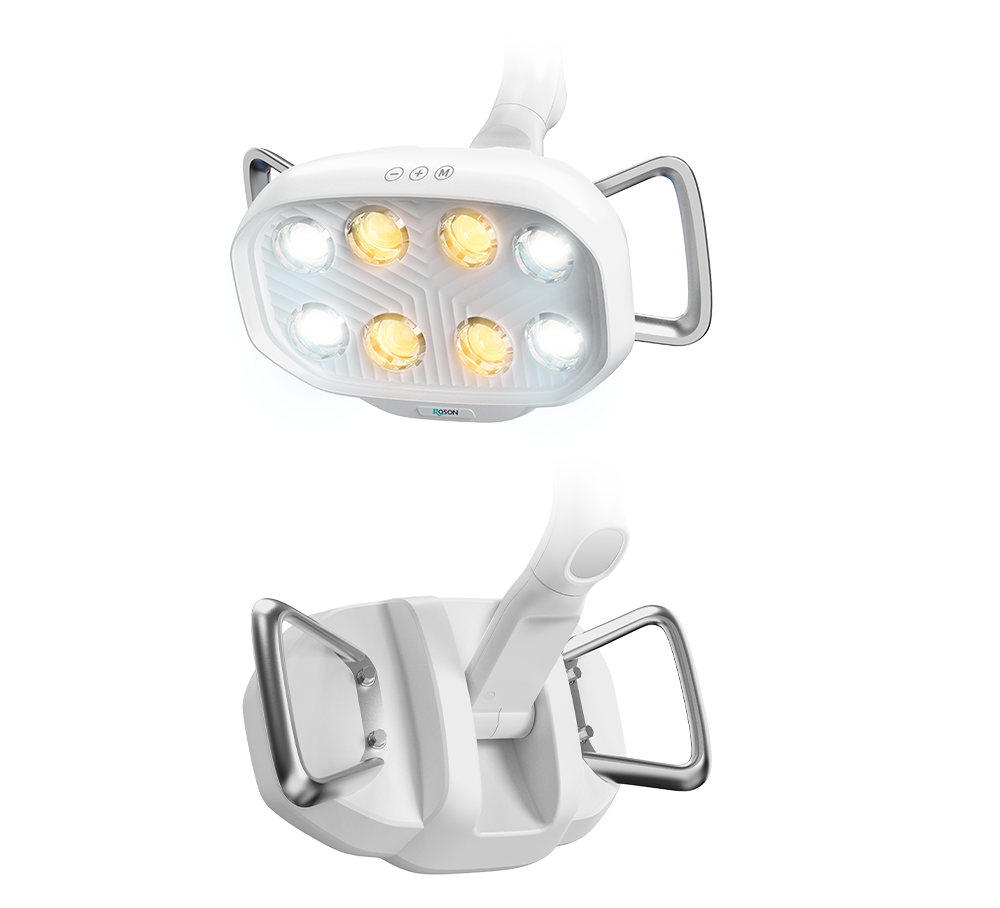
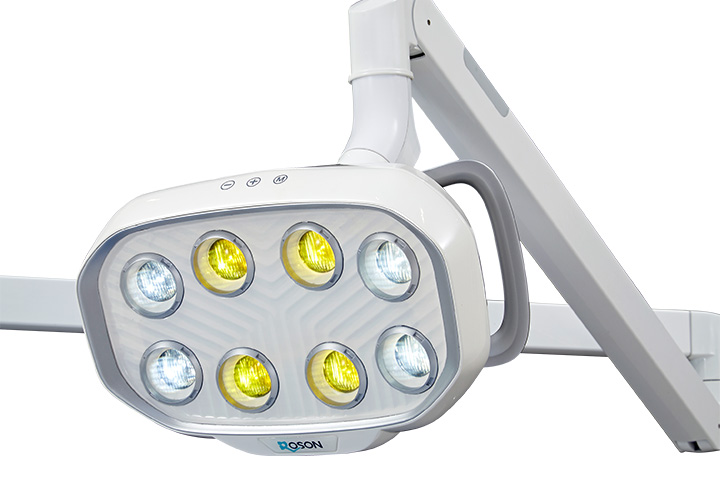
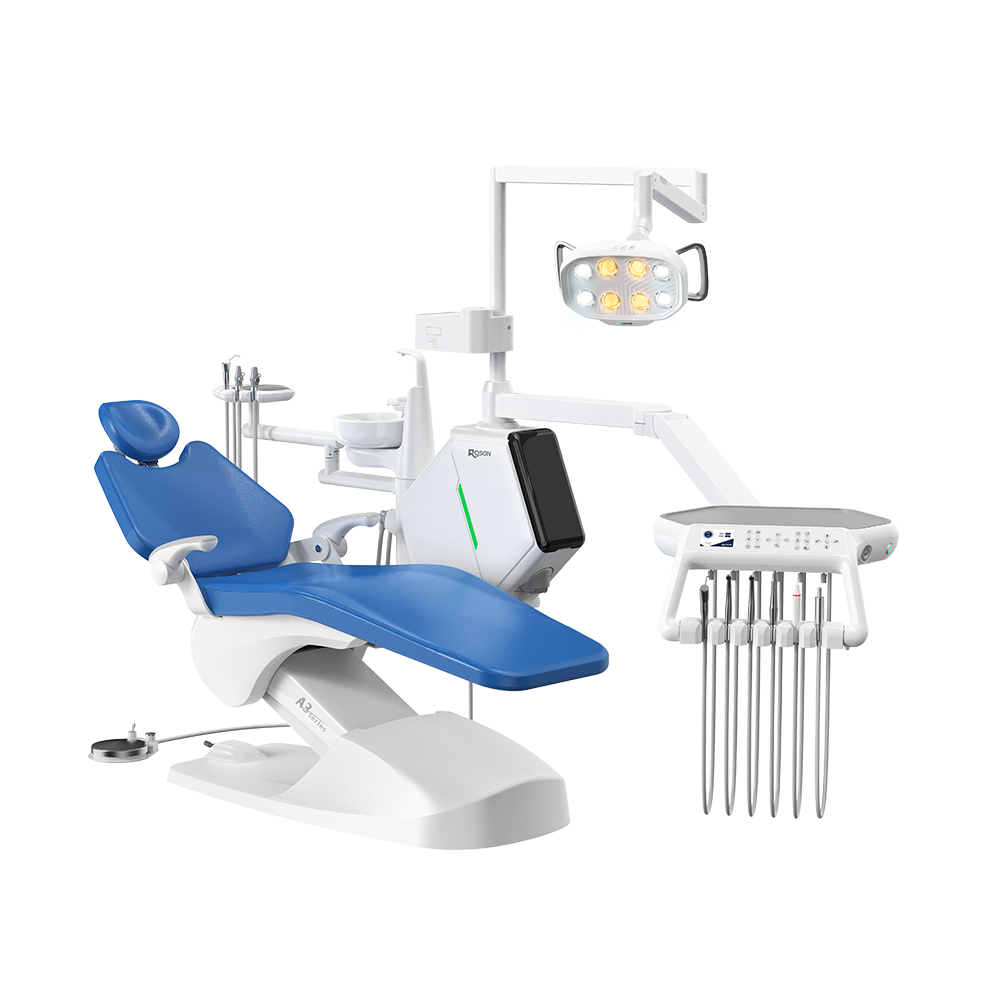
The Roson A3 uses the RoLight E dental light with adjustable brightness, adjustable color temperature, and a digital control display.
Roson describes the RoLight E as using LED bulbs for natural-like illumination. The A3 product page also lists a comfortable light-spot design and an eight-bead LED dental light configuration.
Confirmed lighting features include:
- Adjustable brightness
- Adjustable color temperature
- Digital setting display
- LED illumination
- Comfortable light-spot design
- Integration with the A3 dental chair and unit
How Do Digital Lighting Controls Support Workflow?
Digital controls allow the dentist to view and change lighting settings during treatment.
Brightness can be reduced when reflections become distracting or increased when stronger illumination is needed. Color temperature can also be changed to suit the procedure and surrounding environment.
The visible display makes settings easier to recognize and repeat. This can help clinics and training centers maintain more consistent operating conditions between different users.
Conclusion: What Lighting Features Matter Most in a Dental Chair and Unit?
The key lighting features are adjustable intensity, controllable color temperature, even distribution, stable positioning, and practical shadow control.
Lux affects how much light reaches the treatment area, but brightness must be considered together with glare and uniformity. Color temperature changes the visual appearance of teeth and tissue, while shadow control helps keep the working field visible when the beam is partly blocked.
The Flagship Model A3 combines the RoLight E dental light with adjustable brightness, adjustable color temperature, and a digital display. Explore our Flagship Model A3 dental chair and unit, or contact us for A3 configuration information.
About the Author