Skip to content
 EN
EN  ZH
ZH 
How Chair Durability Impacts Your Clinic's Financial Health

Beyond the Sticker Price: Deconstructing the Total Cost of Ownership
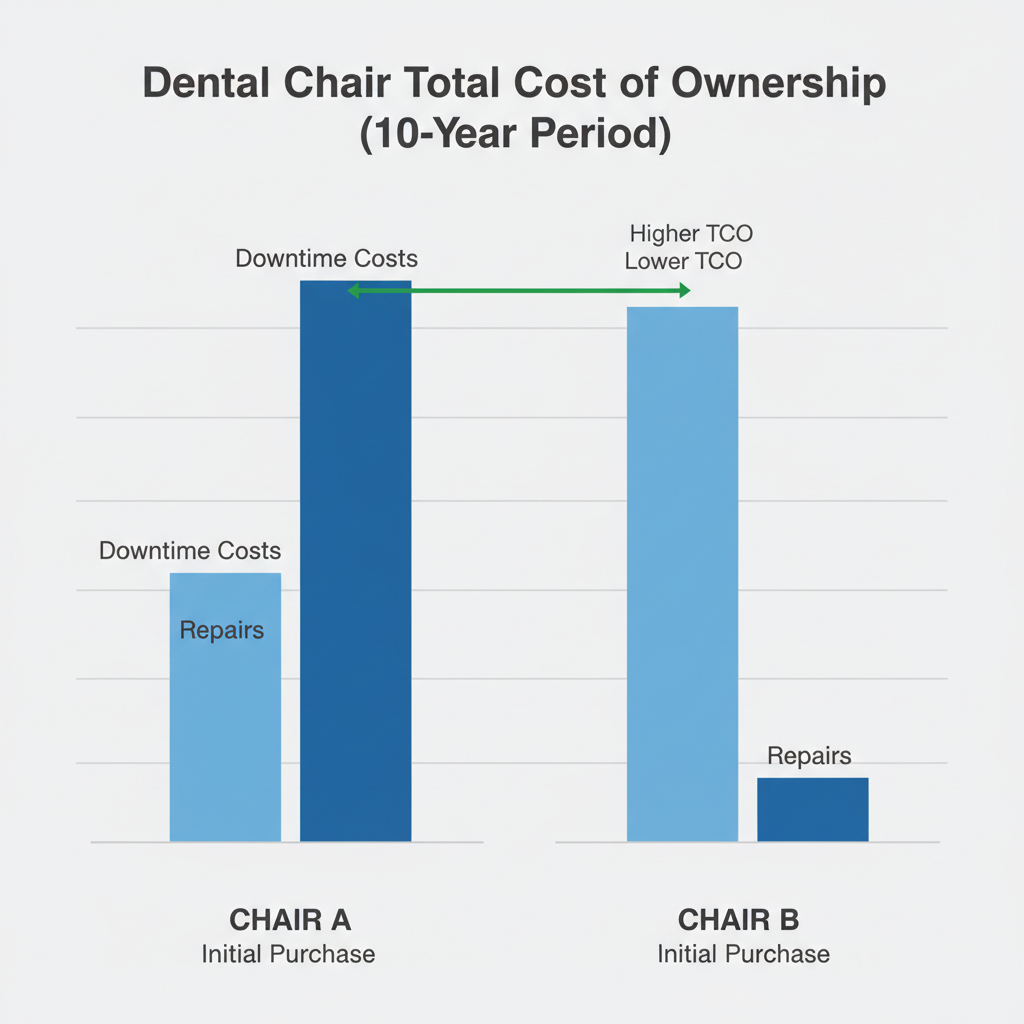
When procuring a new dental chair, the initial purchase price is often the most scrutinized figure. However, focusing solely on this number is a common mistake that can lead to significant financial strain down the line. A more robust evaluation framework is the Total Cost of Ownership (TCO), which accounts for all expenses incurred throughout the asset’s entire service life. For a busy clinic, understanding TCO is fundamental to making a sound investment.
The TCO Formula: A Practical Calculation for Your Clinic
To move beyond simple price comparisons, you can use a straightforward formula to estimate the effective yearly cost of a dental chair. This metric provides a much clearer picture of the long-term financial impact on your practice.
The Formula: (Purchase Price ÷ Expected Service Years) + Annual Maintenance Cost = Effective Yearly Cost
Let’s break this down with a practical scenario for a clinic that sees 20–40 patients daily:
-
Chair A (Low Upfront Cost):
- Purchase Price: $8,000
- Expected Service Life: 5 years (due to lower quality components)
- Estimated Annual Maintenance: $500
- Effective Yearly Cost: ($8,000 ÷ 5) + $500 = $2,100
-
Chair B (Higher Upfront Cost):
- Purchase Price: $15,000
- Expected Service Life: 10 years (typical for a well-maintained, mid-range chair)
- Estimated Annual Maintenance: $200
- Effective Yearly Cost: ($15,000 ÷ 10) + $200 = $1,700
In this analysis, Chair B, despite its higher initial price, is $400 cheaper per year. Over a decade, this translates to $4,000 in savings per chair, not including the significant hidden costs of downtime.
Debunking the Myth of the “Cheapest” Chair
A common myth in equipment purchasing is that the lowest-priced option saves the clinic money. In reality, less expensive chairs often cut corners on critical components, leading to premature failures. My experience in clinics has shown that the first parts to fail are almost always the upholstery, the electromechanical actuators for positioning, and the foot-control assemblies. These are high-use components where quality matters most. Frequent breakdowns not only inflate maintenance costs but also disrupt the clinic’s schedule and erode patient trust.
The Hidden Costs of Unplanned Downtime
The most significant cost of an unreliable chair isn’t the repair bill—it’s the lost revenue. A non-operational chair means canceled appointments and an unproductive operatory. For a busy practice, a single day of downtime can translate into thousands of dollars in lost billings. The goal for any high-traffic clinic should be to maintain an equipment uptime of 98% or higher. This level of reliability is only achievable with durable equipment and a proactive maintenance culture.
Key Indicators of a Durable Dental Chair
Assessing durability requires looking beyond the spec sheet. It involves evaluating the quality of materials, the manufacturer’s commitment to quality standards, and their after-sales support infrastructure.
Materials, Construction, and Design
A durable chair starts with a robust frame, typically made from high-grade steel or aluminum. Pay close attention to the quality of the actuators—the motors that control the chair’s movement. These are critical components that bear significant stress. A modular design, which allows for individual subassemblies to be replaced, is another key feature. This simplifies repairs, reduces service time, and is far more cost-effective than replacing an entire chair system due to a single component failure.
The Importance of Certifications and Standards
Certifications are a crucial indicator of a manufacturer’s commitment to quality and safety. When evaluating equipment, look for compliance with internationally recognized standards. For instance, ISO 13485:2016 is a standard that outlines the requirements for a quality management system for medical devices. It ensures the manufacturer has rigorous processes for design, production, and testing.
For equipment sold in the European Union, the CE Marking indicates conformity with health, safety, and environmental protection standards. This is further reinforced by the EU Medical Device Regulation (MDR), which establishes stringent requirements for product performance and clinical evaluation. Similarly, devices sold in the United States must comply with FDA regulations, such as 21 CFR Part 820, which governs quality system regulation.
Supplier Reliability: Spare Parts and Support
Even the most durable chair will eventually require service. A critical, yet often overlooked, part of the procurement process is evaluating the supplier’s after-sales support. Before purchasing, ask for a written guarantee of spare-parts availability for at least five to seven years post-purchase. According to industry analysis from sources like MarketsandMarkets, the dental equipment market is growing, and manufacturers who provide strong after-sales support are better positioned for long-term success. Negotiate a service-level agreement (SLA) that defines response times for service calls and ask if loaner equipment is available to eliminate downtime during major repairs.
A Proactive Maintenance Strategy for Maximum Uptime
Durability isn’t just about how a chair is built; it’s also about how it’s maintained. A systematic approach to preventive maintenance is essential for extending service life and achieving a ≥98% uptime target.
A Practical Maintenance Checklist & Schedule
Implementing a simple, multi-tiered maintenance schedule can prevent the majority of common failures. This distributes the workload and ensures consistent oversight.
| Frequency | Task | Purpose |
|---|---|---|
| Weekly | Visual inspection of upholstery for tears and seams. | Prevents minor damage from becoming a major, unhygienic issue. |
| Check all power cords and foot pedal cables for damage. | Ensures electrical safety and prevents intermittent connection failures. | |
| Monthly | Test all actuator functions through their full range of motion. | Identifies motor strain or control issues before they lead to failure. |
| Lubricate specified joints and pivot points per manufacturer guide. | Reduces mechanical wear and ensures smooth, quiet operation. | |
| Annually | Professional electrical safety testing (leakage and grounding). | Ensures compliance with safety regulations and protects patients and staff. |
| Load testing of the chair’s lifting mechanisms. | Verifies that the chair can safely support its maximum rated weight. |
Smart Spare Parts Management
While your supplier should handle major component replacements, keeping a small inventory of high-failure, user-replaceable parts is a wise strategy. This can prevent a minor issue from turning into a day of downtime. Consider stocking items like:
- Replacement fuses
- Common seals and O-rings for water lines
- A spare foot pedal assembly
This small investment can bridge the gap while waiting for a technician or a larger part delivery, often allowing for an immediate in-house fix.
Wrapping Up: Key Takeaways
Investing in a new dental chair is a significant financial decision that directly impacts your clinic’s profitability and operational efficiency. To ensure a positive return, it is essential to shift the evaluation focus from upfront price to long-term value. By calculating the Total Cost of Ownership, prioritizing durable construction backed by credible certifications, and implementing a proactive maintenance schedule, you can maximize equipment uptime, reduce long-term expenses, and create a more reliable and productive clinical environment.
Disclaimer: This article is for informational purposes only and does not constitute professional financial or medical advice. Clinic owners and practice managers should consult with qualified financial and technical professionals to assess their specific needs before making any procurement decisions.
References
About the Author