 ZH
ZH  EN
EN 
What Are the Key Features of Ergonomic Dental Stools?

An ergonomic dental stool must maintain neutral posture without compromising chairside mobility. For a dentist stool ergonomic design, comfort is not only about a soft seat. The stool should also support proper positioning, easy movement, adjustment, and long periods of seated work.
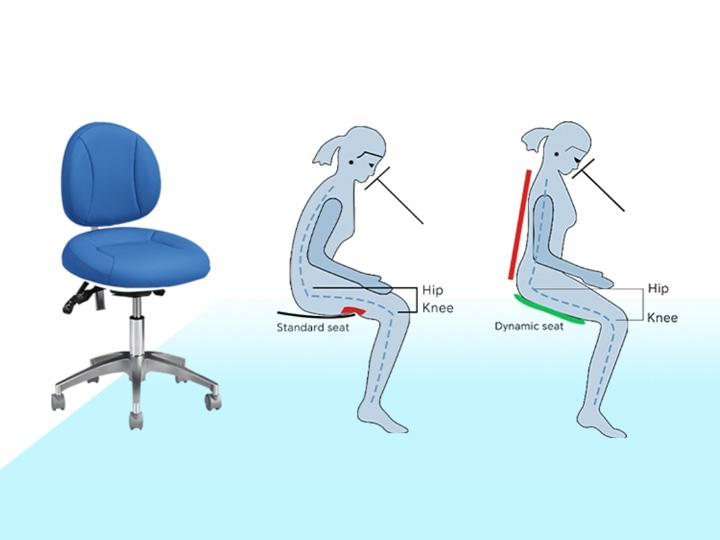
This matters because dental treatment often requires dentists to work in fixed or forward-leaning positions for extended periods. The American Dental Association (ADA) identifies operator-stool selection, posture, movement, and positioning as important parts of dental workplace ergonomics.
Research also indicates that stool design can affect posture and muscle activity during simulated dental procedures. However, the right ergonomic features depend on the stool design and the task. Buyers should choose features based on their actual workflow rather than assume that one stool suits every dentist.
Quick evaluation checklist
- Adjustable seating position
- Suitable lumbar or torso support
- Stable base and controlled mobility
- Appropriate cushioning and upholstery
- Easy adjustment during clinical work
- Compatibility with the dentist’s working posture
What Makes a Dental Stool Ergonomic for Daily Dental Work?
An ergonomic dental stool helps dentists maintain a comfortable working position. It also allows them to move easily around the treatment area. It also allows them to move easily around the treatment area. This can help reduce physical strain without making movement difficult during treatment.
How Does Stool Adjustability Affect Dental Posture?
Adjustability allows dentists with different body sizes and working positions to configure the stool around their own needs. The ADA specifically recommends considering factors such as height, lumbar curvature, and body size when selecting an operator stool.
For example, a dentist may need to change the seat height or backrest position when working on different areas of the patient’s mouth. Easy adjustment allows the dentist to make these changes quickly during the workday.
Why Does Back Support Matter?
Back support can help dentists maintain a more supported sitting position instead of relying entirely on their own back muscles. A study of different dental stools found that stool design influenced lumbar posture and muscle activity during simulated dental screening.
However, back support should not be treated as a guarantee against discomfort. Individual posture, procedure type, magnification, patient positioning, and working habits also affect ergonomic outcomes.
How Important Are Mobility and Stability?
A dental stool needs to move when the dentist needs to reposition, but it must also remain stable during clinical work. Smooth-rolling casters and a stable base therefore need to be considered together rather than separately.
Research on dental ergonomics also shows that stool type can influence how dentists position their bodies during procedures. This makes mobility a practical part of ergonomic design, particularly when the dentist frequently changes position around the patient.
What to check before purchasing
- Can the user adjust the stool to their working height?
- Can the backrest or torso support accommodate the user’s posture?
- Can the stool move smoothly without interfering with treatment?
- Does the base provide stable support while the dentist works?
Which Features Should You Compare When Choosing an Ergonomic Dentist Stool?
A useful comparison focuses on adjustability, support, movement, and maintenance because these features directly affect how the stool fits the working environment.
| 特点 | What to evaluate | Why it matters |
| Height adjustment | Range and ease of adjustment | Helps accommodate different users and working positions |
| 靠背 | Shape and adjustment options | Supports individual positioning |
| Seat design | Contour, cushioning, and pressure distribution | Affects comfort during extended sitting |
| 流动性 | Casters and rotation | Helps reposition around the treatment area |
| 基地 | Stability and construction | Supports controlled movement |
| 材料 | Durability and cleanability | Important for routine clinical maintenance |
Is a Comfortable Seat Enough?
No. Cushioning is only one part of ergonomic performance because a soft seat cannot compensate for poor positioning or inadequate support.
Our dental-stool range includes high-density foam cushioning, durable and easy-to-clean upholstery, adjustable height and backrests, 360-degree rotation, five-star bases, and smooth-rolling casters as shared range features.
These features address different practical requirements. Cushioning concerns sitting comfort, while adjustment supports positioning and casters support movement. Buyers should therefore evaluate the complete configuration rather than selecting a stool based on one feature.
Should Dentists Choose the Same Stool for Every Procedure?
Not necessarily. A dentist performing procedures that require frequent repositioning may value mobility and flexible adjustment, while another user may place greater emphasis on lumbar or torso support.
Research reinforces this point. A 2024 study involving 14 dentists found lower activity in the descending trapezius muscle when an ergonomically designed stool was used compared with a conventional stool during simulated intraoral scanning and tooth preparation.
The result supports considering ergonomic stool design as part of the working setup, but the study was conducted with a relatively small sample and simulated procedures. It should not be interpreted as proof that one particular stool is universally suitable.
How Does Roson Approach Ergonomic Dental Stool Design?
此次巡检不仅是一次设备的全面维护, combines adjustable support, mobility, cushioning, and different stool configurations across its dental-stool range. The official range currently includes RS-07, RS-06, RS-05, and RS-03, giving distributors and dental facilities several configurations to evaluate.
What Features Are Available in Roson Dental Stools?
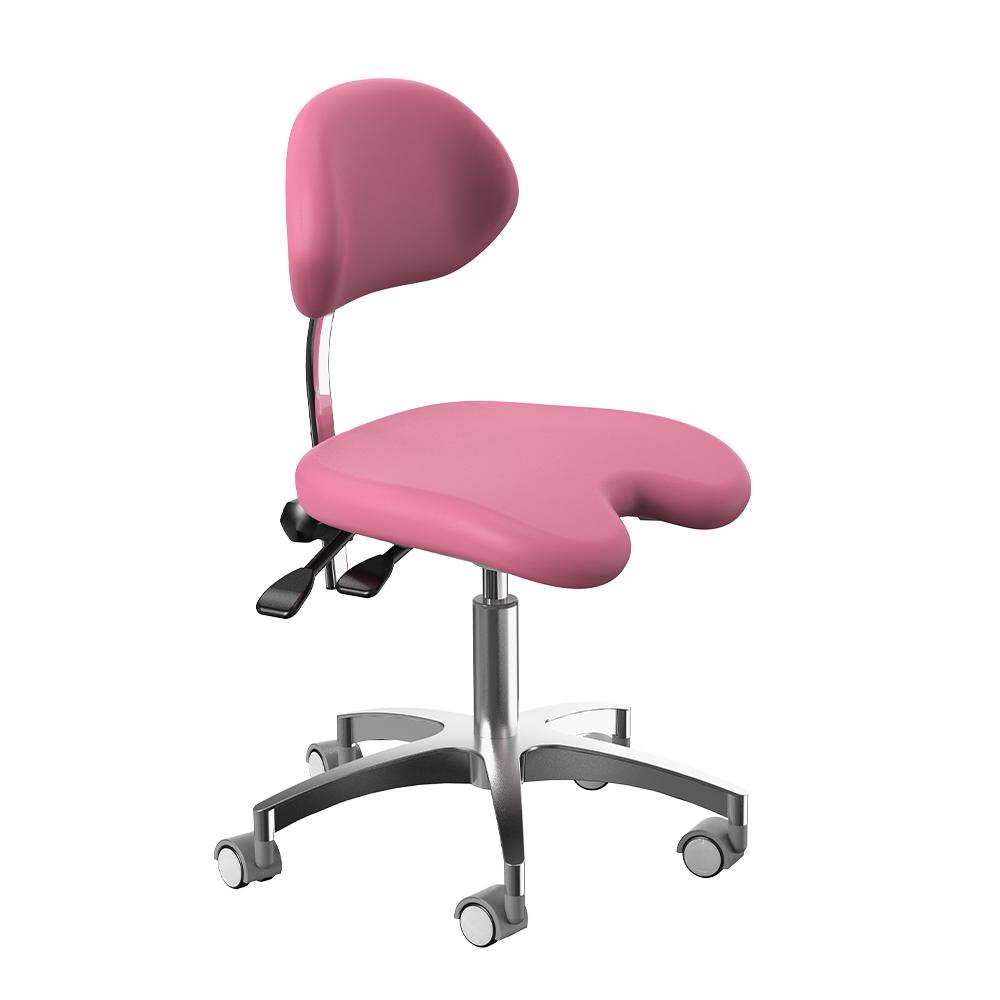
The RS-07 is designed around healthy seating posture and includes a U-shaped ventilation structure, a 20-degree angled contoured leg rest, a 90°–110° adaptive backrest recline, and 300–428 mm adjustable seat depth. These features address seating comfort, leg pressure, lumbar support, and different clinician postures.
The RS-06 provides eight-way control and adjustment, a five-degree forward-tilt function, and 360-degree silent casters. These features are particularly relevant when dentists need to adapt their sitting position and move quietly within the operatory.
The RS-05 uses a U-shaped cushion, high-density rebound cotton, an ergonomic tilt, an anatomically shaped back, adjustable seat height, an adjustable foot ring, and adjustable torso support that can be configured for left- or right-hand operation.
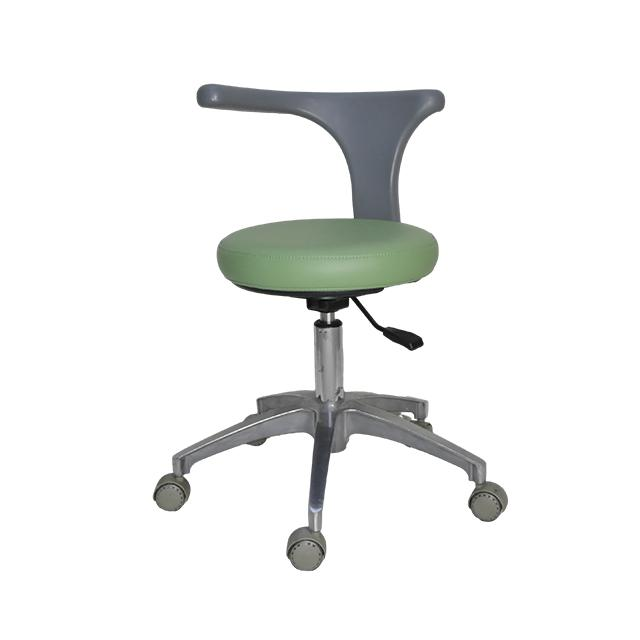
The RS-03 uses pneumatic height adjustment, a T-shaped trunk support arm, an aluminum base, and quiet casters designed for smooth movement across hard floors.
Important for distributors: these features vary by model, so product specifications should be matched to the exact model rather than presented as standard features across the entire range.
What Should Distributors Consider Beyond Stool Features?
Distributors should evaluate not only the physical product but also the manufacturer’s support for different customer requirements. We work with distributors and dental professionals worldwide and provides support through its international sales network.
We offer a VIP dealer program with exclusive pricing, customized purchasing plans, and priority support.
For a distributor, this creates a broader purchasing question: Can the supplier support the product after the initial order? Product availability, technical communication, promotional support, and after-sales responsiveness can all affect the practicality of carrying a dental-stool range.
How Can You Choose the Right Ergonomic Dental Stool?
The right choice starts with the user’s working posture and clinical environment, then moves to specific product features and supplier support. A simple evaluation process can reduce the risk of choosing a stool based only on appearance or cushioning.
What Should Dentists Check Before Purchasing?
Start by observing how the dentist actually works. Check whether the user leans forward frequently, changes position around the patient, requires torso or lumbar support, and needs to adjust the stool throughout a procedure.
Then compare those requirements with the stool’s documented adjustment functions. For example, a user who frequently changes position may want flexible adjustment and smooth mobility, while a user who prioritizes supported posture may pay more attention to backrest or torso-support design.
What Should Dental Clinics and Training Centers Prioritize?
Clinics and training centers should consider both individual ergonomics and shared use. When several dentists or students use the same equipment, easy adjustment, durable upholstery, cleanability, and stable mobility become particularly relevant.
The purchasing team should also avoid treating ergonomic design as a substitute for good working habits. Evidence indicates that posture, stool design, magnification, and other ergonomic supports can interact during dental procedures.
A practical buying sequence
- Identify the users and procedures.
- Record the required sitting and movement positions.
- Compare adjustment and support functions.
- Check cleaning and maintenance requirements.
- Compare model-specific specifications.
- Confirm manufacturer and distributor support.
Conclusion: What Should You Look for in an Ergonomic Dental Stool?
A suitable ergonomic dental stool should support the dentist’s actual working posture while providing practical adjustment, controlled mobility, stability, and easy maintenance. Research suggests that stool design can influence posture and muscle activity, but ergonomic performance depends on the complete working setup rather than one isolated feature.
For buyers comparing options, our RS-07, RS-06, RS-05, and RS-03 provide different combinations of adjustment, support, cushioning, and mobility. A suitable match depends on the user’s working habits, clinical procedures, and facility requirements rather than a single universal specification.
For distributors, the evaluation should extend beyond the stool itself to include supplier support and purchasing arrangements. For clinics and training centers, the focus should remain on whether the selected configuration supports daily workflows and the needs of the people using it.
Explore the Roson dental stool range or contact us to discuss specific requirements.
关于作者